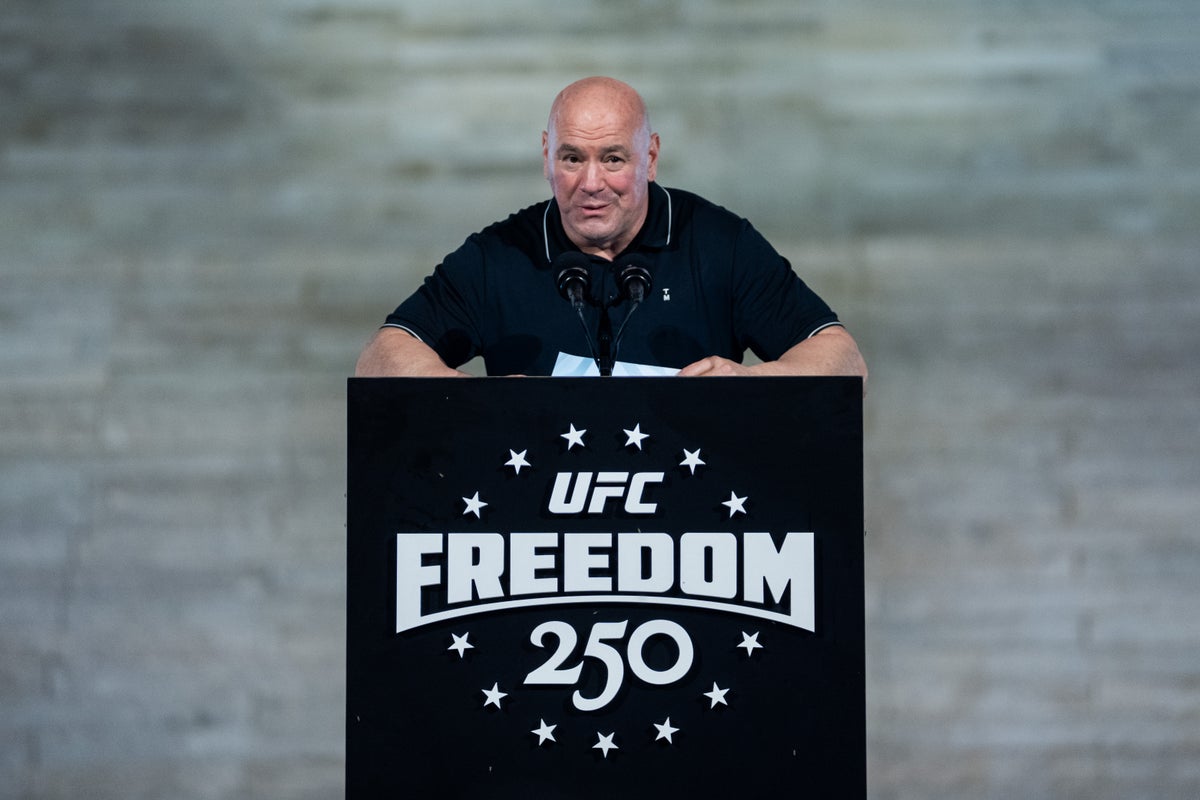
Donald Trump’s 80th birthday celebration at the White House introduces an unprecedented convergence of executive privilege, combat sports entertainment, and political branding. By transforming a milestone personal event into a live Ultimate Fighting Championship (UFC) showcase, the administration is not merely staging a party; it is executing a highly calculated cultural and political activation. This strategic move leverages the specific demographic profile, organizational infrastructure, and narrative mechanics of mixed martial arts to solidify a populist political identity.
To understand the mechanics of this event, one must look past the immediate spectacle and analyze the underlying structural alignment between the Trump brand and the UFC business model. This relationship operates across three primary vectors: demographic capitalization, institutional optics, and reciprocal brand equity. Read more on a connected topic: this related article.
The Demographic Capitalization Engine
The decision to anchor an 80th birthday celebration around a brutal, high-energy combat sport serves a specific defensive and offensive political function. Offensively, it secures direct access to a highly coveted and notoriously elusive voter segment. Defensively, it projects physical vitality, counteracting the standard vulnerabilities associated with octogenarian leadership.
+-------------------------------------------------------------------+
|                  DEMOGRAPHIC CAPITALIZATION ENGINE                |
+-------------------------------------------------------------------+
|                                                                   |
|  [ UFC Fan Base: 18-34 Males ] ----> [ Direct Cultural Access ]   |
|                                                     |             |
|                                                     v             |
|  [ Counteracting Age Vulnerabilities ] -> [ High-Energy Optics ]  |
|                                                                   |
+-------------------------------------------------------------------+
The UFC’s core audience is heavily skewed toward males aged 18 to 34—a demographic that traditional political advertising frequently fails to reach efficiently. By embedding a live fight card into the executive residence, the administration creates a content engine that flows naturally into digital ecosystems where this demographic aggregates, such as TikTok, YouTube, and various streaming platforms. More analysis by Reuters delves into similar views on this issue.
The mechanics of this activation rely on the concept of cultural proxying. Trump does not need to appeal to young voters through policy white papers; instead, he communicates through the proxy of Dana White and prominent fighters. These figures command high levels of trust and engagement within their subcultures. When these athletes validate the executive space, that validation transfers to the host.
This creates an optimization loop for political messaging:
- Attention Capture: Live sports events generate high real-time engagement and a massive volume of secondary, user-generated content.
- Low-Barrier Conversion: Political alignment is framed not as an ideological commitment, but as participation in a shared cultural aesthetic.
- Aesthetic Dominance: The raw, unfiltered nature of combat sports matches the anti-establishment, counter-cultural positioning central to the populist appeal.
Institutional Optics and the Deconstruction of Protocol
Staging a cage fight inside or on the grounds of the White House represents a deliberate disruption of established institutional norms. Historically, executive social events have adhered to strict codes of diplomatic decorum, high-culture curation, or formalized state dinners. Replacing chamber music or state toasts with a regulated blood sport subverts these traditional hierarchies.
This disruption operates on a specific cost-benefit function regarding institutional authority.
$$Optics\ Delta = Value_{Populist\ Resonance} - Cost_{Institutional\ Degradation}$$
For a populist leader, the value of populist resonance consistently outweighs the cost of institutional degradation. The traditional guardrails of presidential behavior are viewed by the core constituency as elitist barriers. Breaking these barriers by bringing a cage fight into the ultimate symbol of state power signals to the electorate that the leader remains uncorrupted by Washington’s institutional culture.
The spatial logistics of the event reinforce this narrative. The octagon, typically erected in commercial arenas like Madison Square Garden or T-Mobile Arena, is transposed into a space associated with geopolitics and constitutional governance. This juxtaposition creates a jarring visual contrast that guarantees saturation across both mainstream media and independent digital channels. The media outrage generated by the perceived desecration of the venue serves as a force multiplier, driving engagement and reinforcing the "us versus them" dichotomy that fuels populist movements.
Reciprocal Brand Equity and the Corporate Alliance
The partnership between Donald Trump and the UFC is not a sudden development, but rather the culmination of a multi-decade symbiotic corporate relationship. Analyzing this connection requires looking back to the early 2000s, when the UFC was struggling for mainstream legitimacy and regulatory approval.
+-------------------------------------------------------------------+
|                     SYMBIOTIC CORPORATE ALLIANCE                  |
+-------------------------------------------------------------------+
|                                                                   |
|  [ Early 2000s: Trump venues host banned UFC events ]             |
|         |                                                         |
|         v                                                         |
|  [ UFC achieves mainstream legitimacy & multi-billion valuation ] |
|         |                                                         |
|         v                                                         |
|  [ 2026: UFC provides cultural capital & demographic access ]    |
|                                                                   |
+-------------------------------------------------------------------+
When other venues shunned the sport due to political pressure and bans on "human cockfighting," Trump provided a platform by hosting events at his Atlantic City properties. This early capitalization allowed the UFC to survive a critical operational bottleneck.
Decades later, the returns on this initial investment are being realized at scale. The UFC is now a global sports entertainment giant with a multi-billion-dollar valuation. The 80th birthday bash represents the ultimate exchange of corporate and political currency:
- The UFC's Return Asset: The promotion delivers its production apparatus, its roster of international stars, and its highly optimized media distribution engine directly to the executive branch.
- The Executive Branch's Return Asset: The administration provides the ultimate validation of the sport, elevating a once-marginalized enterprise to the literal center of American state power.
Dana White’s prominent role in this ecosystem extends beyond simple friendship; it is a masterclass in corporate-political alignment. White operates as an elite surrogate who can speak to audiences that traditional political operatives cannot influence. His presence at the White House main event cements the UFC as the unofficial athletic commission of the populist movement.
Logistics, Security, and Operational Challenges
Executing a live athletic event within a secure government facility presents massive operational friction. The White House is fundamentally a high-security command center, not a sports arena. Introducing the infrastructure required for a UFC main event introduces specific logistical bottlenecks.
The first bottleneck is structural and spatial. The weight of a standard UFC octagon, combined with the required lighting rigs, cameras, and broadcast infrastructure, requires significant structural assessment if placed on the lawns or within historical structures.
The second, more complex bottleneck involves security and personnel clearance. A standard UFC event involves hundreds of individuals: fighters, cornermen, athletic commission officials, judges, referees, production crews, and medical staff. Vetting this diverse, international group under strict Secret Service protocols requires a massive expenditure of administrative resources.
The final operational consideration is liability and risk management. Combat sports carry an inherent risk of severe injury. Managing the optics of an athlete requiring emergency medical transport from the executive mansion requires a highly coordinated crisis communication strategy. The administration mitigates this risk by ensuring the event is framed strictly as an authorized, professionally regulated exhibition, rather than an unregulated spectacle.
The Strategic Play
This event should not be analyzed as a eccentric birthday party, but as a sophisticated deployment of cultural power. Organizations and political strategists observing this activation must recognize that traditional media channels are no longer the primary battleground for public attention.
The strategic play here is clear: capture attention at the source by merging high-stakes political branding with dominant entertainment subcultures. To counter or replicate this strategy, competitors must stop relying on legacy communication frameworks and instead build direct pipelines into highly engaged, self-contained cultural ecosystems. The future of public engagement belongs to those who can successfully operationalize entertainment infrastructure to serve ideological goals.