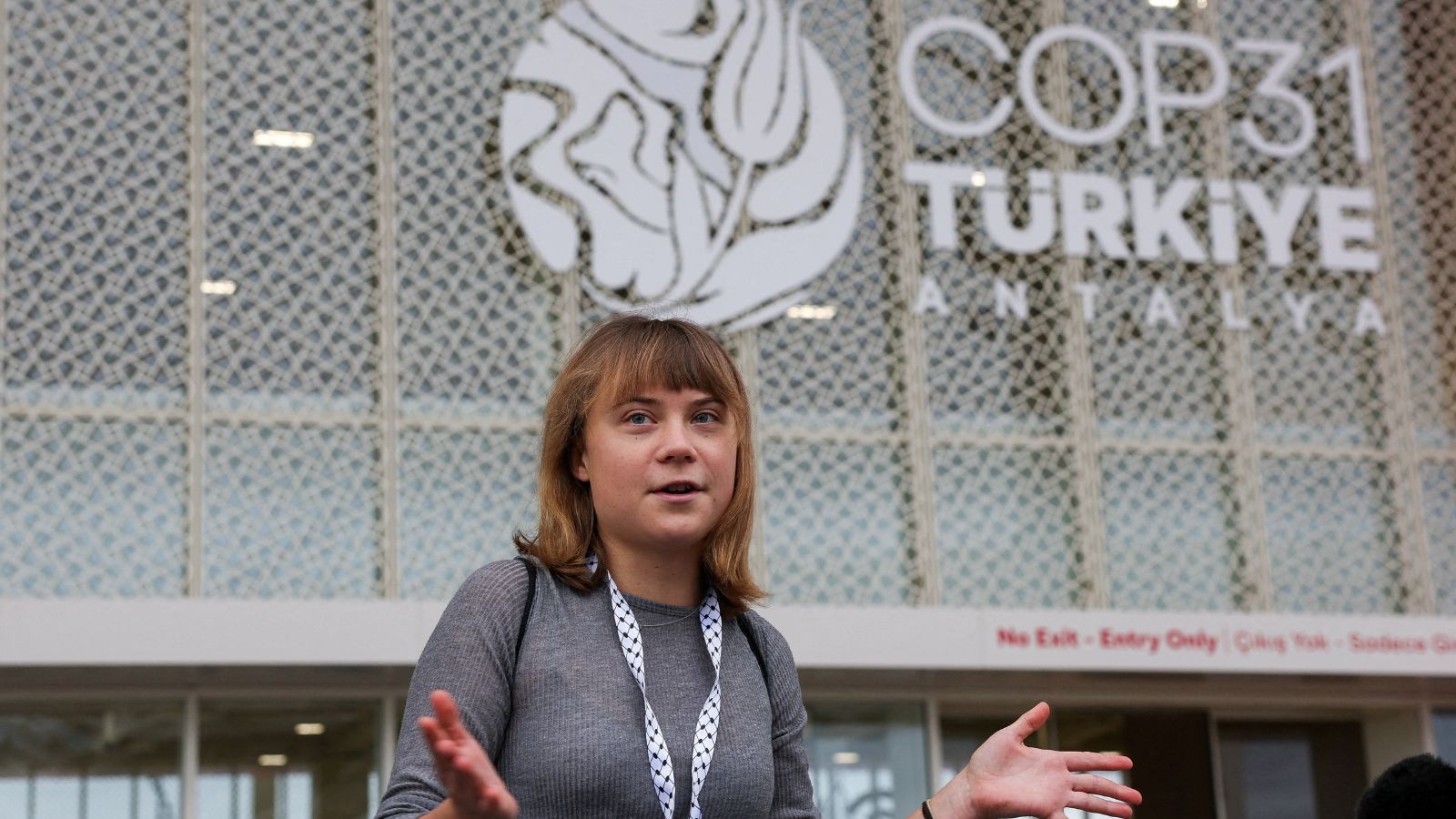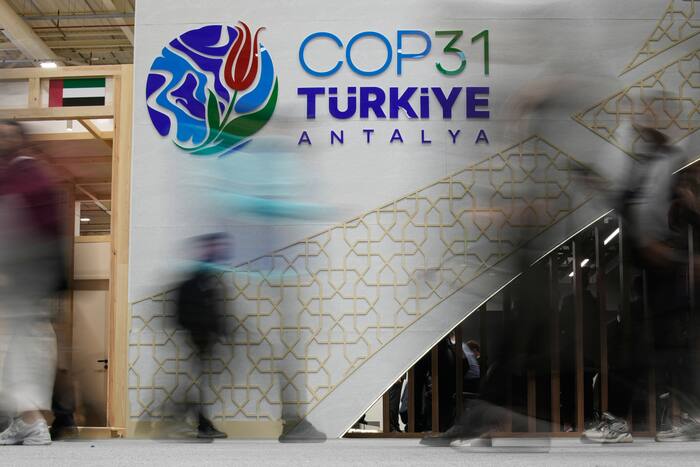
Every year, thousands of diplomats, heads of state, and lobbyists fly into a host city for the annual UN climate conference. Every year, the speeches sound urgent. And every year, global carbon emissions continue climbing right past the podiums.
You've seen the headlines. World leaders gather at COP summits amid mounting warnings that national climate actions are way too slow and fundamentally inadequate. If you feel a sense of déjà vu every November, you aren't imagining things. The gap between what leaders promise inside plenary halls and what their governments actually legislate back home has become the defining feature of modern climate diplomacy. You might also find this related coverage interesting: The Empty Chair by the Turquoise Sea and the High Price of Silence.
I've followed international climate negotiations for years, and the pattern is painfully predictable. We get two weeks of high-stakes drama, late-night drafting sessions over a single verb, and a final communiqué celebrated as "historic" even when it lacks binding enforcement mechanisms. Let's look at why these talks keep stalling, what the scientific data actually demands, and where real leverage still exists outside the formal negotiating rooms.
The Math Behind the UN Climate Conference Frustration
To understand why climate observers are sounding the alarm, you only need to look at the arithmetic. Under the 2015 Paris Agreement, nearly 200 countries agreed to hold global warming well below 2 degrees Celsius above pre-industrial levels, while pursuing efforts to limit it to 1.5 degrees Celsius. As extensively documented in detailed coverage by The Washington Post, the results are widespread.
That 1.5-degree threshold isn't an arbitrary political target. According to the Intergovernmental Panel on Climate Change (IPCC), crossing it significantly increases the frequency and severity of heatwaves, agricultural droughts, coral reef die-offs, and extreme coastal flooding.
Yet the United Nations Environment Programme (UNEP) repeatedly warns in its annual Emissions Gap Reports that current national pledges—known formally as Nationally Determined Contributions, or NDCs—put the world on track for catastrophic warming well above 2.5 degrees Celsius this century. Even worse, many nations aren't even meeting the insufficient targets they already submitted.
The physics doesn't care about diplomatic compromises. Atmosphere carbon dioxide concentrations don't respond to non-binding pledges or distant 2050 net-zero announcements when near-term fossil fuel expansion keeps accelerating.
Why Near-Term Emissions Matter More Than 2050 Pledges
Politicians love 2050 targets. Why? Because whoever sets a target 25 years in the future won't be in office when the bill comes due.
Climate science works on cumulative carbon budgets, not distant finish lines. Every ton of carbon dioxide emitted today stays in the atmosphere trapping heat for centuries. Delaying steep cuts until the 2030s or 2040s forces the world into an impossible corner where only massive, unproven carbon removal technologies could theoretically pull temperatures back down.
When world leaders show up at a UN climate conference without aggressive 2030 and 2035 reduction plans backed by domestic funding, scientists call it out immediately. You can't negotiate with radiative forcing.
What Actually Happens Inside COP Negotiations
If you've never watched a COP plenary session up close, the process can seem baffling. Unlike the UN Security Council, decisions under the UN Framework Convention on Climate Change (UNFCCC) operate largely by consensus.
Consensus sounds democratic in theory. In practice, it means a single petro-state or major coal-dependent economy can water down language until an urgent call to "phase out" fossil fuels becomes a vague agreement to "transition away" from them in an orderly manner.
Here is how the structural friction plays out every single year:
- Vague phrasing over hard deadlines. Negotiators spend days arguing over whether a text should say "urge," "call upon," or "decide." Those subtle linguistic shifts determine whether a country faces political pressure or zero accountability.
- Self-policing without penalties. The Paris Agreement relies on transparency and peer pressure rather than trade sanctions or financial fines. If a major emitter misses its target, nothing legally happens to them.
- Lobbyist saturation. Recent summits have drawn record numbers of accredited fossil fuel lobbyists—often outnumbering the official delegations of the most climate-vulnerable island nations.
Honestly, expecting a consensus-based forum of 198 nations with competing economic interests to suddenly produce a binding global carbon tax is naive. The system wasn't built for speed. It was built to keep everyone at the table.
The Money Fight Holding Everything Hostage
Follow the money, and the deadlock at every UN climate conference makes complete sense. Developing nations didn't cause the historical buildup of greenhouse gases in the atmosphere, yet they suffer the worst immediate impacts from floods, cyclones, and crop failures.
Back in 2009, wealthy nations promised to mobilize $100 billion per year by 2020 to help poorer countries adapt to climate change and build clean energy grids. They missed that deadline by two years. Even when the figure was finally reached, developing countries pointed out that much of the money came as high-interest loans rather than grants, piling more debt onto already strained economies.
Now, the financial needs have scaled into the trillions. Trillions, not billions.
Climate Finance vs. Fossil Fuel Subsidies
The hypocrisy isn't lost on negotiators from the Global South. While wealthy governments claim budget constraints prevent them from funding international climate adaptation or the Loss and Damage fund, global subsidies for oil, coal, and natural gas continue to hit staggering highs.
The International Monetary Fund (IMF) has documented trillions of dollars in explicit and implicit fossil fuel subsidies globally when accounting for underpriced environmental and health damages. Telling a developing nation it can't get grant funding for solar microgrids while G20 nations subsidize domestic oil and gas extraction destroys diplomatic trust before the opening gavel even strikes.
Without serious, predictable, grant-based finance flowing from wealthy emitters to vulnerable nations, developing economies have little incentive to abandon cheap domestic coal or gas reserves. You can't ask a country to skip industrialization without helping pay for the clean alternative.
Where Real Climate Momentum Actually Lives
Does all this gridlock mean the UN climate conference process is completely useless? Not quite. Writing off the entire framework misses how global markets actually react to diplomatic signals.
Even watered-down UN agreements send unmistakable price signals to institutional investors, central banks, and corporate boards. When nearly 200 countries formally acknowledge that the fossil fuel era is ending—even with messy, compromised wording—capital begins shifting.
Look at what's happening outside the slow-moving treaty texts:
- Renewable energy economics have flipped. Solar and wind are now the cheapest sources of new bulk electricity across most of the world, according to analyses from the International Energy Agency (IEA) and Lazard. Utilities aren't building solar farms purely out of altruism; they're building them because the unit economics beat coal and gas.
- Subnational coalitions are moving faster than capitals. States, provinces, and major cities frequently bypass federal gridlock. California, the European Union's carbon border mechanisms, and regional clean-power alliances create binding regulatory standards that force multinational companies to decarbonize supply chains regardless of UN gridlock.
- Climate litigation is giving pledges teeth. Courts in Europe and around the world have increasingly ruled that governments' failure to meet their own climate targets violates citizens' fundamental human rights, forcing legislatures to pass stricter emissions laws.
The UN summit acts like a giant thermometer and a global trade show rolled into one. The real engine of change isn't the final communiqué—it's the clean-tech supply chains, green industrial policies, and bilateral investment deals forged in the hallways alongside the main event.
How to Read Climate Summit News Without Getting Misled
When major outlets report that world leaders are meeting amid warnings of slow climate action, it's easy to tune out the noise or fall for greenwashing. Next time a summit dominates the news cycle, filter the announcements through a few practical checks:
- Look for 2030 and 2035 numbers, not 2050 promises. Ignore any net-zero pledge that doesn't include legally binding emissions cuts within the current decade.
- Check whether finance pledges are new money. Governments routinely repackage existing foreign aid budgets and announce them as brand-new climate finance. Look for independent tracking from organizations like Climate Action Tracker or the World Resources Institute.
- Watch domestic legislation, not summit speeches. A leader's speech in front of a UN backdrop means nothing if their energy ministry is simultaneously approving new oil exploration licenses or coal plants at home.
- Track methane and grid storage commitments. Cutting methane leaks delivers fast cooling benefits over a 20-year window, and utility-scale battery deployment tells you whether renewable power is actually replacing baseload fossil fuels.
If you want to push for faster action where it counts, stop waiting for a miracle treaty from a UN conference hall. Put your pressure on local utility regulators, municipal pension funds, and national lawmakers who control domestic energy permitting and fossil fuel subsidies. That's where the actual emissions live, and that's where political accountability still has bite.