Blaming petrostates for the breakdown of United Nations climate negotiations is the laziest take in modern journalism. Every November, the script writes itself. A summit runs into overtime. Delegates stumble out of windowless conference rooms looking exhausted. Pundits immediately point fingers at oil-exporting nations, weeping over the failure to secure a binding phase-out of fossil fuels.
They are looking at the symptom and ignoring the disease.
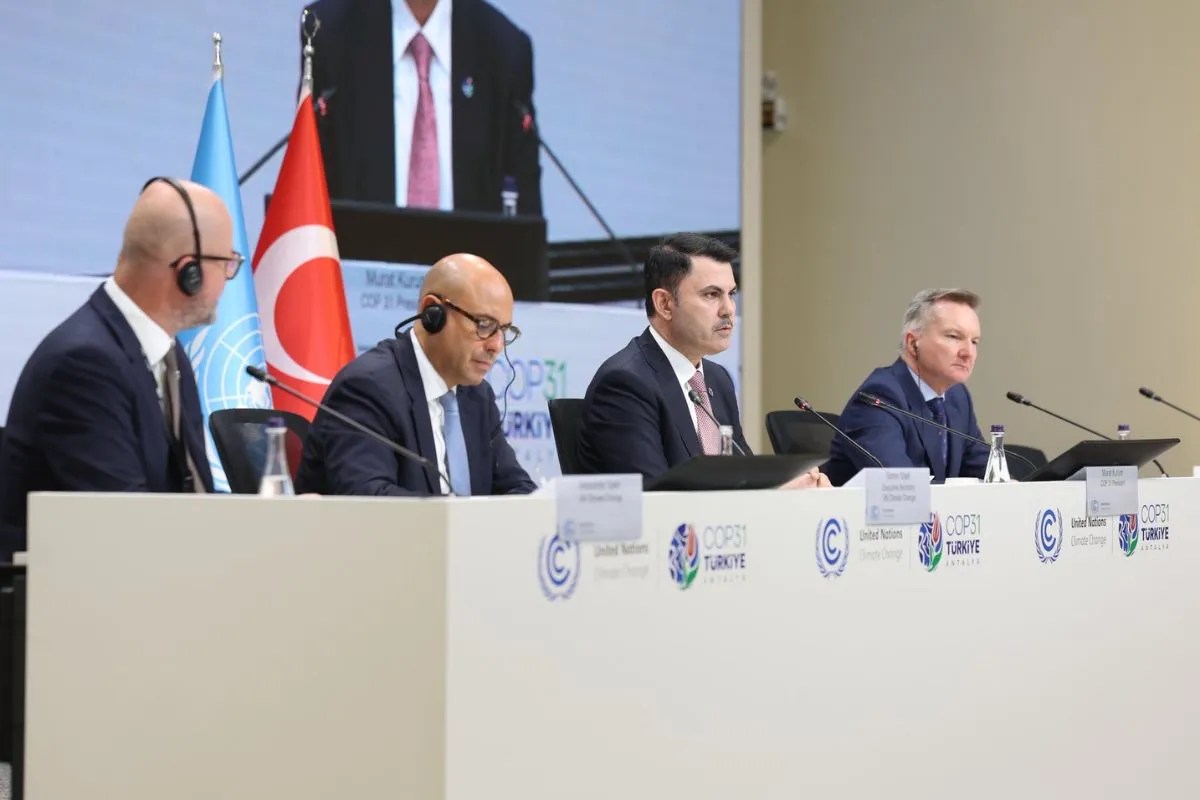
The collapse of global climate diplomacy was not caused by stubborn oil ministers. It was engineered into the architecture of the United Nations Framework Convention on Climate Change (UNFCCC) in 1992. When nearly 200 nations agree to operate under a rule of absolute consensus—where a single country can veto the collective will of the planet—stalemate isn't a bug. It is the entire operating system.
If you want to understand why global climate summits keep imploding, stop reading press releases from environmental NGOs and start looking at basic game theory, sovereign balance sheets, and the physics of electrical grids.
The Myth of the Petrostate Villain
The prevailing narrative paints international climate talks as a morality play. On one side sit the enlightened nations pushing for a rapid transition to wind and solar. On the other sit the greedy hydrocarbon producers sabotaging the future to protect their quarterly earnings.
This framing is convenient, emotionally satisfying, and completely detached from operational reality.
In my years advising institutional capital allocators on energy transition risk, I have watched sovereign wealth funds and national oil companies run the exact same math. They are not ignoring climate science. They are staring directly at energy density, grid reliability, and capital expenditure cycles.
When a developing nation refuses to sign a pledge eliminating coal or natural gas by a fixed date, they are rarely doing it to appease oil lobbyists. They are doing it because three billion people on this planet still consume less electricity per capita than a standard American refrigerator. You cannot build cement plants, smelt steel, or run fertilizer factories on intermittent renewables without massive, expensive grid-scale storage that does not yet exist at commercial scale across the Global South.
Energy transition is not a software update. You cannot simply delete hydrocarbons and install solar panels overnight without crashing industrial output.
Look at the actual numbers from the International Energy Agency (IEA) and the Energy Institute's Statistical Review of World Energy. Even as solar and wind installations break records every single year, global demand for coal, oil, and natural gas has continued to hit all-time highs. Why? Because new renewable capacity is mostly meeting new energy demand in growing economies, not displacing the existing fossil fuel baseload.
To pretend that a non-binding UN communiqué could override the thermodynamic and economic requirements of industrializing nations is pure magical thinking.
Why the Consensus Model Was Doomed From Day One
To understand why these summits fail, you have to understand how the UNFCCC makes decisions. Unlike the UN Security Council, where five permanent members hold a veto, or the World Trade Organization, which operates on complex plurilateral trade rounds, the Conference of the Parties (COP) requires consensus among roughly 198 parties.
Consensus does not mean a majority. It means the absence of formal objection.
Imagine a scenario where 197 countries agree to a strict, enforceable carbon pricing mechanism, and one single nation whose entire national budget depends on crude exports says no. Under UNFCCC rules, the motion dies.
The architects of the 1992 Rio Earth Summit chose this rule to ensure universal buy-in. They feared that if major emitters were outvoted, they would simply walk away from the table, rendering the treaty useless. That logic made sense when the goal was establishing a scientific baseline and a diplomatic forum.
It became fatal the moment the goal shifted to dismantling the primary energy source of the global economy.
When you force 198 nations with diametrically opposed economic interests to agree on a single text, you guarantee one of two outcomes:
- The text is watered down into meaningless corporate poetry. Words like "phase out" are surgically replaced with "transition away from" or "phase down unabated," leaving loopholes wide enough to drive a supertanker through.
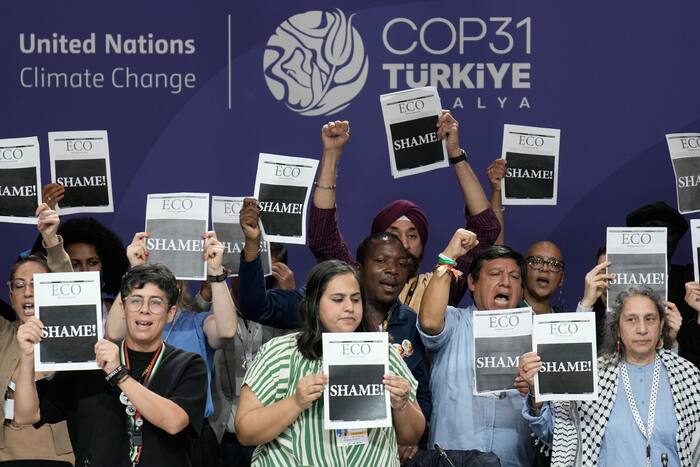
- The talks collapse entirely. Parties dig into their trenches, the clock runs out, and everyone goes home blaming the other side for the wreckage.
This is what economists call the lowest-common-denominator trap. By refusing to leave anyone behind, the UN ensures nobody actually moves forward.
The Finance Mirage Nobody Wants to Admit
Ask any veteran negotiator what actually blows up climate talks behind closed doors, and they won't say "oil." They will say "money."
Specifically, the chasm between what developing nations need to build low-carbon infrastructure and what wealthy nations are actually willing to write checks for.
For over a decade, the centerpiece of climate diplomacy was the $100 billion annual climate finance pledge made by developed nations in 2009. Not only did rich countries miss the original 2020 deadline to deliver that money, when they finally claimed to cross the threshold, independent audits by Oxfam and other policy analysts revealed that the vast majority of it wasn't grants. It was high-interest loans, rebranded development aid, and creative accounting.
Now, the demands have scaled into the trillions. The Independent High-Level Expert Group on Climate Finance estimates that emerging markets and developing countries (excluding China) need roughly $2.4 trillion per year by 2030 to meet climate and development goals.
Let's be brutally honest about Western fiscal reality.
The United States, the European Union, and Japan are drowning in sovereign debt, facing aging demographics, and dealing with domestic voters who are furious about inflation and energy costs. No legislature in Washington, Brussels, or Tokyo is going to approve hundreds of billions of dollars in annual wealth transfers to foreign governments. It is politically dead on arrival.
Yet every year, UN negotiators spend two weeks pretending that a breakthrough on climate finance is just one late-night drafting session away. Developing nations refuse to sign onto strict emissions cuts without guaranteed cash. Wealthy nations refuse to guarantee cash without strict emissions cuts from major emerging emitters like China and India.
It is a structural deadlock. Calling it a failure of "political will" is like saying a bridge collapsed because of a lack of positive thinking. The load-bearing math simply does not work.
Dismantling the Wrong Questions
If you search online for why UN climate talks fail, you will run into the same tired questions. Let's tear them apart.
Did fossil fuel lobbyists hijack the climate talks?
Yes, thousands of industry representatives attend these summits. No, they did not cause the collapse. Blaming lobbyists gives politicians a convenient scapegoat. National leaders do not need ExxonMobil or Saudi Aramco to tell them that spiking domestic fuel prices will get them voted out of office. Look at the yellow vest protests in France, the backlash against heating laws in Germany, or the political sensitivity around gasoline prices in the United States. Politicians stall on aggressive climate mandates because their own constituents punish them at the ballot box when energy becomes expensive or unreliable.
Can we fix the UN climate process?
Not without burning down the rulebook. As long as the consensus rule remains intact, the UNFCCC will remain a venue for performative diplomacy rather than binding action. Amending the voting rules requires—you guessed it—consensus. It is a closed loop. You cannot reform a system whose primary mechanism prevents its own reform.
Does the collapse of UN talks mean climate action is dead?
This is the biggest misconception of all. Global decarbonization is no longer driven by UN treaties. It is driven by industrial policy, supply chain dominance, and the falling cost curve of manufactured energy technologies.
Beijing did not build the world's largest solar, wind, and electric vehicle manufacturing base because of a UN resolution. China did it to eliminate its strategic vulnerability to imported oil and gas, dominate the export markets of the 21st century, and clean up lethal urban air pollution. Similarly, the U.S. Inflation Reduction Act was not a climate charity bill; it was an aggressive industrial protectionism play designed to reshore manufacturing and counter Chinese supply chain monopolies.
The real energy transition is happening in boardrooms, semiconductor fabs, and utility commissions—not in UN plenary halls.
The Uncomfortable Truth About My Own Thesis
Advocating for the abandonment of universal UN consensus carries a massive, undeniable risk.
If we scrap the 198-nation format in favor of smaller, aggressive coalitions—often called climate clubs, a concept championed by Nobel laureate economist William Nordhaus—we instantly fracture the global order.
Here is the downside nobody likes to talk about: a fragmented system breeds trade wars.
When a bloc of wealthy nations imposes a Carbon Border Adjustment Mechanism (CBAM)—essentially a carbon tariff on imported steel, cement, and aluminum—it forces trading partners to either decarbonize or pay up. While economically efficient, it triggers immediate retaliation from developing nations who view it as green imperialism. It penalizes poorer countries that lack the capital to rapidly overhaul their heavy industry, potentially slowing their poverty reduction efforts and driving them deeper into the geopolitical orbit of nations that don't care about emissions standards at all.
You trade diplomatic paralysis for economic hostility. That is not a clean victory. It is simply a different battlefield, albeit one where things actually move.
What Actually Moves the Needle (And What to Ignore)
If you are an executive, an investor, or a policymaker trying to navigate the reality of energy and climate risk, stop pricing UN summit outcomes into your models. They are noise.
Instead, focus on the three levers that actually dictate the pace of global decarbonization:
- Plurilateral Sectoral Agreements: Forget trying to get 200 countries to agree on everything. Watch small groups of major economies and industry titans cutting targeted deals on specific commodities. When the top five steel-producing nations or the largest maritime shipping conglomerates agree on green fuel standards, the entire global supply chain has to adapt, regardless of what happens at the UN.
- Grid Interconnection and Permitting Reform: The bottleneck to clean energy is no longer panel cost or turbine efficiency. It is transmission lines and transformer shortages. Countries that aggressively strip away regulatory red tape to build high-voltage direct current (HVDC) grids will capture the industrial investment of the next decade. Those that don't will watch their clean energy targets die in environmental review queues.
- Base-Load Firm Power: Watch where institutional smart money is flowing. It is moving rapidly toward next-generation nuclear (small modular reactors), enhanced geothermal, and long-duration grid storage. Investors have finally realized that wind and solar cannot carry an AI-driven, electrified economy alone.
The era of saving the planet through sprawling, unanimous global treaties is over. It died because you cannot negotiate away the laws of physics or the realities of sovereign self-interest in a convention center.
Stop mourning the collapse of the UN consensus circus. Let it burn down, and start paying attention to the capital flows, trade tariffs, and engineering breakthroughs that are actually reshaping the world.