The air inside the apartment smells of damp concrete and the sharp, chemical tang of poor-quality fuel. Outside, the streets of Tehran pulse with an anxious rhythm, a city holding its breath beneath a sky heavy with economic ruin, currency collapse, and the constant, low-grade hum of political paranoia. Inside, the curtains are drawn tight. A heavy blanket is pinned across the window frame to swallow any stray sliver of light.
Here, in the dim sanctuary of a living room no larger than a modest walk-in closet, a dozen people sit shoulder-to-shoulder on the floor.
They are not discussing politics. They are not plotting an uprising, nor are they counting the dwindling rials in their pockets. Instead, a woman named Sara—not her real name, because names are expensive luxuries when survival requires anonymity—holds a worn, leather-bound book with pages tissue-thin and yellowed at the edges. Her voice is barely a whisper, pitched low enough to be lost if a motorcycle roars past on the asphalt outside. Yet every ear is strained, leaning inward as though the words themselves are physical warmth in a freezing room.
They are reading about a shepherd, a lost coin, and a father who ran down the road to embrace a child who had squandered everything.
To understand what is happening behind the closed doors of modern Iran, you have to abandon the statistical charts and the geopolitical posturing that dominate evening broadcasts. Numbers tell you that inflation is rampant, that sanctions bite deep, and that public disillusionment with the clerical establishment has reached a historic apex. But numbers cannot measure the shape of a human soul in freefall. When the structures that have defined a society for half a century begin to fracture under the weight of their own contradictions, people look for something that cannot be legislated, taxed, or overthrown.
They look for an anchor that holds when the seabed gives way.
For decades, the official narrative of the Islamic Republic was absolute, inescapable, and omnipresent. It was painted on the sides of buildings, blared from loudspeakers, and enforced by the stern faces of morality patrols. Religion was power. Religion was the state. To question the clergy was to question the very fabric of the nation.
History teaches us, however, that when faith becomes an instrument of coercion, it hollows out from the inside out. It turns into an empty shell—loud, demanding, and brittle.
When that shell finally cracks, the vacuum left behind is terrifying. People do not simply stop believing in God because they lose faith in a government that invokes His name while crushing their livelihood. Instead, a profound spiritual hunger takes root. It is an ache for transcendence, for grace, for a love that asks for nothing in return except a willing heart.
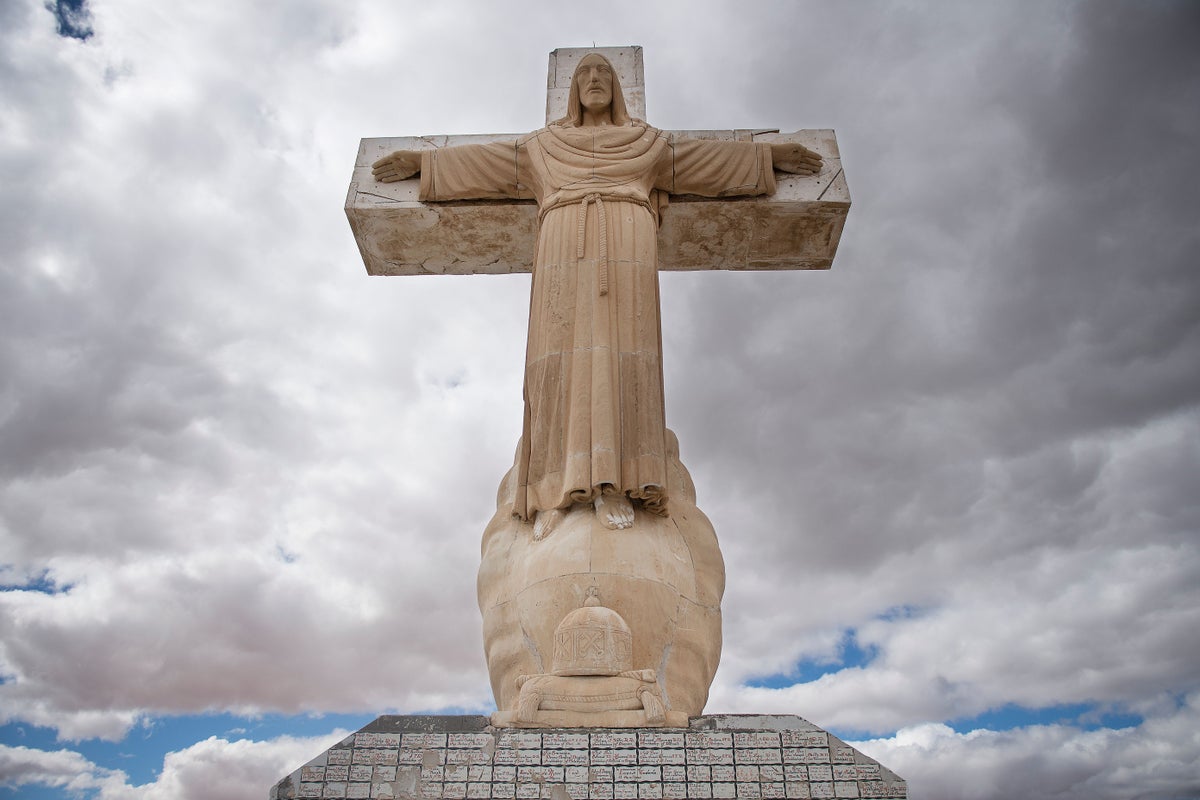
Consider the sheer gravity of what is unfolding in the alleyways of major Iranian cities right now. Reports from open doors and whispered testimonies reveal an underground movement, a decentralized network of house churches swelling with ordinary citizens. Teachers, mechanics, university students, and disillusioned youths are quietly turning away from the state-sanctioned mosques. They are gathering in kitchens, basements, and cramped bedrooms to seek out the Christian faith.
Why? Because in a land where hope has been rationed, the message of the Gospel offers something radical: a dignity that no regime can grant and no dictator can strip away.
Consider the risk. To convert from Islam to Christianity in Iran is not a lifestyle choice; it is an act of quiet rebellion that carries the weight of imprisonment, interrogation, and social exile. The Ministry of Intelligence watches the digital footprints of citizens with hawkish precision. Informants linger in neighborhoods. A knock on the door at midnight is a permanent shadow hanging over every gathering.
And yet, the rooms keep filling up.
Why do they take the risk?
Talk to anyone who has made that transition, and you will hear a recurring motif. It is not about theological treatises or historical debates. It is about an encounter with a God who suffers rather than inflicts suffering. In a society where the divine has long been portrayed as an austere judge demanding absolute compliance, the revelation of a God who weeps with the afflicted is nothing short of revolutionary.
"For years, I thought God was a supervisor with a clipboard, waiting for me to slip up so He could punish my family," a former university student shares, his hands trembling slightly as he pours tea from a cracked ceramic pot. He fled Iran months ago, his journey a harrowing odyssey across borders and through smugglers' hands. "When I first heard that God loved me—not because I was pious, not because I obeyed the laws of the clerics, but simply because He chose to—it felt like cold water on a burn. It hurt, but it healed."
This is the invisible engine driving the spiritual shift across the region. While Western analysts debate foreign policy and nuclear pacts, an entirely different kind of transformation is quietly rewriting the cultural DNA of the Middle East. It is grassroots, deeply personal, and entirely unstoppable because it operates beneath the radar of institutional control.
The state apparatus responds with predictable severity. Pastors are arrested. House church leaders are handed long prison sentences under charges of "acting against national security." Raids are documented, threats are issued, and every effort is made to paint these believers as Western agents subverting the cultural heritage of the nation.
Yet, repression has a curious side effect. It acts like pruning shears on a vine. It strips away the casual adherents, leaving behind a community of believers whose commitment is forged in the fire of genuine conviction. When faith costs you everything, you make damn sure it is real.
Back in the Tehran apartment, the reading comes to an end. No one speaks for a long moment. The silence is heavy, filled only with the distant wail of a police siren filtering down from the main boulevard. Then, a young man near the corner clears his throat. He speaks of his brother, arrested during the recent protests, and the gnawing terror of not knowing whether he is alive or dead in Evin Prison.
Sara does not offer easy platitudes. She does not promise that his brother will be released tomorrow, nor does she offer political analysis. Instead, she reaches out, places a hand on his shoulder, and begins to pray. Her voice is steady, quiet, and impossibly clear.
In that cramped room, beneath the weight of a crumbling regime and an uncertain tomorrow, something extraordinary happens. The fear recedes, if only for a few moments. A community is bound together by a thread that no prison wall can contain and no interrogation room can snap.
The state may control the streets, the pulpits, and the broadcasting towers. But in the dark, quiet corners of a wounded nation, an ancient story is being whispered back to life, proving once again that the human spirit cannot be locked away.