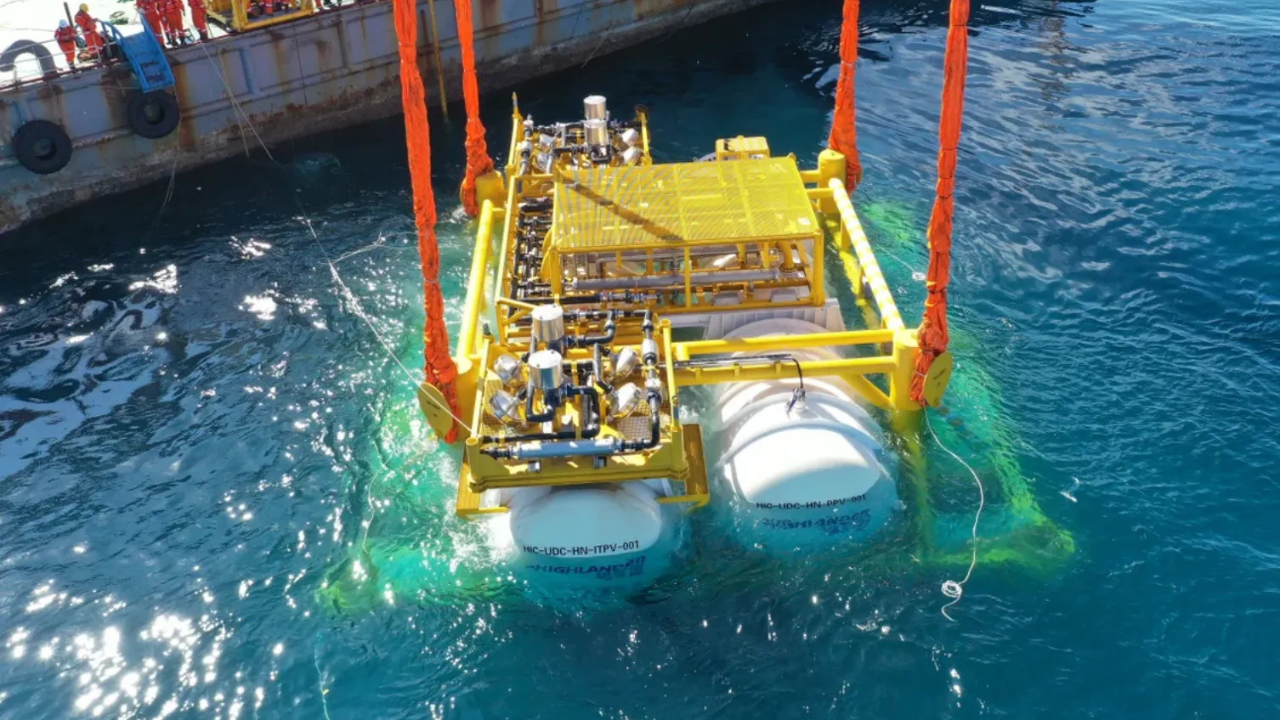
Tech executives love a good PR stunt, especially when it involves sinking millions of dollars of hardware into the ocean. The recent launch of China’s offshore underwater data center off the coast of Hainan is being heralded as a triumph of green engineering. The narrative is predictably flawless: use the ocean as a giant, free heat sink, slash power usage effectiveness (PUE) ratios, and save the planet while running massive AI clusters.
It is a beautiful fantasy. It is also a thermodynamic and operational nightmare.
Having spent nearly two decades auditing infrastructure efficiency and watching enterprise tech firms burn capital on shiny, impractical hardware deployments, I can tell you that subsea data centers are not the future of infrastructure. They are an expensive distraction from the hard work of fixing land-based grids. The industry is falling for a classic magic trick: focusing entirely on the cooling metrics while completely ignoring the brutal realities of marine engineering, maintenance lifecycle costs, and the shifting nature of AI workloads.
Let us dismantle the ocean-cooling myth piece by piece.
The PUE Lie: Lowering One Metric While Raising Total Cost
The primary justification for dropping pressure vessels full of Nvidia blades into the ocean is cooling efficiency. Promoters point to a PUE nearing 1.05, claiming that bypassing traditional chillers saves massive amounts of electricity.
This argument is mathematically short-sighted.
PUE is a ratio of total facility energy to IT equipment energy. It is an internal efficiency metric, not a holy grail. What the marketing brochures leave out is the energy penalty incurred before the power ever reaches the submerged capsule.
Imagine a scenario where high-voltage alternating current (AC) is transmitted from the shore, stepped down to direct current (DC) or lower-voltage AC, sent through kilometers of heavily armored subsea cabling, and finally distributed to the servers. The transmission losses alone over those distances eat into the supposed efficiency gains.
Furthermore, cooling a data center is not just about dumping heat; it is about managing fluid dynamics. Land-based facilities use closed-loop water systems or direct-to-chip liquid cooling that can be precisely modulated. Subsea capsules rely on external bio-fouling protection, active pumping against hydrostatic pressure, and complex internal heat exchangers. You are replacing a well-understood mechanical engineering problem on land with a highly unpredictable marine engineering problem at sea.
The Maintenance Nightmare: Hope Is Not an Operational Strategy
In a standard data center, a technician can replace a failed dual in-line memory module (DIMM) or a faulty network interface card (NIC) in five minutes. In an underwater data center, a single component failure means one of two things: you either accept degraded performance and permanent capacity loss, or you hire a commercial dive team and a crane vessel to haul a 1,300-ton capsule to the surface.
Proponents argue that these vessels are filled with dry nitrogen to prevent corrosion and that hardware failure rates are lower due to the absence of oxygen and human interference. Microsoft's Project Natick proved that hardware can survive under these conditions for a limited time. But surviving a short-term pilot is radically different from managing a multi-decade enterprise lifecycle.
Consider the reality of running modern AI training workloads. These clusters push silicon to its absolute thermal and electrical limits. GPUs fail. Power supply units (PSUs) pop. When a critical mass of accelerators goes dark inside a submerged pod, your capital expenditure is sitting uselessly at the bottom of the sea. You cannot hot-swap a drive through a double-walled pressure hull. The operational strategy shifts from proactive maintenance to cross-your-fingers redundancy, forcing companies to over-provision hardware upfront just to offset the inevitable failures. That is not innovation; it is wildly expensive capitulation.
The Marine Bio-Fouling Tax
The ocean is not a pristine, static bucket of cold water. It is a biological soup determined to colonize any hard surface introduced to it.
Within days of deployment, subsea structures face bio-fouling: the accumulation of algae, barnacles, and tube worms. This biological layer acts as a highly effective insulator. As organisms cover the hull of a data center capsule, the thermal conductivity of the metal drops significantly.
To combat this, these systems require expensive copper-based anti-fouling coatings or active acoustic self-cleaning systems. Over time, these coatings degrade, and the local marine environment can alter the thermal dissipation profile of the site. If the water temperature around the pod rises by even a few degrees due to seasonal currents or localized thermal pollution from the data center itself, the cooling efficiency plummets. Land-based facilities face weather anomalies, but they do not have to worry about a school of fish or a layer of crustaceans suffocating their heat exchangers.
The Geographic Mismatch: AI Needs Power, Not Just Water
The ultimate flaw in the offshore data center thesis is a fundamental misunderstanding of where the AI bottleneck lies. The crisis facing AI infrastructure is not a lack of cooling space; it is a lack of raw, continuous electrical power.
Dropping a data center off the coast of a major metropolitan area does not magically generate the megawatts required to train the next generation of large language models. You still have to hook into the local grid. If the onshore grid is constrained, your underwater pod is just as starved for power as a warehouse in Virginia or Frankfurt.
Connecting these facilities to offshore wind farms or tidal energy platforms sounds elegant on paper, but it introduces massive intermittency risks. AI training runs require uninterrupted baseload power. When the wind dies down, an offshore data center cannot easily fall back on massive arrays of diesel generators or utility-scale battery storage like a land-based facility can. Building that backup infrastructure on the water or on a nearby shoreline completely erases any supposed cost or space savings.
What to Do Instead: The Unconventional Path to Efficiency
Stop looking at the ocean. The solutions to the data center capacity crisis are boring, terrestrial, and require actual engineering depth rather than PR stunts.
Implement High-Temperature Terrestrial Cooling
Modern server components do not need to be kept at refrigerator temperatures. Organizations like ASHRAE have long updated their guidelines to allow for much higher data center operating temperatures. By designing land-based facilities that run hot and utilize direct-to-chip liquid cooling with ambient air heat rejection, you can achieve PUE numbers close to the subsea targets without the risk of saltwater corrosion.
Build Where the Power Is, Not Where the People Are
The obsession with putting data centers near major coastal cities is driven by latency demands for consumer applications. AI training workloads do not care about latency. A training cluster can sit in the middle of a desert or next to a stranded geothermal plant thousands of miles from civilization. Instead of running cables under the sea, run fiber optics to remote inland locations where clean, cheap baseload power is already abundant.
Accept the Reality of Modular Onshore Infrastructure
If rapid deployment is the goal, modular containerized data centers on land win every time. They offer the same isolation benefits as a subsea capsule but can be serviced by a technician in work boots rather than a specialized crew on a salvage barge.
The subsea data center trend is a classic case of over-engineering a solution to the wrong problem. It treats the symptoms of grid congestion and cooling inefficiencies by introducing a host of exponentially more complex maritime liabilities.
Leave the ocean to the marine life. Build on solid ground, run your silicon hotter, and stop pretending that sinking your capital to the ocean floor is an act of environmental stewardship.