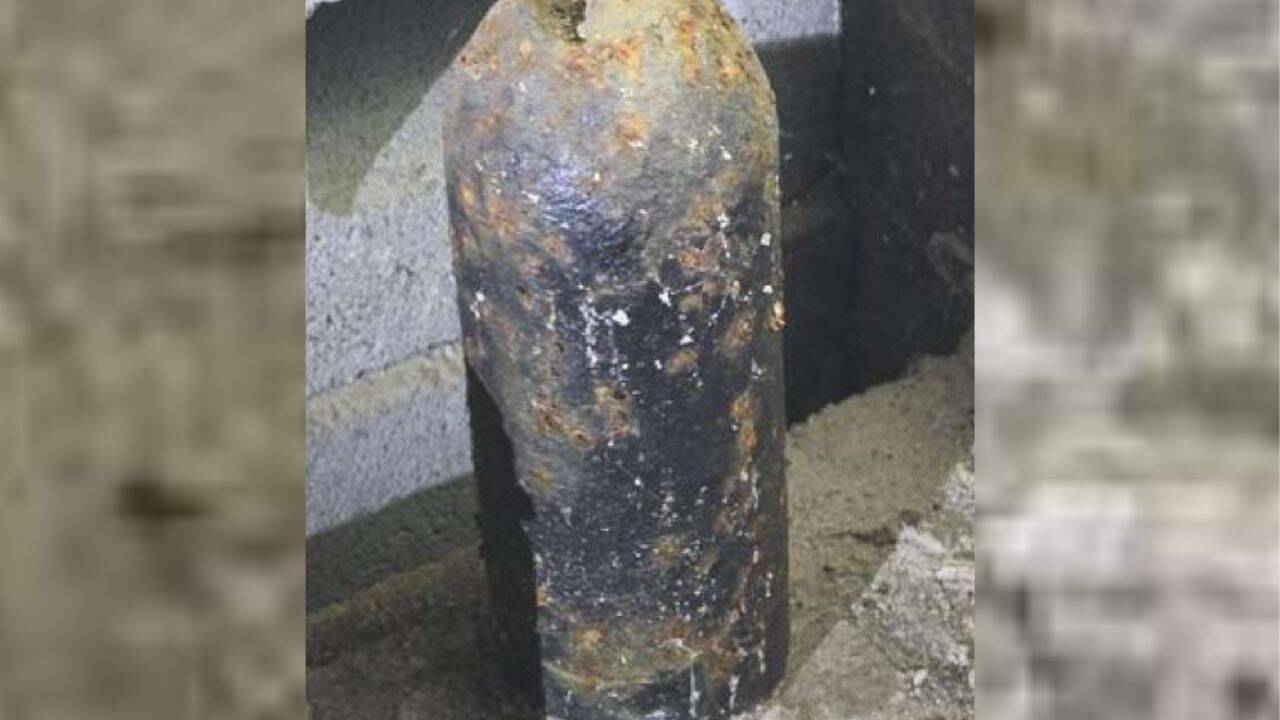
Buying an old house often brings predictable surprises like sagging joists, outdated wiring, or termite damage. Sometimes the floorboards conceal something far deadlier. When a couple moving into a newly purchased home uncovered a live Civil War artillery shell sitting quietly in their basement, local police called in military explosive ordnance disposal teams to secure the site. The incident highlights a widespread yet rarely discussed hazard confronting historic real estate across the United States. Decades of suburban development overlapping former battlefields, staging grounds, and historical encampments mean century-old munitions remain active threats hiding in plain sight.
The Volatile Physics of Century Old Munitions
Modern homeowners often assume that a bomb sitting idle for more than a century loses its power. The chemical reality is precisely the opposite. Black powder, the primary explosive compound used in nineteenth-century artillery projectiles, does not degrade over time if kept dry. Instead, the instability of these devices increases as their metallic casings age. Meanwhile, you can read related events here: Why Georgia's Historic Gubernatorial Win Is Not the Political Shift Observers Claim.
Unexploded ordnance, commonly referred to by military experts as UXO, becomes exponentially more treacherous over long periods. Corrosion degrades iron shells, while internal moisture can interact with chemical components to form highly sensitive explosive salts. A single accidental blow from a hammer during a basement renovation, or even the friction of moving a rusty iron cylinder across a concrete floor, can detonate the main charge.
+-------------------------------------------------------------------+
|               TYPICAL CIVIL WAR ARTILLERY SHELL HAZARD            |
+-------------------------------------------------------------------+
|                                                                   |
|   [FUSE MECHANISM]  --> High sensitivity to friction & impact     |
|          |                                                        |
|   [IRON CASING]     --> Corroded over 150+ years; structurally    |
|          |              unpredictable                             |
|   [MAIN CHARGE]     --> Black powder or early nitroglycerin mixtures; |
|                         remains chemically active indefinitely     |
|                                                                   |
+-------------------------------------------------------------------+
During the American Civil War, military foundries produced millions of explosive shells, spherical case shot, and rifled projectiles. Manufacturing standards were far from uniform. Fuses frequently failed to ignite, leaving unexploded rounds buried in soils or stored away in home armories, barn loft spaces, and cellars across conflict zones in Virginia, Pennsylvania, Tennessee, and Georgia. Over generations, these items were passed down as harmless heirlooms or simply forgotten in dark corners. To understand the full picture, check out the recent article by Al Jazeera.
How Historical Weapons End Up in Modern Homes
The discovery of live ordnance inside residential properties stems from two distinct historical pathways.
- War Relic Collection Trends: Following the war, veterans and relic hunters routinely collected battlefield debris as souvenirs. Inert inert practice rounds and live explosive shells looked virtually identical from the outside. Countless homeowners kept these items on fireplace mantels, in attics, or stored away in basements without realizing the danger sitting in their living quarters.
- Suburban Encroachment on Historic Battlefields: As urban sprawl expanded into historical combat corridors, earth-moving equipment regularly unearthed forgotten supply caches, field magazines, and abandoned artillery positions. In many cases, workers or previous owners brought interesting metal finds indoors rather than alerting authorities.
Identifying a live round requires specialized equipment and training. Civil War projectiles featured complex mechanical fuses, including timed paper fuses, friction igniters, and percussion caps designed to detonate upon impact. When time and rust bind these components together, distinguishing a inert display piece from a fully armed explosive projectile becomes impossible with the naked eye.
The Legal and Financial Blindspots for Buyers and Sellers
The discovery of hazardous materials on a residential property immediately creates legal and logistical complications. Standard real estate seller disclosure forms require homeowners to reveal known material defects and environmental hazards. However, few sellers suspect that an old metal object in the basement represents an active explosive risk.
| Risk Category | Standard Insurance Coverage | Reality for Homeowners |
|---|---|---|
| Explosion from UXO | Generally excluded under war/military clauses | Property damage and liability claims face heavy scrutiny |
| Bomb Squad Disposal Costs | Often covered by municipal services | Specialized site remediation can fall on the property owner |
| Property Valuation Impact | Minimal after clearance | Immediate delay in closing and temporary evacuation orders |
Home inspections rarely catch hidden military ordnance. Standard home inspectors evaluate structural integrity, plumbing, heating systems, and electrical panels. They are not trained to identify military munitions, nor are they required to inspect sealed storage chests, crawlspaces, or debris piles where such items are frequently stored.
When bomb squads respond to a home, they frequently seal off the surrounding neighborhood, implement structural evacuation protocols, and call in specialized Explosive Ordnance Disposal (EOD) units from nearby military installations. If the EOD unit determines the device is too unstable to transport, technicians must perform a controlled detonation on site, disrupting the entire community and putting nearby structures at risk.
Protocol for Uncovering Suspected Ordnance
If you discover a vintage shell, grenade, or unidentified metallic projectile during a home purchase, move, or renovation, standard safety protocol dictates immediate action:
- Do not touch, move, or strike the object. Mechanical agitation is the leading trigger for aging fuses.
- Evacuate the area immediately. Ensure all family members and pets leave the structure.
- Call emergency services. Dial 911 and explicitly report the discovery of suspected vintage ordnance.
- Keep others away. Inform neighbors and prevent anyone from entering the property until law enforcement and EOD personnel arrive.
The assumption that time renders military explosives harmless has cost lives. Until certified EOD technicians scan the item with specialized equipment, every vintage projectile must be treated as a live, lethal device waiting for the slightest disturbance to complete its mission.