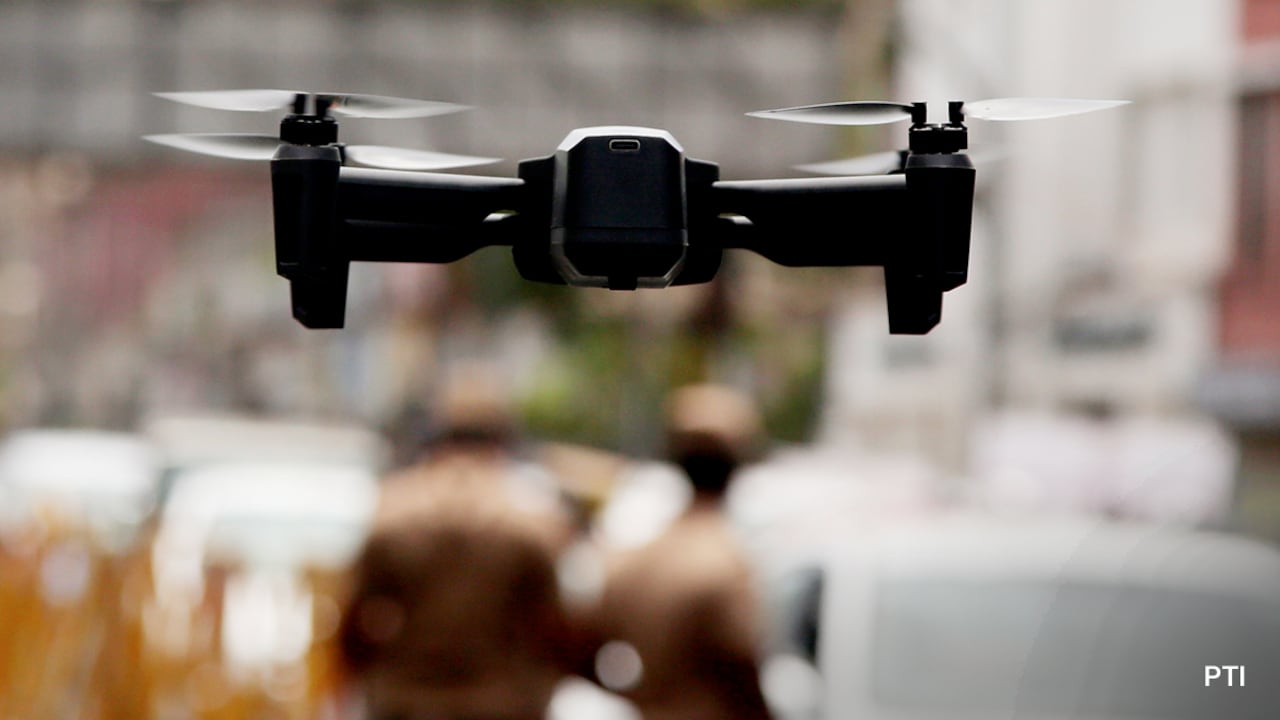
The promulgation of municipal mandates prohibiting the private possession, storage, and transport of unmanned aerial vehicles within Beijing municipal boundaries represents a structural shift in low-altitude airspace management. By transitioning from behavioral deterrence (flight restrictions) to asset elimination (possession bans), municipal authorities have redefined the regulatory framework for urban security. This analysis deconstructs the operational drivers, regulatory mechanics, and systemic implications of the policy.
The Regulatory Architecture of Urban Airspace Denial
Traditional municipal drone governance relies on geofencing, flight authorization protocols, and post-violation penalties. Beijing regulatory evolution bypassed incremental enforcement, establishing a zero-tolerance baseline across three operational vectors: Learn more on a connected issue: this related article.
- Spatial Prohibition: The entire administrative area of Beijing operates as a permanently restricted airspace for private operators. Recreational exemptions do not exist within the municipal perimeter.
- Material Interdiction: The regulation targets the physical supply chain and inventory at the consumer level. Possession, storage, sales, and rentals are outlawed.
- Transit Suppression: Bringing a drone across municipal borders via high-speed rail, highway, or aviation is classified as a transport violation, closing the perimeter against external introduction.
This tripartite structure eliminates the enforcement deficit inherent in monitoring transient airborne objects. By criminalizing the static presence of the hardware, regulatory bodies shift the enforcement burden from dynamic interception in flight to static asset verification.
The Economic and Operational Cost Function
The enforcement of a total possession ban generates friction across several economic and logistical variables. More journalism by BBC News highlights related perspectives on the subject.
For commercial enterprises, specialized operations—such as infrastructure inspection, emergency response, and geophysical surveying—require formal exemptions. The administrative overhead required to clear background checks, secure flight plans, and register equipment introduces a high latency cost into commercial workflows. Operators must navigate layered approvals through public security and aviation authorities, turning routine commercial deployment into an exception-based administrative process.
For consumer hardware owners, the policy imposes an absolute depreciation shock. The elimination of the secondary market within city limits, coupled with mandatory disposal or relocation protocols, forces asset liquidation outside municipal boundaries. This creates a sharp divergence between national manufacturing policies, which position domestic firms as global leaders in consumer drone technology, and municipal security policies that treat the same hardware as a vector of urban vulnerability.
Systemic Vulnerabilities and Mitigation Mechanics
The policy response is driven by the asymmetry between low-altitude maneuverability and conventional urban defense. Dense metropolitan environments present distinct surveillance and interception challenges:
- Radar Clutter: Low-radar cross-section micro-drones blend into the background noise of urban architecture, making early radar detection unreliable.
- Kinetic Interception Risks: Deploying electronic countermeasures or kinetic interceptors in high-density population zones introduces collateral hazards that outweigh the interception benefit.
- Reaction Time Deficit: The time window between the launch of a low-altitude civilian drone and its arrival at a sensitive zone is measured in seconds, neutralizing human-in-the-loop decision loops.
By restricting possession at the source, authorities neutralize the threat vector prior to launch. The policy accepts the cost of alienating hobbyists and restricting low-tier commercial integration to eliminate the tail-risk of unauthorized overflights above critical infrastructure or political centers.
Strategic Outlook
The Beijing mandate establishes a precedent for high-density urban governance where national security supersedes consumer utility in low-altitude airspace. As urban density increases and autonomous navigation technologies mature, municipalities facing similar security pressures will evaluate whether regulatory compliance can be managed through digital tracking or if physical asset prohibition remains the sole reliable safeguard against asymmetric airborne risks.
This video provides an overview of the regulatory changes and security contexts surrounding the implementation of the drone possession ban in Beijing.


