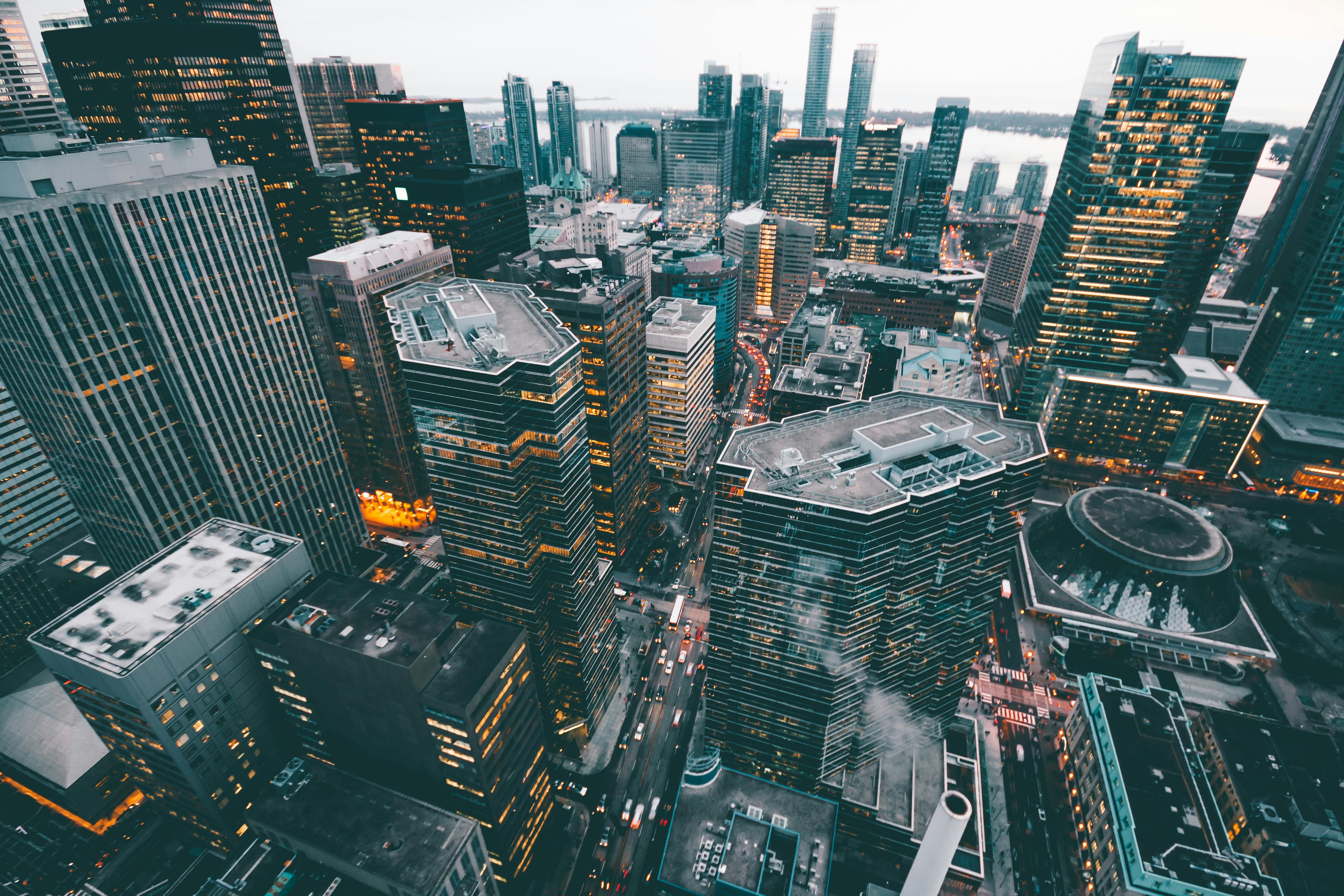
Rapid urbanization across developing economies follows predictable structural vectors rather than random demographic shifts. Recent urban growth metrics place Ghaziabad at the forefront of global expansion rates, with secondary commercial nodes such as Surat, Patna, and Rajkot tracking closely behind. Analyzing this acceleration requires stripping away generalized media narratives to examine the underlying economic, geographic, and administrative mechanics driving urban densification.
The Core Drivers of Metropolitan Spillover
Urban growth rates are primarily a function of spatial displacement and economic agglomeration. Primary metropolitan hubs face severe land scarcity and prohibitive real estate pricing, which creates an outward pressure gradient. Ghaziabad illustrates this dynamic clearly. Positioned adjacent to the national capital region of Delhi, the city functions as a primary economic relief valve.
The primary catalysts for this expansion operate across three distinct vectors:
- Infrastructure Connectivity: High-speed transit corridors, arterial highway expansions, and regional rail transit systems reduce friction costs for daily commuters. When travel times between peripheral districts and primary employment centers drop below critical thresholds, residential migration accelerates.
- Capital Accessibility: Commercial real estate development shifts toward tier-two and tier-three nodes as land acquisition costs in tier-one centers exceed yield thresholds for developers. This shifts capital investment into secondary zones, stimulating construction and secondary service economies.
- Cost-of-Living Arbitrage: Households maximize disposable income by trading peripheral transit time for lower residential square-foot costs, driving sustained population inflows.
Regional Variations and Economic Typologies
While Delhi-NCR satellites like Ghaziabad and Faridabad expand due to direct capital and labor spillovers from a primary megacity, secondary cities in other regions grow via distinct economic specialization.
Surat’s trajectory highlights industrial clustering and export-driven manufacturing, particularly within textiles and diamond processing. Its population growth correlates with localized employment generation rather than purely residential suburbanization. Conversely, administrative hubs like Patna and regional trading centers like Rajkot expand through the centralization of state-level services, educational infrastructure, and localized agricultural-industrial supply chains.
These divergent models prove that rapid growth is not monolithic. Urban planners must distinguish between commuter-dependent bedroom communities and self-sustaining industrial nodes when projecting long-term municipal strain.
Infrastructure Deficits and the Municipal Cost Function
Rapid demographic expansion imposes severe externalities on local municipal governance. The primary structural vulnerability of fast-growing cities lies in the temporal lag between population influx and infrastructural capacity scaling.
When annual population growth exceeds baseline municipal revenue generation, cities face systemic degradation across three critical thresholds:
- Water Table and Drainage Stress: Rapid construction hardens soil surfaces, disrupting natural aquifer recharge and straining municipal water supply networks.
- Solid Waste Management: Waste generation scales linearly with population, but collection and processing infrastructure often lag by years, creating localized environmental bottlenecks.
- Transit Congestion: Road infrastructure designed for mid-sized towns quickly saturates under the weight of exponential vehicle registration increases, necessitating heavy capital expenditure for mass transit retrofits.
Strategic Forecasting for Urban Management
Managing accelerated urban expansion requires moving away from reactive zoning policies toward predictive infrastructure financing. Municipal authorities must decouple land-use planning from short-term political cycles, establishing autonomous urban development authorities capable of capturing land value increments to fund trunk infrastructure ahead of private development. Investors and policymakers should evaluate urban resilience not by gross population velocity, but by the ratio of capital expenditure dedicated to utility infrastructure versus speculative real estate.
