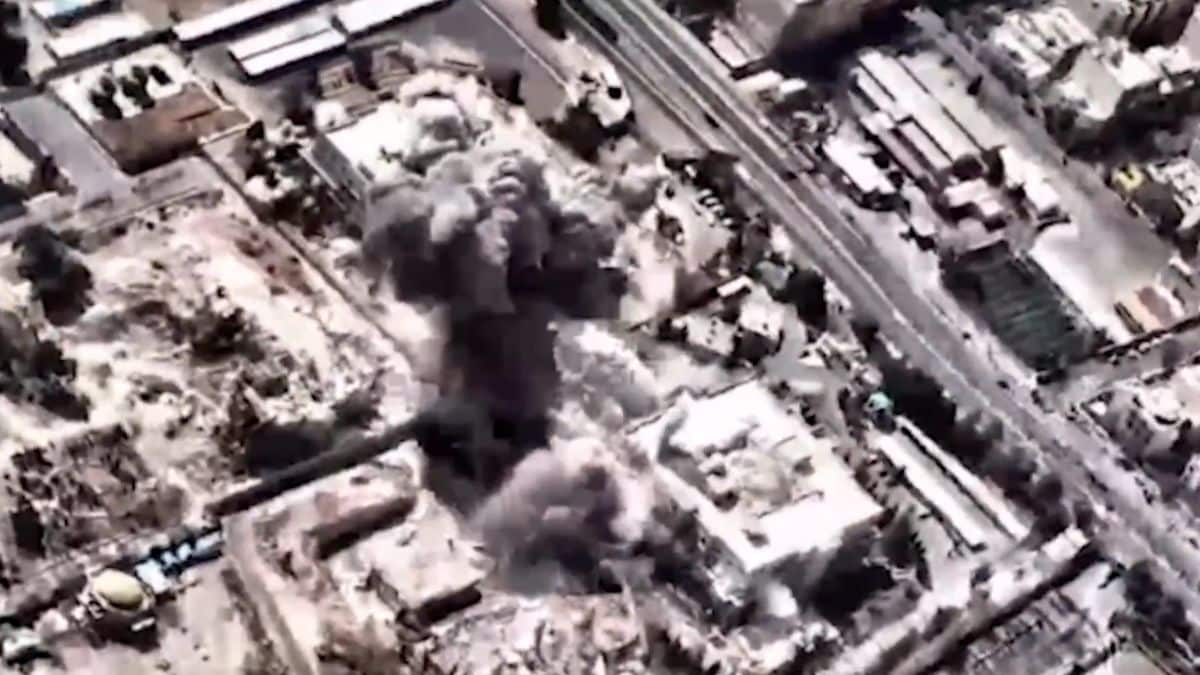
The phrase was "cut off the snake's head." That's how US officials described the precision strike that leveled a primary Islamic Revolutionary Guard Corps (IRGC) headquarters. It wasn't just another exchange of fire in a long-standing shadow war. This was a direct hit on the nervous system of Iran’s regional operations. For years, the strategy was to swat at the flies—the small proxy groups—rather than the hornet's nest itself. That changed overnight.
If you've been following the tension in the Middle East, you know the cycle. A proxy group attacks a US base, the US responds with a targeted strike on a munitions depot, and everyone retreats to their corners. This time, the Pentagon skipped the middleman. By targeting a command center used by the IRGC, the US sent a message that the immunity usually granted to Iranian officials on foreign soil has expired. It's a massive gamble.
The Strategy Behind Hitting the Command Center
Military experts have argued for a long time that as long as the IRGC leadership feels safe, they'll keep funding instability. They've operated with a layer of deniability that's frustrated Washington for decades. You see, the IRGC doesn't just sit in Tehran. They're embedded in Damascus, Baghdad, and beyond. They provide the logistics, the intelligence, and the high-tech drones that make these smaller militias dangerous.
When the US says they destroyed the headquarters, they aren't just talking about bricks and mortar. They're talking about the loss of encrypted communication gear, localized battle plans, and, most importantly, the senior personnel who coordinate between different groups. It’s about creating a leadership vacuum. Without the "head," the "body"—the various militias in the region—becomes uncoordinated and prone to mistakes.
Why This Isn't Just Another Air Strike
You've probably seen headlines about strikes in Syria or Iraq before. Usually, those are "proportional" responses. They're designed to hurt but not to escalate. This strike felt different because of the target's nature. A headquarters is where the brains live.
Most people get this wrong. They think a strike like this is about starting a war. In reality, it’s often about trying to prevent one by establishing a "red line" that actually means something. If you keep drawing lines in the sand and letting people cross them, eventually the lines don't matter. By hitting the IRGC directly, the US is trying to restore a sense of fear. It’s a return to "deterrence by punishment."
The Risk of Regional Contagion
Let’s be real. You can’t blow up a major power’s regional HQ and expect them to just take it. Iran has a massive toolkit for retaliation. They can ramp up cyberattacks, harass shipping in the Strait of Hormuz, or activate sleeper cells. The danger here is that both sides might miscalculate how much the other is willing to endure.
History shows us that these situations rarely stay contained. In 2020, after the Soleimani strike, the world held its breath. We saw a massive ballistic missile response. This current situation carries similar weight. The difference now is the sheer number of active fronts. You have the Red Sea, Lebanon, and Gaza all simmering at once. Adding a direct US-Iran confrontation to that mix is like throwing gasoline on a forest fire.
Logistics and Intelligence Wins
The success of a strike like this depends entirely on "actionable intelligence." You don't just guess where a high-level meeting is happening. This suggests a massive breach in Iranian security. Someone talked. Or someone’s phone was compromised. For the US to be confident enough to pull the trigger, they needed to know exactly who was in that building and what they were doing.
This creates a secondary effect: paranoia. Now, every IRGC commander in the field is looking over their shoulder. They’re wondering if their driver is a mole or if their satellite phone is a beacon for a Hellfire missile. That psychological pressure is often more effective than the explosives themselves. It slows down decision-making. It makes them hesitate. In war, hesitation is fatal.
The Shift in US Foreign Policy
For a while, the vibe in Washington was "pivot to Asia." The goal was to leave the Middle East behind and focus on China. But the Middle East has a way of pulling you back in. This strike signals that the US isn't ready to cede the region to Iranian influence just yet. It’s a messy, violent realization that regional stability sometimes requires a very heavy hand.
Don't expect this to be a one-off. If the IRGC tries to rebuild or retaliates through a proxy, the precedent has been set. The US has shown it's willing to go after the architects, not just the builders. It's a high-stakes game of chicken where the stakes are measured in global oil prices and regional lives.
Keep an eye on the diplomatic backchannels. Usually, after a strike this big, there's a flurry of messages sent through neutral parties like Oman or Switzerland. Both sides want to show strength, but neither side truly wants a total war that would wreck their economies. The next few weeks will tell us if this "head of the snake" strategy actually works or if it just creates a more headless, unpredictable monster.
The immediate next step for anyone following this is to monitor the movement of US carrier groups and Iranian naval assets. These physical movements tell you way more than any press release ever will. Watch the Persian Gulf. If the tankers keep moving, the situation is managed. If they stop, we're in trouble.