Headline reports that the United States has issued fresh Iran-related sanctions on the Treasury website capture a surface event while obscuring the real economic mechanism: financial coercion operates through compliance costs, correspondent banking friction, and intermediary rerouting rather than the mere existence of a designation. To evaluate any new round of Treasury sanctions accurately, analysts need a structured framework separating designation mechanics (who is listed and under what legal authority), transmission channels (how restrictions propagate through payment rails, shipping, and procurement), and evasion adaptation (how targeted networks restructure corporate shells, barter chains, and regional hubs). Because no underlying text or specific designation list was supplied beyond the headline reference, this analysis examines the structural mechanics of US Treasury sanctions on Iran rather than claiming unverified details about an unspecified announcement.
Understanding how these measures work requires distinguishing between known structural facts about US sanctions architecture and educated hypotheses regarding how a specific new designation wave alters behavior. Known facts include the statutory authorities administered by the Office of Foreign Assets Control (OFAC), the extraterritorial reach created by dollar clearing and secondary sanctions risk, and the historical pattern of evasion networks adapting through front companies and alternative settlement routes. Educated hypotheses involve predicting which specific commodity flows, banking corridors, or third-country intermediaries face immediate disruption from an unexamined listing until official OFAC notices and designations are reviewed.
The Three Pillars of Treasury Sanctions Architecture
A rigorous evaluation of US sanctions starts with the three mechanisms that turn a legal notice into real-world economic friction. Treating a Treasury update as a binary "on or off" switch misses how enforcement actually bites across global supply chains.
Primary Restrictions and Asset Freezes
At the core of OFAC enforcement are blocking sanctions—most visibly placements on the Specially Designated Nationals and Blocked Persons (SDN) list—alongside sectoral or activity-based prohibitions. When a person, entity, vessel, or aircraft is blocked, property and interests in property within US jurisdiction or in the possession or control of US persons are generally frozen, and US persons are broadly prohibited from dealing with them unless authorized or exempt.
The operational impact of a blocking order depends heavily on ownership and control rules, including OFAC's 50 Percent Rule, under which an entity owned 50 percent or more in the aggregate by one or more blocked persons is itself considered blocked even if not individually named on the SDN list. In practice, this creates an immediate information burden for banks, insurers, and exporters: compliance teams cannot rely solely on name screening against a static list; they must map beneficial ownership across layered holding structures.
Secondary Sanctions and Foreign Intermediary Risk
Domestic prohibitions bind US persons and US-nexus transactions, whereas secondary sanctions project pressure outward by threatening non-US foreign financial institutions or commercial actors with loss of access to the US financial system or other restrictions if they engage in specified significant transactions with sanctioned sectors or designated parties. Even when a foreign bank clears transactions in euros, dirhams, yuan, or local currency rather than US dollars, exposure to US correspondent banks, dollar liquidity facilities, or dollar-denominated trade finance creates strong incentives to de-risk.
This dynamic produces over-compliance—often referred to in policy literature as de-risking. Commercial banks frequently exit entire corridors, client segments, or jurisdictions that sit anywhere near high-risk trade rather than bear the audit, legal, and reputational cost of a false negative. From an analytical standpoint, over-compliance is a feature of how deterrence scales, though it also pushes residual trade into less transparent channels.
Compliance Costs as a Tax on Trade
Sanctions function economically as a transaction cost shock and a risk premium layered onto every step of a trade cycle. Each compliance check—know-your-customer screening, vessel AIS tracking verification, bill-of-lading inspection, trade finance documentation, and legal sign-off—adds time, working capital lockup, and advisory expense.
Consider a hypothetical mid-sized petrochemical trader in a third country considering a shipment linked to an Iranian supplier. Even if the specific cargo falls into a gray zone or relies on non-dollar settlement, the trader must weigh potential correspondent bank account closures, port or insurer refusals, and heightened due diligence expenses. When compliance and legal overhead exceed the expected net margin of the trade, legitimate or borderline intermediaries step back, leaving higher-risk operators who price that tail risk into wider spreads.
Cause-and-Effect Chains Headline Coverage Often Misses
Surface-level coverage frequently stops at "who was sanctioned" and assumes an immediate, proportional collapse in the targeted activity. Real-world causal chains are nonlinear, lagged, and shaped by market structure.
Why Announcements Rarely Equal Instantaneous Halts
A Treasury website update changes legal obligations and risk perceptions immediately, but physical and financial flows have inertia. Contracts already in transit, letters of credit opened earlier, multi-leg maritime voyages, and pre-positioned inventories do not vanish overnight. Market participants often pause new commitments first while legal counsel reviews exact designation language, license exceptions, and effective dates.
Furthermore, enforcement is sequential. Initial designations signal regulatory priority and expand the evidentiary graph of linked entities, while subsequent enforcement actions, advisories, or companion designations target the networks that adapt around the first wave. Measuring effectiveness solely by day-one headline volume understates both the lag in physical rerouting and the compounding effect of cumulative listings.
Rerouting Through Intermediaries and Settlement Shifts
When direct banking or shipping routes face friction, trade rarely disappears entirely; instead, it reroutes through jurisdictions with different risk tolerances, regulatory enforcement intensity, or bilateral trade arrangements. Networks routinely adjust along several operational dimensions:
- Corporate layering: Establishing holding companies, trading houses, or joint ventures in third countries to obscure origin, destination, or beneficial ownership.
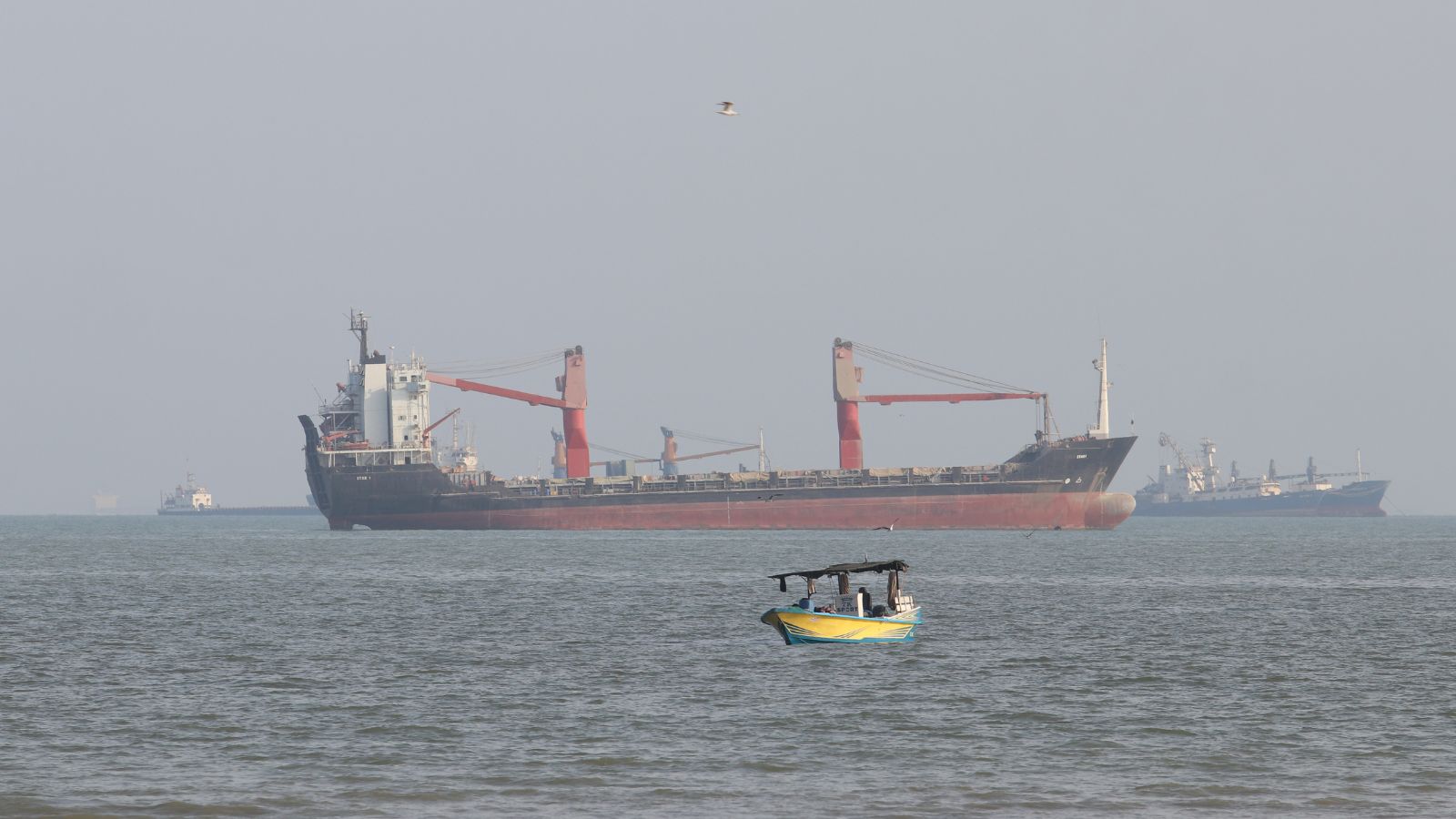
- Maritime and logistics adjustments: Altering ship-to-ship transfer locations, rotating registries or flags, spoofing or disabling location transponders, and splitting cargo parcels across smaller vessels.
- Payment and settlement substitution: Shifting away from standard correspondent banking toward bilateral clearing arrangements, hawala or informal value transfer networks, cash settlement, barter/goods-for-goods structures, or digital asset rails where liquidity and off-ramps allow.
- Product reclassifications: Modifying blend specifications, intermediate processing stages, or customs descriptions to complicate origin and end-use verification.
Each adaptation solves one constraint while introducing another. Using smaller vessels or longer routing increases freight cost per unit; relying on informal or alternative settlement reduces transparency and increases counterparty default risk; adding shell layers increases administrative overhead and leaves more documentary breadcrumbs for investigators over time.
Price Discounts, Middlemen, and Rent Distribution
A critical economic consequence missed in simplistic accounts is how the sanctions discount is distributed. When a sanctioned producer faces restricted market access, buyers who are willing and able to take delivery—or intermediaries positioned between the producer and end refiners or manufacturers—can demand price discounts relative to benchmark global prices.
Rather than eliminating economic surplus, sanctions often redistribute rents from the sanctioned seller to middlemen, specialized shippers, and discount-capturing buyers. For the targeted economy, part of the export value is absorbed by wider price discounts, higher logistics costs, and intermediary margins; for global markets, displaced supply may be partially offset by alternative suppliers or discounted flows reaching price-sensitive buyers, shifting trade shares rather than erasing global physical balance.
Step-by-Step Operational Assessment for Analysts and Risk Teams
When a new Iran-related sanctions notice appears on the Treasury website, practitioners responsible for trade compliance, credit risk, market intelligence, or strategic planning can evaluate its practical bite through a disciplined five-step workflow.
- Isolate the exact legal instrument and target class. Determine whether the action adds names to the SDN list, updates sectoral or secondary sanctions scope, issues general licenses, or publishes an advisory. Identify whether targets are financial institutions, shipping/logistics operators, energy/petrochemical entities, procurement networks, or individuals.
- Map the network graph beyond named entities. Trace parent-subsidiary links under the 50 Percent Rule, shared addresses or directors, associated vessels or aircraft, and recurring counterparties. A single designated trading firm often sits inside a web of sister companies handling billing, chartering, and warehousing.
- Audit exposure across payment, cargo, and ownership touchpoints. Check internal ledgers, trade finance workflows, customer/vendor master files, and logistics partners for direct or indirect links—including third-country suppliers whose inputs may originate from or transit through affected chains.
- Assess bottleneck sensitivity rather than headline count. Ten listings targeting a critical clearing node, specialized maritime service, or key procurement broker can generate far more operational friction than dozens of shell entities that were already dormant or easily replaced.
- Monitor second-order signals over 30 to 90 days. Track changes in shipping routes, intermediary pricing spreads, compliance inquiries from correspondent banks, and follow-on enforcement actions to separate temporary noise from structural rerouting.
Limitations and Blind Spots of Sanctions Frameworks
No sanctions regime is a frictionless or omnipotent instrument. Analysts who treat sanctions as a complete solution—or conversely assume they have zero effect because evasion occurs—both misread the evidence.
First, attribution and visibility limits constrain enforcement. Beneficial ownership registries vary widely across jurisdictions, nominee arrangements can mask control, and non-dollar or off-exchange settlement leaves thinner audit trails for regulators and private compliance teams alike.
Second, collateral friction affects legitimate activity. Humanitarian channels, medical or agricultural trade, and ordinary commercial transactions in neighboring countries frequently encounter delays or heightened scrutiny because compliance systems flag geographic or sectoral keywords defensively.
Third, diminishing marginal returns and adaptation cycles shape long-run outcomes. Over extended periods, targeted networks institutionalize workarounds, accumulate experience with evasion playbooks, and concentrate trade in jurisdictions less integrated with US financial supervision. Sanctions can raise costs, constrain scale, and isolate networks from mainstream finance, but they rarely operate in a vacuum without economic trade-offs and adaptive counter-moves.
Strategic Play for Decision-Makers
Build an entity-and-corridor exposure map within 48 hours of any Treasury sanctions update—linking every named target and 50-percent-owned affiliate to your actual payment rails, logistics vendors, and third-party counterparties—and pair it with a standing escalation threshold that freezes high-risk transactions pending ownership verification rather than relying on manual name matches alone.