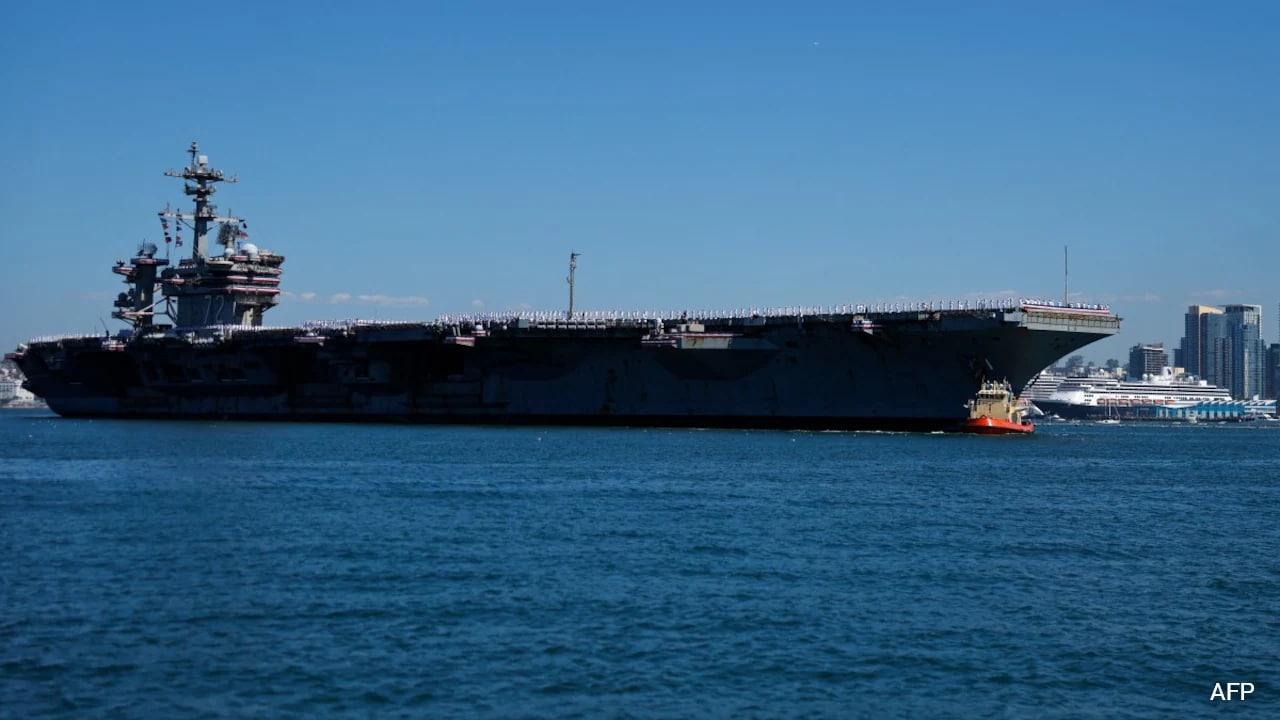
The USS Abraham Lincoln aircraft carrier group returned to its home port after an extended and punishing deployment in the Middle East, concluding a rotation defined by relentless operational tempo, constant missile threats, and unprecedented strain on both sailors and hardware. For months, the Nimitz-class vessel and its embarked air wing operated in the crucible of the U.S. Central Command area of operations, serving as a floating fortress amidst escalating regional hostilities involving Houthi forces and broader Iranian-backed proxy networks.
When a carrier strike group spends extra weeks at sea beyond its scheduled return, it is rarely due to routine schedule adjustments. It points directly to a systemic operational deficit in naval availability. The Navy is simply trying to cover too much ocean with too few hulls, forcing crews to absorb the cost of political hesitation and global strategic overstretch.
The Weight of Continuous Combat Operations
Operating an aircraft carrier in a contested zone is entirely different from conducting routine patrols or participating in allied exercises. During this deployment, the Lincoln and its destroyer escorts faced a constant security calculus. Incoming anti-ship ballistic missiles and one-way attack drones transformed the Red Sea and surrounding waterways into active combat corridors reminiscent of mid-20th-century naval warfare, though fought at supersonic speeds with automated defense systems.
Sailors stood watch in sweltering conditions for months on end. Maintenance cycles were compressed. Flight deck operations ran at a frantic pace to maintain round-the-clock air dominance and defensive combat patrols. Every catapult launch and arrested landing represented mechanical wear on a ship that has already logged decades of heavy service.
When a vessel endures this level of sustained stress, the return to home port is not a moment of quiet celebration. It is an emergency triage period. Engineering spaces require deep overhauls, electronics suites need extensive diagnostics, and airframes demand comprehensive structural inspections to identify micro-fractures caused by high-stress carrier landings.
The Strategic Strain on Force Structure
The Lincoln's delayed return highlights a structural vulnerability that naval analysts have warned about for years. The math of the fleet does not add up. With a statutory requirement to maintain a certain number of strike groups deployed globally at any given time, the Navy relies on a rotational conveyor belt that is perpetually running behind schedule.
When one carrier's maintenance period slips by a few weeks or months due to shipyard backlogs, the carrier slated to relieve it must either extend its own deployment or rush through its pre-deployment training phase. The Lincoln wound up stuck in the middle of this operational bottleneck.
Extending deployments wears down more than just steel. It burns out personnel. Retention rates in critical technical ratings—nuclear operators, aviation ordnancemen, and electronic technicians—fluctuate wildly when sea-to-shore ratios become severely unbalanced. A sailor who expected to spend six months away from family ends up doing eight or nine, missing births, graduations, and basic stability. Over time, experienced professionals walk away from the service, taking institutional knowledge with them.
Rethinking Presence in a Drone Era
The deployment also forced a hard look at the economics of carrier strike group operations against asymmetric threats. Launching multimillion-dollar interceptor missiles to shoot down low-cost drones is a losing fiscal equation over the long haul. While the Lincoln's air wing and escort ships performed exceptionally well under fire, the strategic utility of parking a hundred-thousand-ton nuclear-powered carrier within range of cheap coastal projectiles has sparked intense debate inside defense circles.
Surface action groups and land-based air power can absorb some of these missions, yet the psychological and diplomatic signaling power of an aircraft carrier remains unmatched. Policymakers want a carrier visible in the region as a deterrent, regardless of the wear and tear inflicted on the crew and the hull.
As the Lincoln's crew steps off the brow and into the arms of waiting families, the shipyards of the Pacific and Atlantic are already preparing for the next iteration of this cycle. The pierside quiet will be brief. The next group is already warming up its turbines, stepping into a maritime environment that grows more demanding by the month, with a fleet that has zero room for error left to spare.