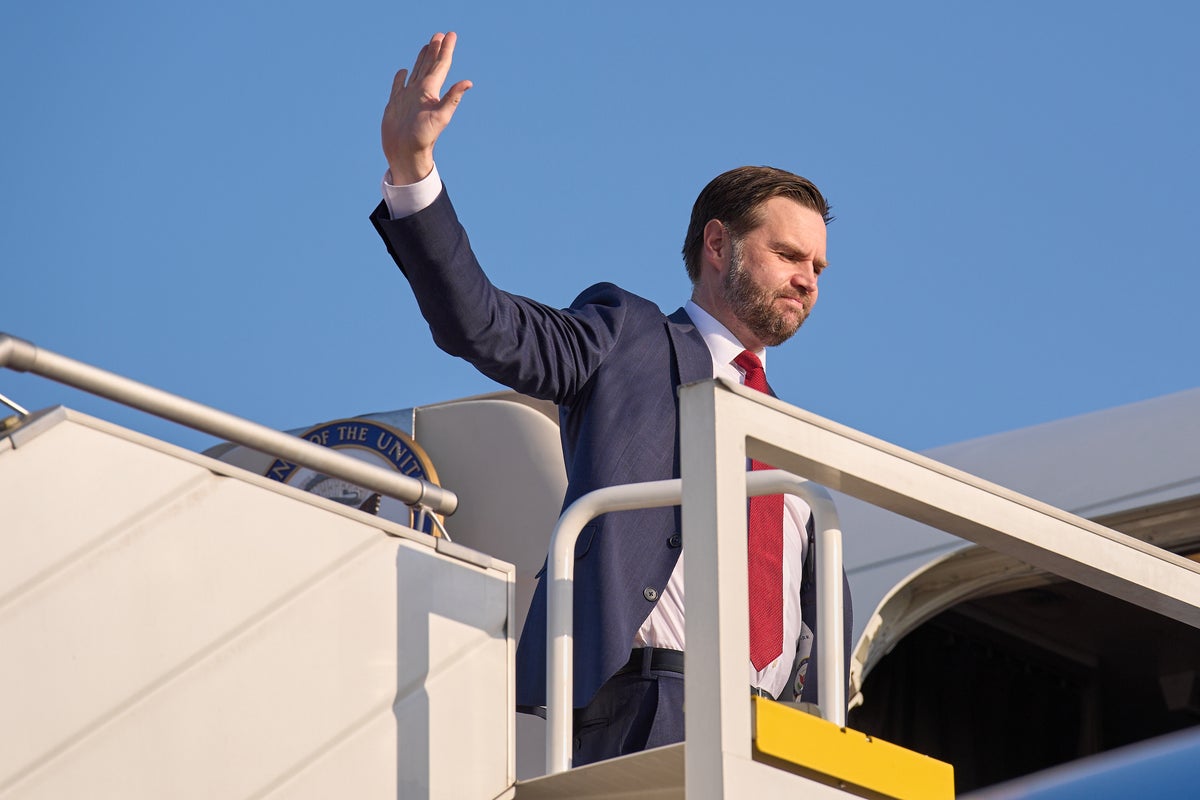
The media is obsessed with the travel schedule. They see a vice presidential candidate staying on U.S. soil and scream "flip-flop" or "sidelined." They look at the absence of a plane ticket and conclude there is a lack of influence. They are fundamentally wrong. In the theater of high-stakes geopolitics, the most dangerous person in the room is often the one who isn't there.
The "lazy consensus" suggests that if J.D. Vance isn't physically landing in a foreign capital to "lead talks" with Iran or its intermediaries, he’s been demoted to a domestic cheerleader. This logic belongs in the 1990s. It ignores the brutal reality of how power actually functions in a digital-first, decentralized administration. Physical presence is often a sign of a subordinate role—a glorified messenger sent to handle the optics while the real architects stay back to pull the levers of actual consequence.
The Geography of Power is Obsolete
Diplomacy isn't about frequent flyer miles. The competitor's narrative treats international relations like a door-to-door sales job. If you aren't on the porch, you isn't making the sale.
But look at the mechanics of the "Trump-Vance" approach to the Middle East. It isn't built on the traditional State Department model of endless summits and beige conference rooms. It's built on leverage—specifically economic and kinetic leverage. You don't need to be in Doha or Muscat to tighten the screws on oil exports or to coordinate with regional allies on intelligence sharing.
By staying home, Vance avoids the "hostage to the host" trap. Every time a high-ranking official lands in a foreign country, they are immediately constrained by the local security apparatus, the local press, and the local agenda. They become a prop in someone else’s play. Staying in D.C. or on the campaign trail allows Vance to maintain a 30,000-foot view of the board without getting bogged down in the ceremonial fluff that eats up 90% of a diplomat's time.
The Proxy Negotiation Fallacy
The press keeps asking if Vance is "leading" the talks. This is the wrong question. In a world of asymmetrical warfare and proxy conflicts, "leading" a talk often means being the primary target for manipulation.
I’ve seen political operations blow their entire strategic advantage because they sent their top talent into the lion's den too early. When you send your Vice President to the table, you’ve hit the ceiling of your escalation ladder. You have nowhere left to go but the President himself. By keeping Vance in reserve, the administration maintains "strategic ambiguity"—a concept the media clearly finds uncomfortable because it doesn't fit into a tidy 800-word "who's up, who's down" column.
Why the "Flip-Flop" Narrative is a Smokescreen
The "flip-flop" reported by Trump officials isn't a sign of confusion; it’s a sign of a functional internal firewall. If everyone in an administration is saying the exact same thing about a sensitive diplomatic channel, they are either lying or they are being monitored.
Discrepancies in whether a VP is "leading" or "staying home" serve a specific purpose: they keep the adversary guessing. If Tehran doesn't know who has the final say on the deal, they can't effectively lobby or pressure a single point of failure. It is basic Game Theory.
- Scenario: You tell the press Vance is leading. The Iranians prep their talking points for Vance.
- Pivot: You keep Vance home and send a mid-level envoy with a hardline message.
- Result: The Iranian negotiators are off-balance. They prepped for a political figure and got a technical hatchet man instead.
The Real Cost of "Being There"
Traditionalists argue that "face time" builds trust. That is a myth in the context of the Islamic Republic. We are talking about a regime that views Western diplomatic norms as weaknesses to be exploited.
Sending a high-profile figure like Vance to "lead" talks provides the adversary with a massive propaganda win before a single word is even spoken. It signals that the U.S. is desperate for a deal. It signals that we are willing to put our second-highest office holder on a plane just to get them to listen.
True authority is the ability to say "I’m not coming." It is the ability to communicate that the terms are on the table, and we don't need a photo op to verify them. This is the "Boardroom Logic" that the political class hates because it bypasses their entire ecosystem of consultants and protocol experts.
The Vance Specialty: Domestic Leverage as Foreign Policy
Vance’s primary value isn't his knowledge of Persian history; it’s his ability to sell a foreign policy shift to the American base.
Foreign policy is only sustainable if it has domestic buy-in. The biggest failure of the last thirty years of Middle Eastern intervention wasn't a lack of "talks"—it was the fact that the people in Ohio, Pennsylvania, and Michigan felt the policy had nothing to do with them.
Vance staying home to link the Iran situation to American energy independence and domestic manufacturing is a far more potent "diplomatic" move than sitting in a palace in Switzerland. If he can convince the American public that a hardline stance on Iran directly leads to lower gas prices and more jobs in the Rust Belt, he has created more leverage than any diplomat ever could.
Stop Asking "Where is He?" and Start Asking "What is Moving?"
The media focuses on the person. The strategist focuses on the movement.
While the "insiders" argue about Vance's travel itinerary, they are missing the shifts in the underlying data. Look at the sanctions enforcement. Look at the naval deployments in the Red Sea. Look at the back-channel communications with the Abraham Accords signatories.
If those things are moving in a cohesive direction, it doesn't matter if J.D. Vance is in a basement in Cincinnati or a bunker in the West Wing. In fact, if the machinery of state is grinding forward effectively while the figurehead remains "home," it proves the administration is more disciplined than its predecessors, not less.
The obsession with "who is leading the talks" assumes that talks are the goal. They aren't. Outcomes are the goal. Talks are just the noise we make while we try to achieve them.
The Downside of the Disruption
There is a risk to this approach, and it’s one the administration must own: the risk of a vacuum. When you don't fill the space with a clear, singular messenger, the "lazy consensus" fills it for you with narratives of chaos.
But chaos is often the preferred environment for those who want to dismantle a failing status quo. You cannot "disrupt" the foreign policy establishment by following their handbook. You cannot change the trajectory of a forty-year cold war by sending the same types of people to the same types of meetings to say the same types of things.
If the press is confused, the enemy is likely more so. In the world of high-stakes negotiation, clarity is a gift you give your friends. Confusion is a weapon you use against your enemies.
J.D. Vance isn't staying home because he’s sidelined. He’s staying home because the most effective way to win the game is to refuse to play by the opponent's rules. The plane isn't leaving the tarmac because the real work is already happening right where he is.
Stop looking for the diplomat. Watch the board.