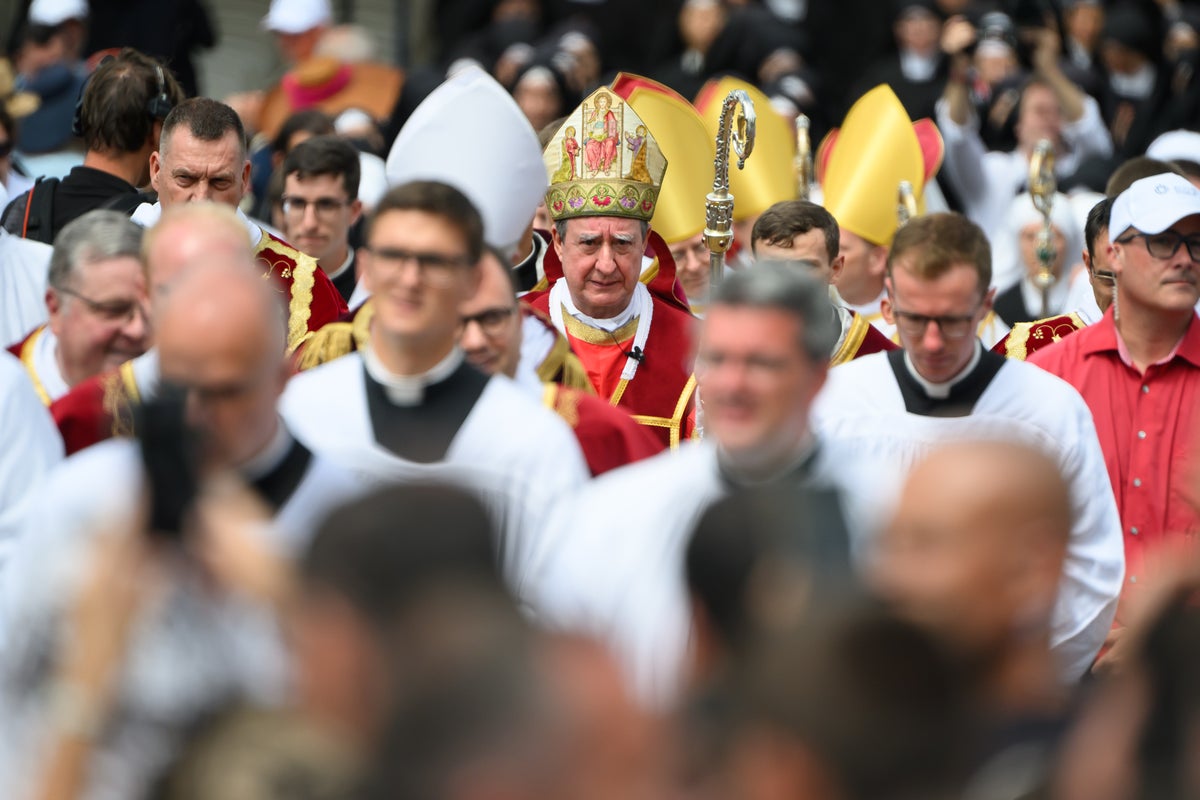
The media is calling it a devastating blow. They are painting the Vatican's July 2 decree as the final hammer coming down on a rebellious, right-wing fringe. They look at the formal excommunication of six traditionalist bishops in Écône, Switzerland, and see an institution reasserting its absolute authority.
They are entirely wrong.
Cardinal Víctor Manuel Fernández and Pope Leo XIV did not crush a rebellion this week. They codified their own institutional irrelevance to a rapidly growing segment of their population. By weaponizing latae sententiae excommunication against the Society of Saint Pius X (SSPX) for ordaining four bishops without a papal mandate, the Holy See played right into the society’s hands.
This is not a story about rogue priests breaking away from the mother church. This is about a bankrupt central bureaucracy trying to evict a tenant that already built a better house across the street.
The Canonical Myth of the Smothering Blow
Mainstream journalists love the word "excommunication" because it sounds medieval, absolute, and terminal. They assume that when Rome pulls the plug on sacramental validity—declaring SSPX confessions and marriages invalid overnight—the faithful will panic and run back to their local diocesan parishes.
I have spent years analyzing the internal mechanics of traditionalist movements. This bureaucratic shock-and-awe strategy never works. It failed in 1988 when Archbishop Marcel Lefebvre first defied John Paul II, and it will fail spectacularily now under Pope Leo XIV.
Traditionalist Catholics do not operate under the same psychological framework as corporate office workers. When Rome tells an SSPX adherent that their priest is illicit, the adherent does not see a valid penalty. They see an occupying power trying to cut off the supply lines of the true faith. To the 600,000 laypeople globally who frequent these chapels, the Vatican's decree is not a correction; it is a validation of their entire worldview.
The Currency of Necessity
The fundamental logic of the SSPX is built on a single canonical loophole: the "state of necessity." Under Canon 1323 of the Code of Canon Law, a person who violates a law out of a perceived grave state of necessity is exempt from automatic penalties.
By issuing a blanket excommunication that extends not just to the bishops who performed the consecrations, but threatening every layperson who "formally adheres" to the society, the Dicastery for the Doctrine of the Faith (DDF) just handed the SSPX the ultimate rhetorical weapon.
Superior General Father Davide Pagliarani immediately capitalized on this, framing the Vatican's modernizing trajectory since Vatican II as a direct threat to the deposit of faith. When the Vatican calls the SSPX "rebels," the society responds with: "God now asks us to be treated as rebels."
Imagine a burning building where the security guard tells you it is against corporate policy to use the fire escape. You use the fire escape anyway. Rome thinks they are arguing about the policy. The traditionalists are arguing about the fire.
The Mirage of Sacramental Invalidation
Let’s look at the mechanical reality of the Vatican's decision to strip SSPX priests of their faculties for confession and marriage. In 2016, Pope Francis granted these faculties globally to avoid pastoral confusion. Reversing them now is designed to create a crisis of conscience.
It won't. Here is how the mechanics actually play out on the ground:
- The Common Error Loophole: Canon law contains a principle called ecclesia supplet—the Church supplies jurisdiction in cases of common error or doubt. SSPX canonists will argue daylight hours that if the faithful believe the priest has the faculty, the Church automatically provides it for the good of souls.
- The Parallel Infrastructure: The SSPX operates over 700 priests, seminaries, schools, and self-contained chapels across 77 countries. They do not rely on diocesan funding. They do not use diocesan buildings. They do not care about diocesan boundaries.
The Vatican is attempting a digital ban on an organization that operates entirely on an analog, decentralized ledger. You cannot excommunicate a parallel infrastructure that does not recognize your regulatory authority to begin with.
The Real Crisis for Pope Leo XIV
The real crisis is not that the SSPX is leaving. The real crisis is that they are thriving because of the vacuum Rome left behind.
While diocesan weekly mass attendance numbers in Western Europe and North America collapse into single digits, traditionalist chapels are packed with young families. Secular commentators attribute this to a "global far-right resurgence." That is lazy, superficial analysis.
Young families are not driving two hours to a Latin Mass because they want to participate in a geopolitical trend. They are doing it because the modern parish structure has liquidated its own inheritance. When you replace transcendent liturgy with beige architecture and therapeutic homilies, you cannot surprise anyone when the population migrates to an entity that offers absolute certainty.
The Vatican's harsh response exposes a deep institutional anxiety. If the SSPX were truly an insignificant, ultra-right splinter group of no consequence, Rome would have ignored the Écône consecrations or tied them up in decades of canonical committees. Instead, the DDF issued an eviction notice less than 24 hours after the oil dried on the new bishops' foreheads. That isn't authority. That is panic.
By drawing a hard line and declaring hundreds of thousands of active, tithing, young Catholics formally separated from the Church, Pope Leo XIV has created a clean break. But he didn't isolate the SSPX. He insulated them. They no longer have to play the game of diplomatic negotiation with Roman congregations. They are completely free to expand their parallel hierarchy, ordain whoever they want, and wait out the current pontificate.
Rome spent decades trying to figure out how to solve the traditionalist problem. With this decree, they didn't solve it—they surrendered their last bit of leverage over it.
Cardinal Müller Calls SSPX Consecrations Schismatic
This video provides immediate context on the high-level theological and canonical arguments used by the Vatican to justify the schism declaration against the SSPX.