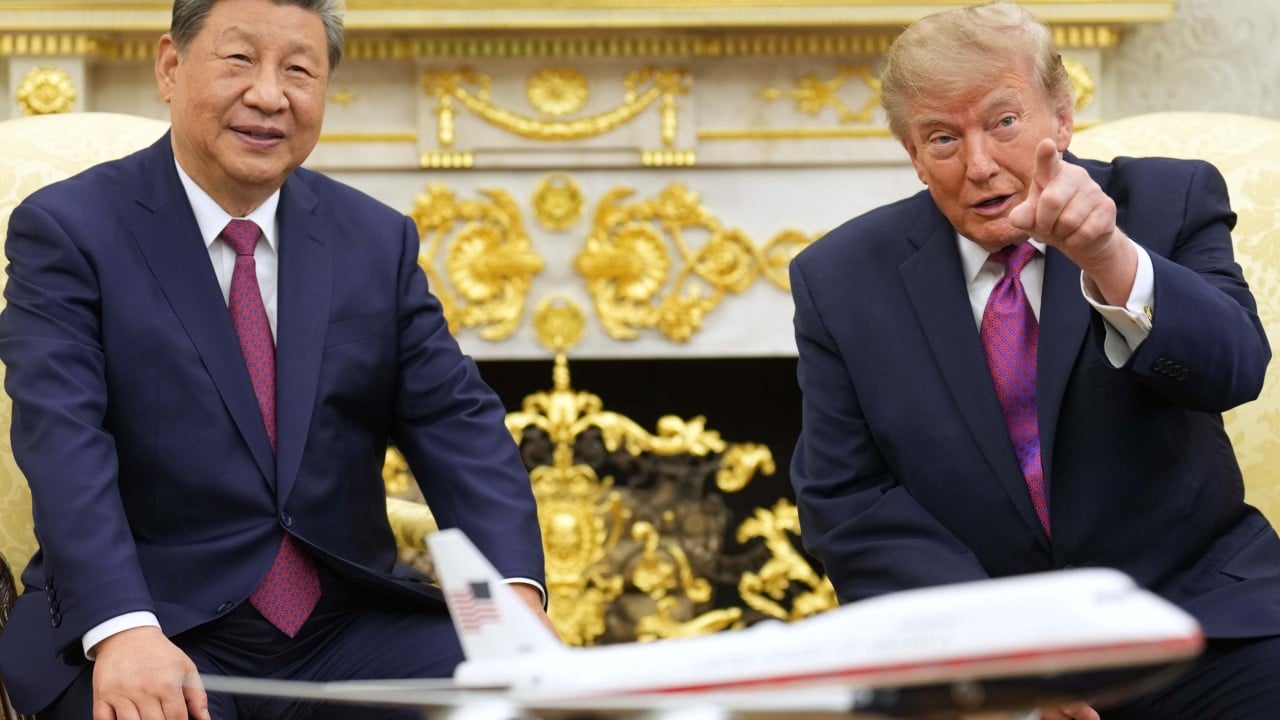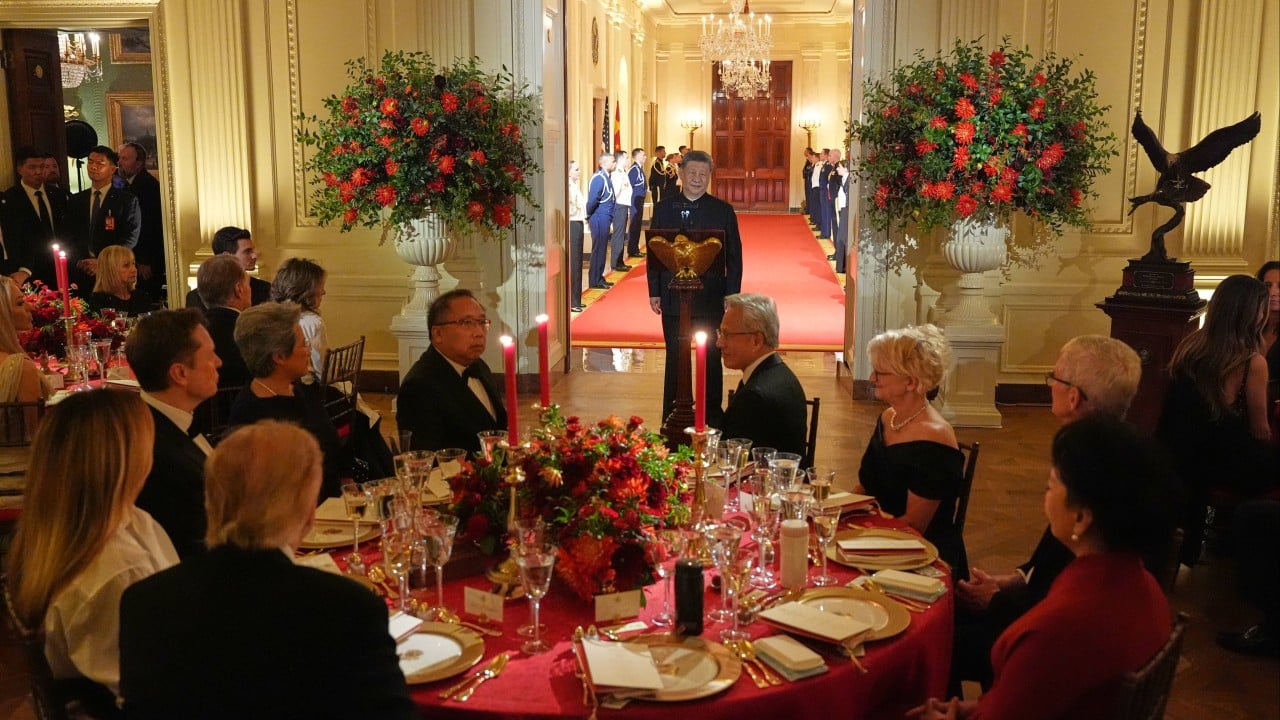
Diplomacy is rarely conducted in the briefing room. When Donald Trump and Xi Jinping sit across from one another at a state dinner, the menu, the guest list, and the evening's entertainment are never mere hospitality. They are precision-guided instruments of statecraft designed to signal power, test boundaries, and rewrite the rules of global trade without either leader signing a single treaty. By weaponizing nostalgia—specifically the 1971 "Ping-Pong Diplomacy" era and carefully curated American vintages—both administrations use soft power theater to mask hardline economic friction over tariffs, semiconductor supply chains, and territorial disputes in the Indo-Pacific.
State dinners look like pageantry to the casual observer. To anyone who has spent decades watching Washington and Beijing trade blows, they are high-stakes psychological warfare conducted with crystal stemware and white tablecloths.
The Architecture of Nostalgia and Coercion
Protocol officers spend months obsessing over the placement of a single fork. That level of neurosis exists because, at the highest tiers of geopolitical rivalry, there is no such thing as an accident. When the White House or the Great Hall of the People designs an evening around historical callbacks—like table tennis exhibitions or vintage wines from politically sensitive regions—they are constructing a very specific narrative trap.
Take the perennial invocation of Ping-Pong Diplomacy. In April 1971, a seemingly spontaneous interaction between American player Glenn Cowan and Chinese champion Zhuang Zedong at the World Table Tennis Championships in Nagoya, Japan, cracked open a door that had been welded shut since 1949. Within days, the U.S. table tennis team was invited to Beijing, paving the way for Henry Kissinger’s secret visit and Richard Nixon’s historic 1972 summit.
Modern strategists love trotting out the ping-pong paddle because it projects an illusion of organic warmth. It suggests that two nuclear-armed superpowers can simply hit a celluloid ball back and forth and rediscover their shared humanity.
The reality is far colder. In 1971, Mao Zedong and Richard Nixon were bound together by a mutual, existential terror of the Soviet Union. Today, there is no third-party boogeyman forcing Washington and Beijing into a marriage of convenience. They are each other's primary adversary.
When a Trump-Xi dinner leans heavily on 1970s nostalgia, it is not celebrating an enduring friendship. It is attempting to emotionally blackmail the other side into remembering an era when cooperation felt possible, even as both nations actively decouple their economies. It is a sedative administered right before the surgery.
Why the Wine List Matters More Than the Communiqué
Food and drink at a state banquet operate as a silent trade negotiation. Every item on the menu represents a domestic constituency, an export sector, or a subtle jab at the guest’s vulnerabilities.
Consider the mechanics of pouring American wine for a Chinese delegation. Wine is not a neutral beverage in U.S.-China relations. For years, California vineyards—particularly those in Napa and Sonoma—viewed the expanding Chinese middle class as their greatest growth market. Then came the trade wars. Retaliatory tariffs slapped by Beijing on American agricultural goods, including wine, gutted U.S. exports to China, handing market share on a silver platter to French, Chilean, and Australian producers.
Serving a prestigious California Cabernet or an Oregon Pinot Noir at a state dinner accomplishes three distinct objectives simultaneously:
- Domestic Political Signaling: It tells American agricultural lobbies and West Coast donors that the administration is fighting to reopen closed foreign markets, placing their product literally under the nose of the man who taxed it into oblivion.
- Status Assertion: Historically, French Bordeaux dominated Chinese elite dining culture. By substituting an elite American vintage, the host asserts cultural and industrial parity, rejecting the assumption that Old World luxury holds a monopoly on prestige.
- Calculated Reciprocity: In traditional Chinese banquet culture (yanxi), toasting with high-end liquor—usually baijiu like Kweichow Moutai—is a test of stamina, respect, and hierarchy. Matching that ritual with top-tier American viticulture forces the visiting delegation to play on the host’s cultural turf while still honoring the structural rules of the toast.
If the menu features American beef, Alaskan seafood, or Midwestern grains, the subtext becomes even louder. Every bite is a reminder of the trade deficit and the agricultural heartland voters who hold immense sway over American electoral politics. Xi Jinping does not need a translator to understand what a prime ribeye from Nebraska means when it lands in front of him. He knows the exact tariff rate attached to it.
The Cult of Personality Versus the Bureaucratic Machine
To understand why these dinners carry so much weight under Trump and Xi, you have to look at how both men exercise power. Neither operates like a traditional institutionalist.
Xi Jinping has spent over a decade systematically dismantling collective leadership norms within the Chinese Communist Party, centralizing authority to a degree unseen since Mao. In Beijing, nothing moves without Xi’s implicit or explicit blessing. His presence at the table means the ultimate decision-maker is in the room.
Donald Trump operates from a mirror-image instinct. Throughout his political career, Trump has consistently bypassed traditional State Department channels in favor of direct, leader-to-leader transactionalism. He views diplomacy through the lens of a New York real estate mogul sizing up a rival across a mahogany desk. To Trump, personal chemistry isn't a byproduct of good policy; it is the primary engine of the deal.
When you put a strongman centralizer and a transactional populist in the same room, the dinner ceases to be a ceremonial formality. It becomes the main event.
| Diplomatic Dimension | Traditional Institutional Approach | The Trump-Xi Banquet Model |
|---|---|---|
| Primary Goal | Incremental consensus and multilateral stability | Bilateral leverage and immediate, visible concessions |
| Role of Staff | Negotiators draft outcomes weeks in advance | Staff manage optics while leaders improvise pressure |
| Use of History | Context for long-term treaty obligations | Theatrical props to flatter or corner the counterpart |
| Success Metric | Joint communiqués and working group creation | Media visuals, market reactions, and personal rapport |
This dynamic creates massive operational risk. When the formal bureaucracy is sidelined in favor of dinner-table diplomacy, the guardrails disappear. A throwaway comment over dessert about semiconductor export controls or Taiwan’s defense posture can trigger immediate panic in Tokyo, Taipei, and Brussels. Allies watching from the sidelines know that when Trump and Xi clink glasses, the fate of smaller nations is often treated as a side dish.
The Guest List as a Corporate Battlefield
Look past the heads of state and scan the seating chart. That is where the real story lives.
State dinners are notorious for turning billionaire CEOs into diplomatic props. When tech titans, Wall Street executives, and manufacturing giants secure a seat near the head table, they are not there for the filet mignon. They are there because they represent the mutually assured economic destruction that prevents a cold war from turning hot.
For decades, the American business community served as Beijing’s most reliable lobbying arm in Washington. Whenever Congress threatened human rights sanctions or trade penalties, corporate leaders would quietly remind the White House that punishing China meant punishing American shareholders.
That consensus is dead, yet the executives still show up to the dinners. Why? Because they are trapped in an impossible squeeze.
- From Washington, they face relentless pressure to "de-risk" supply chains, bring manufacturing back to North America, and stop transferring dual-use technologies that could modernize the People's Liberation Army.
- From Beijing, they face subtle—and sometimes overt—threats of regulatory audits, antitrust investigations, and sudden loss of market access if they comply too enthusiastically with U.S. containment policies.
When Xi Jinping looks across the room and sees the CEOs of major American chipmakers, banks, and automakers seated beside Trump’s cabinet, he is reading a live barometer of American resolve. If the business leaders look eager to flatter Beijing, Xi knows Washington’s hawkish posture lacks domestic corporate backing. If those executives look distant or aligned with the administration's economic nationalism, Xi realizes the decoupling trend is structural, not merely rhetorical.
The seating chart is a live intelligence briefing.
The Myth of the Personal Breakthrough
Media coverage of high-profile summits inevitably falls into a predictable trap. Journalists fixate on body language. Did they smile during the handshake? Did the dinner run forty minutes past schedule? Did the band play a song with a hidden message?
Obsessing over these theatrical details misses the fundamental structural reality of the U.S.-China relationship. Warm optics do not erase hard geography or conflicting national survival strategies.
Consider the core flashpoints dividing the two nations:
- Technological Supremacy: The race to dominate artificial intelligence, quantum computing, and advanced semiconductors is zero-sum. Both Washington and Beijing view control over these technologies as the decisive factor in 21st-century military and economic hegemony. No vintage Cabernet can convince the U.S. Commerce Department to lift export bans on extreme ultraviolet lithography machines, and no ping-pong exhibition will stop China from pouring hundreds of billions of dollars into domestic chip self-sufficiency.
- The First Island Chain: From the South China Sea to the Taiwan Strait, American naval power and Chinese anti-access/area-denial capabilities are locked in a daily game of chicken. For Xi, absorbing Taiwan is a non-negotiable pillar of his "national rejuvenation" legacy. For Washington, allowing Beijing to seize control of the world's most critical semiconductor manufacturing hub and break through the First Island Chain would spell the end of American credibility in Asia.
- Industrial Overcapacity: China’s economic model relies heavily on state-subsidized manufacturing exports—electric vehicles, solar panels, batteries, and steel—to offset a collapsing domestic real estate sector. The U.S. and Europe refuse to serve as the dumping ground for excess Chinese production that destroys domestic industrial jobs.
These are not misunderstandings caused by poor communication. They are irreconcilable structural collisions.
When commentators suggest that a successful state dinner "resets" the relationship, they are confusing a temporary tactical pause with a strategic resolution. Both Trump and Xi have domestic reasons to project calm at specific moments. Trump wants stable stock markets, low inflation, and headline-grabbing wins on agricultural purchases or fentanyl precursor crackdowns. Xi needs breathing room to manage domestic economic headwinds, youth unemployment, and local government debt without facing an immediate, all-out tariff escalation from Washington.
The dinner serves both men's short-term political calendars. It buys time. It does not buy peace.
What Actually Happens After the Plates Are Cleared
History offers a sobering corrective to the romance of summitry. In 2017, Trump hosted Xi Jinping at Mar-a-Lago, serving prime steak and chocolate cake while simultaneously informing the Chinese leader that he had just launched fifty-nine Tomahawk cruise missiles at a Syrian airbase. The optics were extraordinary—intimate, dramatic, and seemingly cordial. Within a year, the two countries were locked in the largest bilateral trade war in human history.
In 2023, the Woodside summit in California produced carefully choreographed walks through manicured gardens and agreements to resume military-to-military communications. Months later, cyber intrusions into U.S. critical infrastructure—attributed to state-backed Chinese groups like Volt Typhoon—dominated national security briefings in Washington, while aggressive maritime confrontations near the Second Thomas Shoal escalated tensions with the Philippines.
The pattern is unmistakable. Symbolism is inversely proportional to substance. The heavier the reliance on historical callbacks, cultural performances, and nostalgic props, the thinner the underlying policy agreement tends to be. When two powers actually solve a major problem, they don't need a ping-pong table to prove they are getting along; they hold a press conference and release a signed text.
When the cameras finally click off, the motorcades roll out of the driveway, and the catering staff sweeps up the last of the confetti, the structural machinery of rivalry grinds right back to work. Customs agents continue inspecting cargo for banned forced-labor imports. Naval destroyers continue transiting contested waters. Intelligence agencies continue hunting for zero-day exploits in each other's power grids.
The wine is gone, the paddles are back in their cases, and the real war resumes before the dishes are even dry.