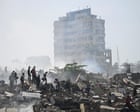
Disaster reporting is broken. Every time a fault line slips, the international media rolls out the exact same script: "brutal and fast" destruction, frantic search-and-rescue footage, and a narrative that treats natural phenomena like unexpected alien invasions. The recent coverage of the Venezuelan earthquake is a masterclass in this lazy, reactive journalism. It focuses entirely on the drama of the rubble while completely ignoring the structural reality that made the damage inevitable.
Earthquakes are inevitable. Mass casualties are not. Recently making waves recently: The Price of Penning a Truth That Shook the World.
When a society crumbles under a seismic event, the fault does not lie with the plates shifting miles beneath the earth. It lies with a failure of engineering, corrupt governance, and an international aid ecosystem that profits off fixing ruins rather than building resilience. We need to stop treating these events as unpredictable tragedies and start calling them what they really are: predictable infrastructure failures.
The Myth of the Unpredictable Monster
The standard narrative surrounding the Venezuela quake implies that the sheer speed and brutality of the event caught everyone off guard. This is a lie disguised as empathy. Seismologists have mapped global fault lines for decades. We know exactly where the pressure is building. Additional information regarding the matter are explored by USA Today.
The consensus media loves the "force of nature" trope because it absolves everyone of responsibility. If an earthquake is an act of God, then no human is to blame for the collapse of a ten-story apartment building. But a closer look at the data reveals a different story.
Compare a 7.0 magnitude earthquake in a region with strict, enforced building codes—like Japan or Chile—to the same magnitude event in a region with systemic corruption and bypassed regulations. In Tokyo, a 7.0 shake sways skyscrapers and disrupts train schedules for an afternoon. In Caracas or Port-au-Prince, it flattens neighborhoods and claims thousands of lives. The variable isn't the geology. It is the concrete.
Engineering is the Only True Rescue Team
International news outlets love to focus on the heroic "hunt for survivors." Cameras follow rescue dogs and heavy machinery picking through concrete. It makes for compelling television, but it is an incredibly inefficient way to save human lives.
Structural engineers have proven time and again that post-disaster rescue operations have a rapidly diminishing return rate. The vast majority of people extracted alive from collapsed buildings are saved by local neighbors in the first thirty minutes, not by international teams flying in 24 hours later with specialized gear.
If global entities actually cared about minimizing the body count, the funding would flow into retrofitting existing structures before the ground shakes.
- Base Isolation Systems: Mounting buildings on flexible pads that absorb seismic energy.
- Ductile Detailing: Ensuring concrete structures have enough steel reinforcement to bend rather than snap.
- Enforced Inspections: Eliminating the bribery that allows substandard materials into high-density housing zones.
Investing a dollar in structural reinforcement saves multiple dollars in emergency response and countless human lives. Yet, the global community consistently prefers to spend millions on the spectacle of the aftermath.
The Problem with the Disaster-Industrial Complex
Why does this broken loop persist? Because disaster response is a massive, self-sustaining economy. Non-profits, legacy media outlets, and contractors all thrive on the imagery of devastation.
When a crisis hits, fundraising campaigns skyrocket. Governments pledge billions in aid. But tracking where that money actually goes reveals a bleak picture. A massive percentage of international aid gets swallowed by administrative overhead, logistics, and short-term bandage solutions like tents and bottled water. The structural vulnerabilities that caused the catastrophe remain completely unaddressed.
I have watched organizations pour money into temporary camps while the local building codes remain a joke. It is a cycle of manufactured vulnerability. We wait for a predictable event to happen, express shock when vulnerable structures collapse, send in highly publicized aid, and then leave the area just as vulnerable to the next shift in the tectonic plates.
Stop Asking How to Help After the Collapse
The standard "People Also Ask" section during a crisis is filled with queries like "How can I donate to the rescue efforts?" or "What country is sending the most aid?"
These are the wrong questions. They focus on the cleanup rather than the cure. Instead, the public should be asking: "Why did that building collapse while the one next to it stood entirely intact?" and "Which officials signed off on sub-standard concrete in a known seismic zone?"
Holding local authorities and international developers accountable for building standards is far less glamorous than donating to a generic relief fund, but it is the only action that breaks the cycle. If a building is not seismically sound, it is not a home—it is a pre-fabricated tomb waiting for a trigger.
We must strip the sentimentality from disaster reporting. Stop platforming the narrative that nature is a malicious entity catching humanity off guard. The ground will shake again. The only question that matters is whether we will continue to build houses of cards or finally demand structures that can stand the shock. Everything else is just noise designed to comfort the collective conscience while waiting for the next inevitable collapse.