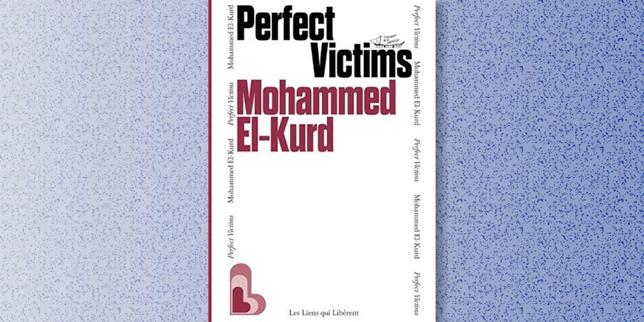
For decades, the standard narrative served up by cultural commentators has been a predictable exercise in artistic and political pity. The prevailing cultural consensus insists that Palestinians can only exist on the global stage as objects of charity, perpetual sufferers whose agency is entirely stripped away by Western imperialism and regional conflict. When writers like Mohammed El-Kurd dissect how the West categorizes Palestinians into neat binaries of innocence and guilt—dividing them into the acceptable "perfect victim" who suffers quietly and the demonized militant who resists—the analysis usually stops at finger-pointing.
The lazy consensus blames external media consumption, Western hypocrisy, and the moral bankruptcy of foreign newsrooms. Everyone nods along at literary festivals, buys the book, claps for the critique, and leaves the fundamental trap completely intact.
Almost nobody wants to talk about how the obsession with manufacturing the perfect victim actually neuters political efficacy.
Let us be entirely clear about the mechanics here. When an entire national liberation struggle is funneled through the narrow keyhole of moral purity, you do not empower the oppressed. You create an impossible performance review. You demand that human beings living under boots must somehow exhibit the angelic patience of saints, the legal precision of international human rights lawyers, and the PR sophistication of a Silicon Valley tech startup. The moment a real human being steps outside that saintly script—showing anger, making strategic errors, or expressing raw, unvarnished rage—the international audience clutches its collective pearls and withdraws sympathy.
That is not solidarity. That is a velvet-lined cage.
The Trap of Infallible Innocence
I have spent years watching political movements try to optimize themselves for Western consumption. The playbook is always identical. You sand off the rough edges. You hire Western-trained spokespeople who speak immaculate English with the right cadence. You sanitize every grievance until it sounds like a corporate HR complaint rather than a scream for liberation.
The underlying premise of the perfect victim model is that oppression can only be undone if the oppressor feels guilty enough. This is a fatal strategic error. Power does not yield to moral theatre; power yields to pressure, friction, and the realignment of interests. When Palestinian narrative architecture remains obsessed with proving moral innocence to audiences that hold zero structural power over the conflict, it abandons the hard levers of leverage in favor of emotional validation.
Think about how this plays out in media cycles. When an activist or writer focuses entirely on how the West misrepresents, exploits, or pigeonholes the suffering, they are still placing the West at the center of the universe. The Western gaze remains the sun around which everything orbits. Whether the West views Palestinians as terrorists or angels, the underlying psychological dependency is terrifyingly intact. You are still asking the master’s house to fix the master’s architecture using the master’s tools.
True disruption means refusing to audition for the role of the victim altogether.
Dismantling the Global Sympathy Economy
There is a lucrative global sympathy economy that rewards perpetual misery. Academics, non-governmental organizations, documentary filmmakers, and cultural critics make entire careers dissecting the pathology of how the world looks at the Middle East. They write dense monographs about representation, Orientalism, and the gaze of the empire.
Yet, look at the material outcomes. Does another essay on the politics of pity rebuild destroyed infrastructure? Does another literary critique of Western media bias stop a bulldozer or alter a trade agreement? Of course not. In fact, it often achieves the exact opposite by turning a brutal, high-stakes geopolitical conflict into a cozy academic parlor game where everyone gets to feel ethically superior while changing precisely nothing on the ground.
The insistence on absolute moral purity is a trap designed to ensure paralysis. If resistance must be immaculate to be valid, then any messy, compromised, real-world action is immediately disqualified. This leaves populations with a devastating choice: remain passive, starving, and pure in your martyrdom, or take action and lose your international backing.
That binary is a false construct. History is not made by saints; it is made by actors willing to get their hands dirty in the messy reality of power politics. Every successful national movement in modern history—from anti-colonial struggles in Africa and Asia to civil rights movements in the West—succeeded not because they charmed their oppressors into feeling sorry for them, but because they made the status costlier to maintain than the alternative.
The Power of Tactical Impoliteness
What happens when we stop caring about whether the West finds the resistance polite?
The moment you abandon the quest to be the perfect victim, you unlock a terrifying form of freedom. You stop tailoring your rhetoric for the evening news cycle in London or New York. You stop policing your own population for showing justified anger. You recognize that international solidarity based on pity is fickle, patronizing, and ultimately worthless when real power comes to push.
Real strategy replaces moral posturing. Instead of whining about how media outlets frame the conflict, smart organizers build independent information architectures, secure supply chains, economic autonomy, and diplomatic alliances with nations that do not care about Western moralizing. They stop looking for validation in the pages of literary reviews and start focusing on institutional durability.
The obsession with how we are perceived is a luxury of the safe and the comfortable. For those living inside the crucible, perception management is a distraction from survival and strategy.
It is time to drop the victim script. It is time to stop performing tragedy for an audience that only values you when you are bleeding quietly. Agency is not something granted by a sympathetic editorial board; it is something seized the moment you stop asking for permission to exist on your own terms.


