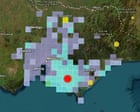
You’re dead asleep at two in the morning when your house suddenly starts violently shuddering. Doors rattle in their frames. Pets bolt upright in sheer panic. That was the rude awakening for more than sixteen thousand residents across Victoria when a magnitude 4.8 earthquake struck just after 2:00 am, centered near the regional town of Leongatha.
If you live in Melbourne or South Gippsland, you didn't need a seismograph to tell you something major just happened. The shallow 10-kilometer depth meant the energy punched straight up to the surface, rattling windows and waking up entire suburbs over 130 kilometers away from the epicenter.
Why Victoria Keeps Getting Shaken
Australia isn't sitting on a fiery tectonic plate boundary like Japan or New Zealand, so people assume we're immune to seismic chaos. We aren't. Australia sits on the Indo-Australian Plate, which is constantly creeping northward and smashing into Asia. This slow-motion collision builds immense internal stress within the continental plate itself.
When that trapped energy finally forces its way through ancient faults deep underground, you get sudden ruptures like the one near Leongatha. Seismologists point out that this region has experienced an active cluster of smaller tremors over the past decade. It's a sharp reminder that stable landmasses still store and release massive amounts of tectonic pressure.
The Reality of Melbourne's Building Vulnerability
Most houses in Melbourne are built from brick veneer or weatherboard, which actually flex reasonably well during sudden ground shaking. Even so, the sheer suddenness of a 2:00 am jolt sends anxiety levels through the roof. People reported thinking a truck had crashed into their living room or that a severe storm had blown in.
Emergency services quickly jumped into action following the tremor, scanning critical infrastructure across South Gippsland and metropolitan Melbourne. While minor property cosmetic damage or cracked plaster happens with a quake of this size, major structural collapses thankfully didn't materialize this time around. But it brings back uncomfortable memories of the 2021 earthquake that shook buildings and caused localized damage across parts of the state.
What You Should Do When the Ground Moves
Earthquakes don't give you a heads-up text message. When a tremor hits in the middle of the night, your instincts are tested instantly.
Drop, cover, and hold on remains the golden rule, even if staying in bed feels safer. If you're asleep, roll onto the floor next to your bed to protect yourself from falling picture frames or collapsing light fixtures. Don't run outside while the ground is actively shaking because falling roof tiles or shattered glass pose a much higher risk than staying put indoors. Once the shaking completely stops, check your gas and water lines for leaks, keep your phone handy for emergency updates, and expect smaller aftershocks over the coming days.
Nature occasionally reminds us we aren't entirely in control, and this latest shake proved that quiet tectonic plates can still pack a brutal punch when you least expect it.
Victoria shaken by 4.8 magnitude earthquake near Leongatha | 7NEWS
This news report provides live broadcast coverage and local reactions from residents who experienced the magnitude 4.8 earthquake firsthand.