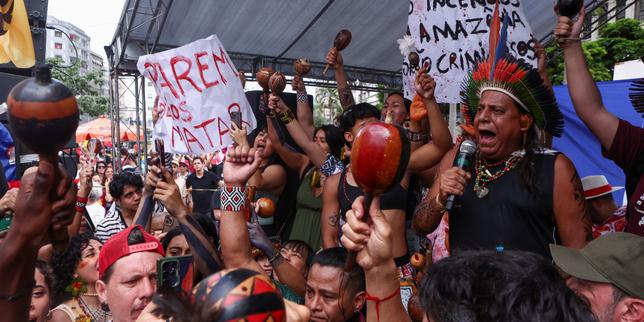
When Luiz Inácio Lula da Silva won the Brazilian presidential election in late 2022, many expected an immediate sigh of relief for the Amazon. Jair Bolsonaro’s administration had stripped environmental agencies of funding, openly praised illegal mining, and froze indigenous land demarcations. Lula promised the exact opposite: zero deforestation, absolute protection of ancestral territories, and a dedicated Ministry of Indigenous Peoples.
Yet almost immediately after the election results were confirmed, violence exploded across indigenous territories.
Invaders, illegal miners, loggers, and armed land grabbers didn't back down. Instead, they launched targeted attacks against native communities in what human rights groups and indigenous leaders describe as direct retaliation for Lula’s victory. The logic behind this surge was simple and terrifying. Armed networks knew their era of official impunity was coming to an end, so they rushed to clear land, intimidate leadership, and establish physical control before federal law enforcement could rebuild its presence.
Understanding why this retaliation happened—and why the violence hasn't instantly disappeared under Lula's government—requires looking at the deep financial interests operating inside the Amazon.
The Economic Drivers of Post-Election Violence
Land grabbing in Brazil isn't just random lawlessness. It is a highly organized, capital-intensive business.
When squatters invade indigenous lands, they are looking for quick returns through wildcat gold mining, timber extraction, or illegal cattle ranching. During the Bolsonaro presidency, these operators invested heavily in heavy machinery, fuel networks, airstrips, and private militias. Lula's electoral victory threatened to make those investments worthless overnight.
Indigenous rights organizations like the Indigenous Missionary Council (CIMI) and the Articulation of Indigenous Peoples of Brazil (APIB) documented a sharp spike in threats, land invasions, and targeted killings right after the election.
Illegal miners in the Yanomami territory doubled down, knowing that federal operations would soon disrupt their supply chains. In Maranhão and Pará, illegal loggers escalated intimidation against the "Guardians of the Forest"—indigenous patrols organized to protect isolated territories—trying to dismantle local resistance before government support could arrive.
The violence was a message. It warned both local communities and the incoming administration that removing entrenched economic interests would require actual force, not just political declarations.
What the Mainstream Coverage Misses
Most international reporting framed Lula's victory as an immediate happily-ever-after for environmental protection. That narrative was naive.
A president can sign executive orders on day one, but restoring environmental governance takes years. The federal agencies responsible for protecting indigenous lands—such as IBAMA (the environmental protection agency) and FUNAI (the National Indigenous People Foundation)—had been systematically gutted over four years. Staffing levels were severely depleted, budget allocations were slashed, and key regional posts were assigned to allies of the extractive sector.
When Lula took office, these agencies lacked basic operational capacity. Rebuilding them takes time. Re-hiring field agents, procuring equipment, and repairing intelligence networks can't happen in a single month.
Criminal syndicates exploited this transition window. They knew the government was politically willing to act, but structurally unable to deploy force across vast regions immediately.
That gap created a dangerous power vacuum.
The Reality of Demarcation Struggles
The core conflict in rural Brazil almost always centers on land demarcation. Under the Brazilian Constitution of 1988, indigenous peoples hold full rights to their ancestral lands. Official demarcation grants legal protection, making any commercial activity without community consent illegal.
Predictably, land grabbers try to prevent demarcation by any means necessary. If a community can be intimidated, displaced, or broken apart, claiming ownership of the land becomes significantly easier.
The legal battle became even more intense with the debate surrounding the Marco Temporal (temporal frame threshold). This legal thesis claimed indigenous groups were only entitled to lands they physically occupied on October 5, 1988—the day the Constitution was ratified.
The argument conveniently ignored the historical reality that many indigenous groups had been forcibly evicted from their ancestral lands long before 1988.
Although Brazil’s Supreme Court ruled against the Marco Temporal doctrine, Congress—heavily influenced by the ruralist agribusiness caucus—pushed forward legislation to enforce it anyway. This political friction at the highest levels of government gave cover to land grabbers on the ground. They felt backed by powerful political figures in Brasília, fueling further aggression against vulnerable villages.
Steps Needed to Protect Indigenous Communities Right Now
Resolving this crisis isn't just about sending troops for short-term operations; it requires sustained structural reform.
Permanently Restore IBAMA and FUNAI Funding
Temporary military operations don't work over long periods. Federal enforcement bodies need permanent staff, modern logistics, and direct backing from federal police to maintain a continuous presence in high-risk zones.Accelerate Land Demarcation
Leaving territories in legal limbo invites invasion. Officially finalizing pending demarcations removes the legal uncertainty land grabbers rely on to claim rights over indigenous territory.Target Financial Networks Behind Land Invasions
Arresting wildcat miners or low-level loggers on the ground doesn't stop the industry. Federal prosecutors must trace the financial pipelines, bank accounts, and buyers in major cities buying illegal gold and wood.Guarantee Physical Protection for Indigenous Leaders
Community leaders who speak out against illegal mining and logging face immediate death threats. Strengthening human rights defender protection programs with actual security support is vital.
Governments cannot protect the Amazon while ignoring the people who keep it standing. Halting retaliation against indigenous communities requires enforcing the rule of law consistently, dismantling illegal financial networks, and proving that land grabbing no longer pays off.