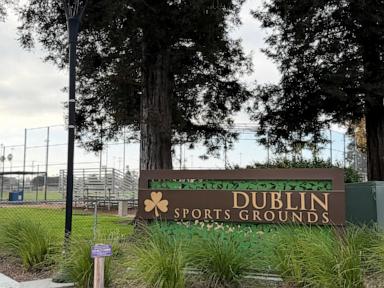
A public park is designed to be a sanctuary. It is a patch of green carved out of asphalt and concrete where strangers cross paths without suspicion. Children chase soccer balls across manicured lawns. Dogs pull lazily on leashes, sniffing at the roots of ancient oaks. Parents push strollers, lost in the quiet rhythm of the afternoon. In California, where the sunlight often feels like an endless promise, these spaces are communal living rooms. They are where we go to breathe, to forget the crushing pressures of rent, traffic, and quiet desperation.
Then, in a single, violent second, the illusion shatters.
Imagine the ordinary afternoon shattered by shouts. Imagine the swing sets suddenly empty as people scatter, not realizing at first that what they are hearing is not a loud argument, but the sound of a life ending.
When news breaks that an older couple has been arrested and charged with the murder of their own son-in-law in the middle of a public park, the mind rebels against the image. We expect violence to wear a mask. We expect it to creep from the shadows of midnight alleys or arrive via the cold mechanics of a home invasion. We do not expect it to wear sensible shoes, to arrive in a sedan, to be orchestrated by grandparents in broad daylight.
Yet, human rage does not respect the beauty of a park, nor does it honor the social contracts that keep families from devouring themselves from the inside out.
To understand how a family arrives at a public park with murder on their minds, one must look past the police reports and the mugshots. One must look into the slow, corrosive buildup of domestic warfare.
Consider the anatomy of a modern family dispute. It rarely starts with a weapon. It starts with silence at the dinner table. It starts with text messages glowing in the dark, vibrating with passive aggression. It festers over custody battles, over perceived disrespect, over the bitter division of property and affection after a marriage collapses. When two people divorce, they rarely divorce alone. They drag their entire lineages into the wreckage. Parents become fiercely, blindly protective of their children. They watch a son-in-law or a daughter-in-law transform from a welcomed addition to the holiday table into a hated adversary.
In many households, this bitterness becomes an obsession. It consumes coffee breaks. It dictates weekend plans. It turns living rooms into war rooms where strategies are discussed, grievances are cataloged, and old hurts are weaponized into new hatreds. Over months or years, the target of this collective resentment ceases to be a human being with a mother, a history, and a future. They become an obstacle. A villain in a private psychodrama that has grown entirely out of hand.
When that much pressure builds inside a closed vessel, something has to give.
On the day of the incident, the California sun was shining. The park was busy. People were living their normal lives, unaware that they were about extras in a tragedy. The suspects arrived with a purpose that defied all reason. They did not hide their faces. They did not wait for the cover of night. In the twisted logic of their grievance, justice was something they had to take into their own hands, right there on the grass, in front of strangers.
The physical altercation was brief, brutal, and irreversible. A life was extinguished between the swings and the slide.
What drives a person—especially an older person, someone who has lived decades and presumably learned the fragile value of existence—to throw everything away in a flash of public violence?
Criminologists and psychologists have a name for it, but the clinical terms feel inadequate. They talk about acute stress responses, pathological enmeshment, and the blinding tunnel vision of rage. But words like pathology strip away the raw, ugly humanity of the act. This was not a mechanical failure of the brain. It was a choice made at the absolute terminus of human endurance and moral failure. It was the moment a human being looked at another human being and decided that the world would be better off if they ceased to exist.
The aftermath of such an event is a study in collective whock.
The police arrive. Red and blue lights flash against the green leaves. Yellow tape goes up, turning a children's play area into a crime scene. Neighbors gather behind the barriers, their phones out, whispering in disbelief. How could this happen here? Not in our town. Not in broad daylight.
Yet, it did happen here. And it happens more often than we care to admit.
When a society looks at a crime like this, we desperately want to find a simple explanation. We want to point to a broken mental health system, or a specific law that failed, or an external monster that corrupted otherwise good people. But the uncomfortable truth is far more mundane and far more terrifying. Ordinary people are capable of extraordinary atrocities when their emotional immune systems fail.
Family courts are packed with people drowning in low-grade panic and high-octane resentment. The legal system moves at the speed of glaciers, while human emotions burn like wildfire. Months of litigation, financial ruin, and the slow-motion destruction of a family dynamic can push people past the edge of sanity. While the courts debate custody and visitation rights, the human cost accumulates in quiet apartments and tense family gatherings until something snaps.
The California couple charged with this crime now faces the ultimate reckoning. The legal machinery will grind forward. Lawyers will file motions. Prosecutors will lay out the timeline of events, the physical evidence, the witness testimony. Trials will be held. Verdicts will be rendered. If convicted, the remainder of their lives will be spent behind razor wire, looking out at concrete yards instead of public parks.
And for what?
The grievance that felt so immense, so unbearable on a sunny afternoon, will mean nothing in the cold calculus of a prison cell. The disputes over children, property, or pride will continue to echo, but the people involved will be gone or broken.
When we walk through a park today, the grass has grown back over the spot. The children still run. The dogs still pull on their leashes. Life resumes its stubborn, indifferent march. But the shadow remains. It lingers in the back of our minds, reminding us of how thin the ice is beneath our feet. We walk among neighbors whose internal worlds are entirely invisible to us. We pass people who may be fighting silent wars of their own, teetering on the edge of a precipice we cannot see.
The story of a crime in a public park is not just a police blotter item. It is a mirror. It forces us to examine the quiet hatreds we harbor, the grudges we nurse, and the terrifying speed with which a human life can be unmade by the very people who were once supposed to love them.
There is no neat moral to draw from this. There is no simple policy fix that can legislate away the dark corners of the human heart. There is only the sobering realization that beneath the warm sun and the green trees, the worst of us is never more than a bad decision away.
The sirens fade. The reporters pack up their cameras. The park closes at dusk, the gates locked against the night. Inside, the darkness reclaims the grass, quiet and deep, hiding everything that happened under the sun.