The air inside a courtroom has a specific, heavy density. It smells of old paper, polished wood, industrial disinfectant, and the quiet, crushing weight of human anticipation. For more than a decade, the stretch of highway along New York’s South Shore was defined by a different kind of silence—a haunting, coastal quiet where the Atlantic washed over secrets buried deep in the brush. But on this morning, the silence belonged to a room packed to the walls with people who had waited too long for a day they feared might never come.
They sat on hard benches, shoulders touching, a collective unit bound by an invisible thread of shared tragedy. These were the mothers, the sisters, the brothers, and the daughters of the women whose lives were stolen and left along the lonely dunes of Ocean Parkway. For years, they had been forced to mourn in the public eye while a shadow loomed over their lives, an unnamed monster that local authorities seemed entirely unable to catch.
Then came the arrest. Then came the endless legal filings. And finally, the day of reckoning.
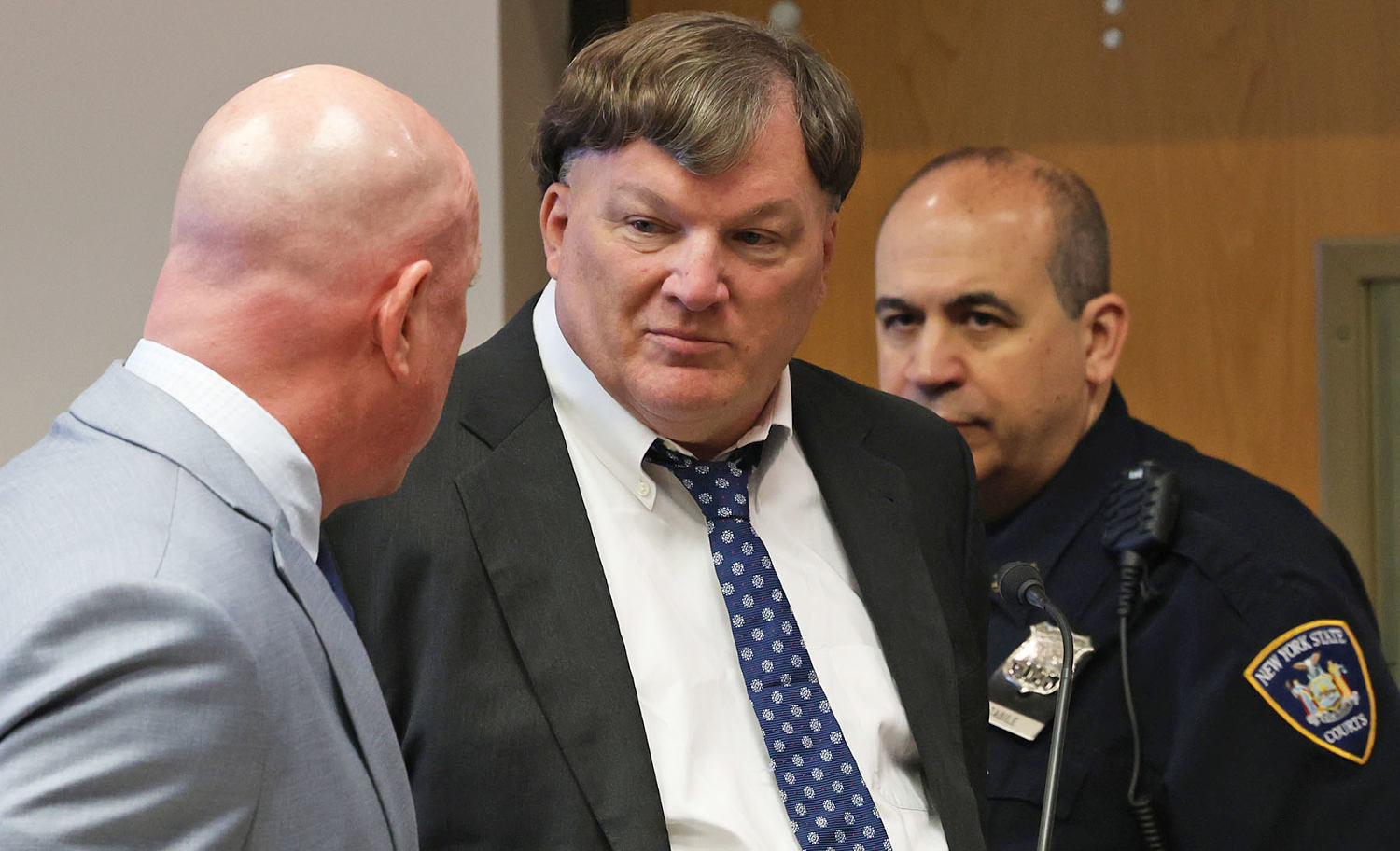
When the defendant was brought into the room, the temperature seemed to drop. He moved with a heavy, deliberate slowness, a stark contrast to the sheer magnitude of the horror attributed to his name. To look at him was to confront the most terrifying truth of human malice: that the architect of unimaginable cruelty rarely looks like a monster. He looked like an ordinary neighbor, an architect who rode the train, a man who blended seamlessly into the mundane fabric of suburban life.
But the people in the gallery did not see an ordinary man. They saw the end of an era of terror.
The judge called the court to order, the mechanical rustle of papers serving as the metronome for a proceeding that would alter the rest of a man's natural life. The state was there to deliver numbers—multiple consecutive life sentences without the possibility of parole. Cold, mathematical finality. A bureaucratic box checked to ensure that a predator would never breathe free air again. Yet, the law's numbers, as massive as they are, can feel hollow against the depth of an empty chair at a Thanksgiving table.
That is why the court turns the microphone over to the survivors.
One by one, the family members stepped up to the podium. Their hands shook. Some gripped the edges of the wood as if it were the only thing keeping them upright in a swirling sea of trauma. Others stood rigid, drawing strength from the decades of anger that had replaced their initial grief.
A sister spoke first. Her voice was small at first, catching on the vowels, fighting against the lump of tears that had resided in her throat since 2010. She did not read from a legal brief. She talked about a girl who loved the summer, who had a laugh that could ring through a crowded house, who had made mistakes but possessed a heart wider than the ocean she was found near.
"You thought they were disposable," she said, her voice growing steady, turning sharp as flint as she locked eyes with the man in the jumpsuit. He kept his gaze fixed on the table in front of him, refusing to look up, a coward cloaked in the apathy of defeat. "You thought nobody would look for them. You thought the world didn't care. Look around this room. We never stopped looking. We never stopped loving them."
The words hung in the sterile air. The courtroom was so quiet you could hear the faint hum of the air conditioning, a sharp contrast to the storm of emotion passing through the gallery.
The confrontation of a serial killer by the families of his victims is an act of profound reclamation. For years, the narrative around the Gilgo Beach murders was dominated by the killer's shadow. The media focused on the mystery, the geographic patterns, the failures of the early investigation, and the salacious details of the victims' lives. The women themselves—Megan Waterman, Melissa Barthelemy, Amber Lynn Costello, Maureen Brainard-Barnes—were too often reduced to a grim collective moniker: "The Gilgo Four." They became plot points in a true-crime phenomenon.
But in this courtroom, the families tore down that narrative block by block. They gave their loved ones their names back. They restored their humanity.
Consider the sheer psychological weight carried by these families for over a decade. When a loved one vanishes under suspicious circumstances, grief is not a static event. It is a chronic, mutating condition. Every time the phone rings, every time a new body is discovered in another county, the wound tears open fresh. They had lived through years of police apathy, through eras where their daughters were dismissed because of the work they did to survive. They had fought the system just to get detectives to take the disappearances seriously.
To stand feet away from the person responsible for that agony is a test of human endurance.
Another relative stepped forward, a mother whose face bore the deep, unmistakable lines of prolonged sorrow. She did not cry. Her anger had burned down to something dense and heavy, like charcoal. She called him a demon. The word was not used as a metaphor or a dramatic flourish; it was delivered as a literal description of a soul completely void of human empathy.
"You are a demon," she repeated, ensuring the syllables echoed off the concrete walls. "And the darkest corner of hell is waiting for you. But until then, you will rot in a cage, knowing that you failed to erase them."
The man at the defense table remained motionless. His hands, which had once wrought total devastation on defenseless women, were now folded loosely in his lap. He showed no remorse, no anger, no sorrow. He was a vacuum. It became clear to everyone watching that his silence was his last remaining weapon, a pathetic attempt to withhold the satisfaction of an apology or a visible sign of defeat.
But the families did not need his remorse to find their catharsis. Their victory was already won the moment the handcuffs clicked into place, and it was cemented by the absolute permanence of the sentence the judge was about to hand down.
The legal system is an imperfect tool for measuring human suffering. It translates blood and tears into statutes, paragraphs, and prison years. When the judge finally spoke, reading the counts one by one, the language was dry and structured. Count one: murder in the first degree. Sentence: life imprisonment without the possibility of parole. The rhythm was relentless. It repeated over and over, building a wall of time so vast that no human lifespan could ever climb over it.
Justice, in the institutional sense, is a machine. It grinds slowly, turning the chaotic horror of a crime scene into an orderly stack of trial transcripts. But for the people sitting in the gallery, justice was not found in the paperwork. It was found in the simple fact that they were still standing, and he was going under the earth.
The trial may be over, the sentences carved into the records of New York State, but the impact of this reckoning stretches far beyond the walls of the courthouse. It challenges a culture that often treats vulnerable women as invisible. It forces an acknowledgment that every life taken along that dark highway belonged to someone’s child, someone’s sister, someone’s mother. The true legacy of the Gilgo Beach investigation is not the clever police work that eventually traced a green pickup truck or analyzed DNA on a discarded pizza crust. The true legacy is the stubborn, unyielding refusal of the families to let their daughters be forgotten.
When the proceeding ended, the officers approached the defense table to lead the prisoner away. The chains around his ankles clinked against the linoleum floor, a small, metallic sound that signaled the absolute end of his freedom. He was led through a side door, disappearing into the gray labyrinth of the correctional system, destined to spend the remainder of his days in a space measured in mere feet.
Outside, the New York sun was bright, blindingly so after the dim fluorescent lighting of the courtroom. The families walked out down the stone steps, surrounded by a wall of cameras and microphones. But the atmosphere had changed. The frantic, desperate energy that had characterized their public appearances for twelve years was gone. In its place was a quiet, exhausted peace.
The highway on the South Shore remains. The beach grass still bends in the wind coming off the ocean, and the tide still rolls in over the sand. The landscape looks exactly as it did when the darkness held sway over the coast. But the shadows have been cleared away, driven out by the voices of those who refused to let the silence win.