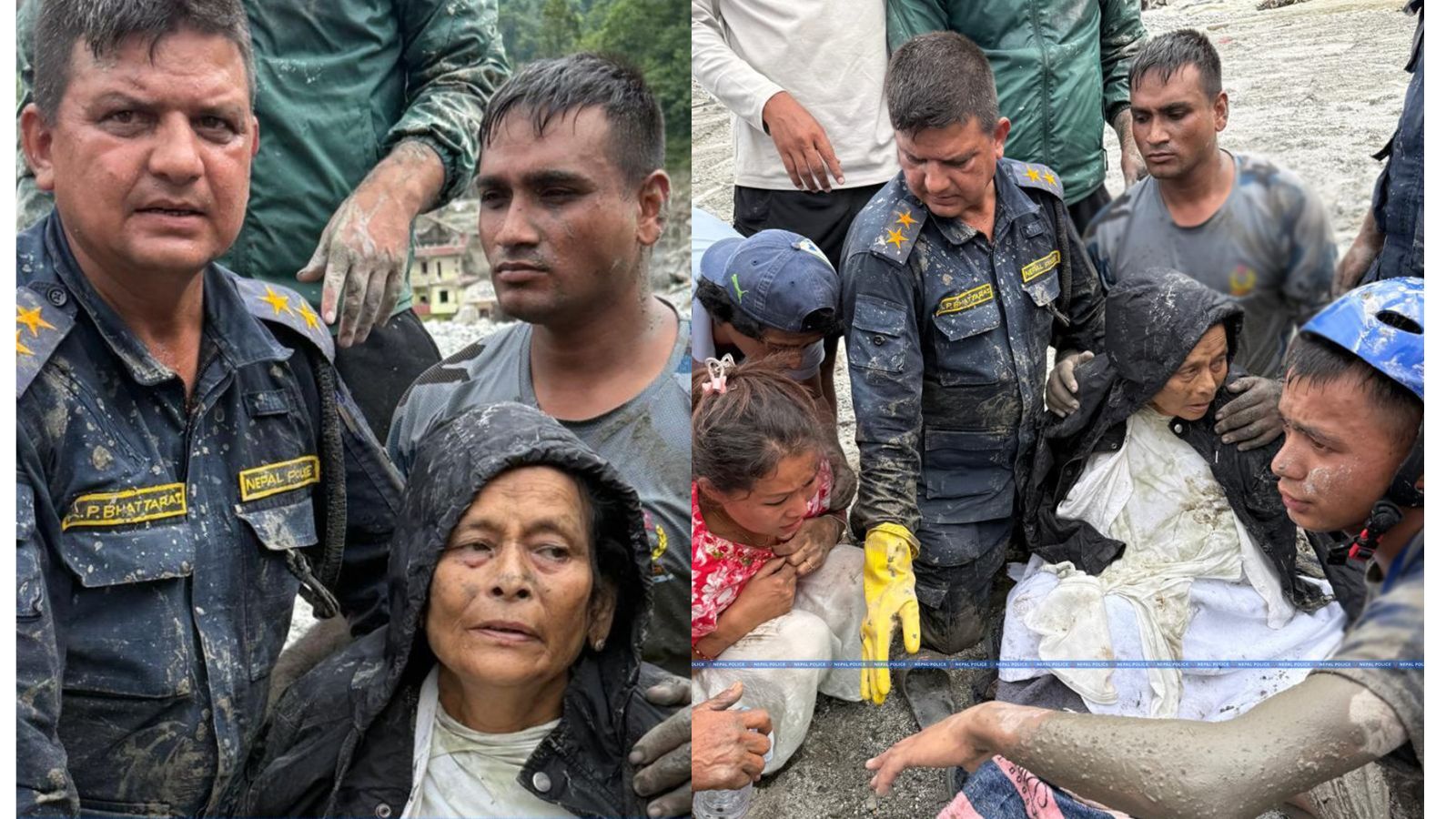
The lazy consensus loves a body. International media arrived in Kathmandu following the catastrophic late-August flash floods with a tidy narrative of woe: thousands missing, morgues overflowing, and grieving families paralyzed because Hindu tradition demands a physical corpse for cremation. Outlets like Al Jazeera framed the ensuing symbolic kusha-grass effigy cremations as a tragic last resort—a heartbroken compromise forced upon people by institutional failure.
They are getting the story entirely backward.
The symbolic cremation of an effigy is not a consolation prize for the desperate. It is an ancient, technologically sound psychological disruption designed precisely for catastrophic loss where recovery is statistically impossible. By framing these rituals as a tragic deviation from "real" funerals, mainstream reporting misunderstands both Hindu scripture and human cognitive survival.
Let us look at the brutal logistics. Nepal’s entire nationwide morgue infrastructure caps out at roughly 350 bodies. When a glacial collapse and torrential monsoon unleash mud and debris over hundreds of miles, killing more than 1,200 people and leaving nearly 5,000 missing, the state faces a hard thermodynamic wall. Over a thousand bodies have already been recovered, with the vast majority temporarily buried under forensic tags and DNA logging because preservation is physically impossible.
Media outlets hyperventilate over these mass temporary burials as an outrage against tradition. They miss the operational reality. Forensic teams from India, China, and Singapore flew in not to recover an endless stream of intact victims, but to manage a biological catastrophe. When a river system flushes human remains across districts like Chitwan, Nuwakot, and Rasuwa, bodies are structurally unidentifiable by sight. They are fragmented, decomposed, and scattered.
Expecting families to wait weeks or months lingering at riverbanks for a DNA match to clear bureaucratic backlogs is a recipe for psychological torture.
This is where the lazy consensus collapses under its own weight. The media treats closure as something locked inside a physical shell. If you do not have the shell, you cannot lock it. But Hindu jurisprudence has accounted for total annihilation for millennia. Sanskrit scholars note that when an entire settlement is wiped out or bodies are swallowed permanently by raging waters, scriptures explicitly authorize Kusha grass effigy cremations (pinda dan or symbolic rites).
The ritual is built for ambiguity. It forces an immediate, non-negotiable psychological confrontation with finality.
In trauma psychology, ambiguous loss is the most destructive kind of grief. When a loved one simply vanishes into a flash flood, the human brain loops endlessly. Hope coexists with dread. Every knock on the door sounds like a survivor returning. By demanding that families wait for a body to materialize before they can mourn, external observers project Western mortuary fixations onto a culture that historically understood the earth takes back what it claims.
When 23-year-old Sujan Achhami carried a bundle of sacred grass down to the Bagmati River next to the Pashupatinath Temple to burn an effigy for his father Dinesh, he was not settling for less. He was executing a psychological circuit breaker. He stopped waiting for a corporate state or an overwhelmed forensic morgue to validate his grief.
We need to stop viewing non-Western coping mechanisms through a lens of pity. The tragedy in Nepal is not that people are burning grass instead of flesh. The tragedy is a changing climate tearing communities apart. Once the floodwaters recede, clinging to the fantasy that a physical body is mandatory for spiritual or emotional release only serves the sensationalist news cycle.
Stop waiting for closure to be handed to you in a body bag. Sometimes, the grass is all you get, and burning it is the only way to live.