Every autumn, the mainstream science press runs the exact same piece of lazy shorthand. They dust off the template, insert the name Henri Kagan, and lament that the Nobel Committee has somehow overlooked the father of asymmetric catalytic reduction. The narrative writes itself: a brilliant pioneer robbed of his gold medal by bureaucratic oversight or geographic bias.
It is a deeply comforting story for people who prefer their science history spoon-fed as a morality play. It is also entirely wrong.
Fixating on whether Kagan gets a phone call from Stockholm misunderstands how fundamental chemistry actually moves forward. Science does not run on retrospective validation from aging committees. It runs on structural obsolescence. Kagan did something extraordinary in the late sixties and early seventies by inventing asymmetric catalytic hydrogenation, giving chemists the power to select handedness in molecules. That breakthrough birthed modern asymmetric synthesis. But treating his omission from the Nobel canon as an active injustice treats chemistry like a Hollywood awards show.
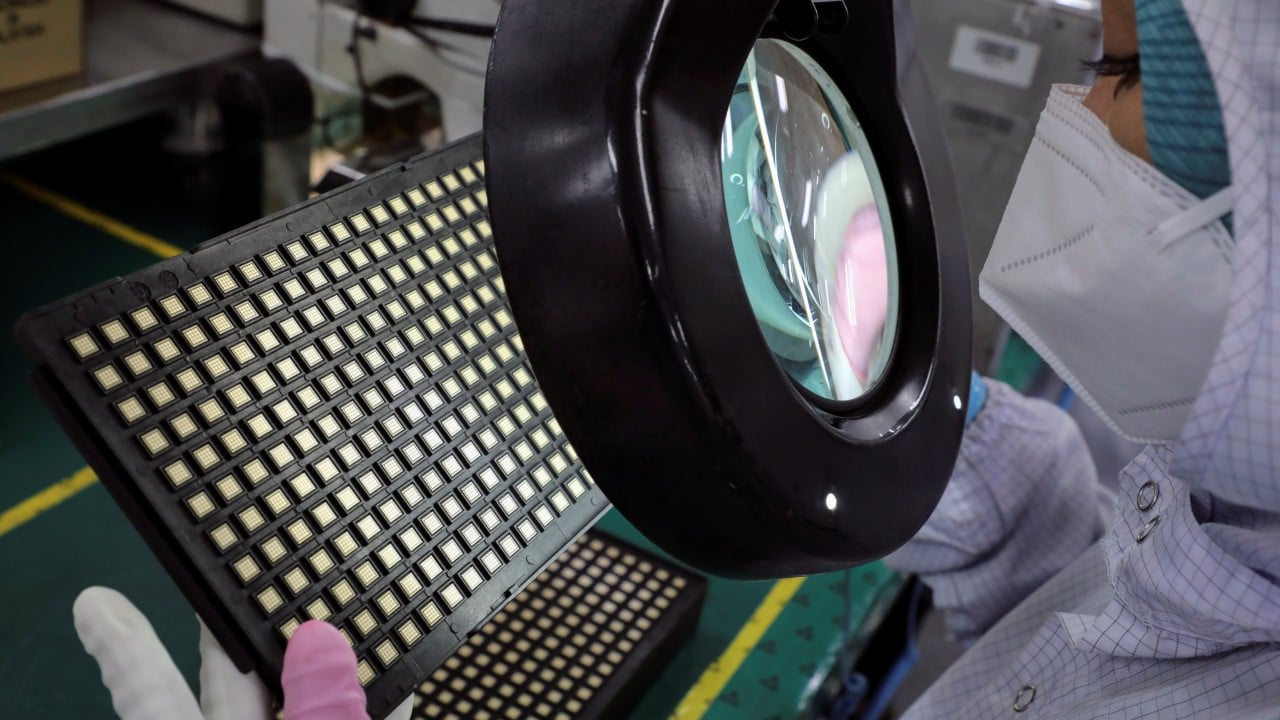
Worse, it misses the quiet industrial revolution happening right now on the factory floor, where the very premise of homogeneous metal-phosphine catalysts is being gutted by high-throughput automation, machine learning, and heterogeneous continuous-flow reactors.
Let us look at the actual mechanics of what Kagan achieved, why the worship of the single pioneer blinds us to where the field is bleeding, and why the obsession with his Nobel status is a symptom of a stagnant science-media complex.
The Myth of the Lone Revolutionary
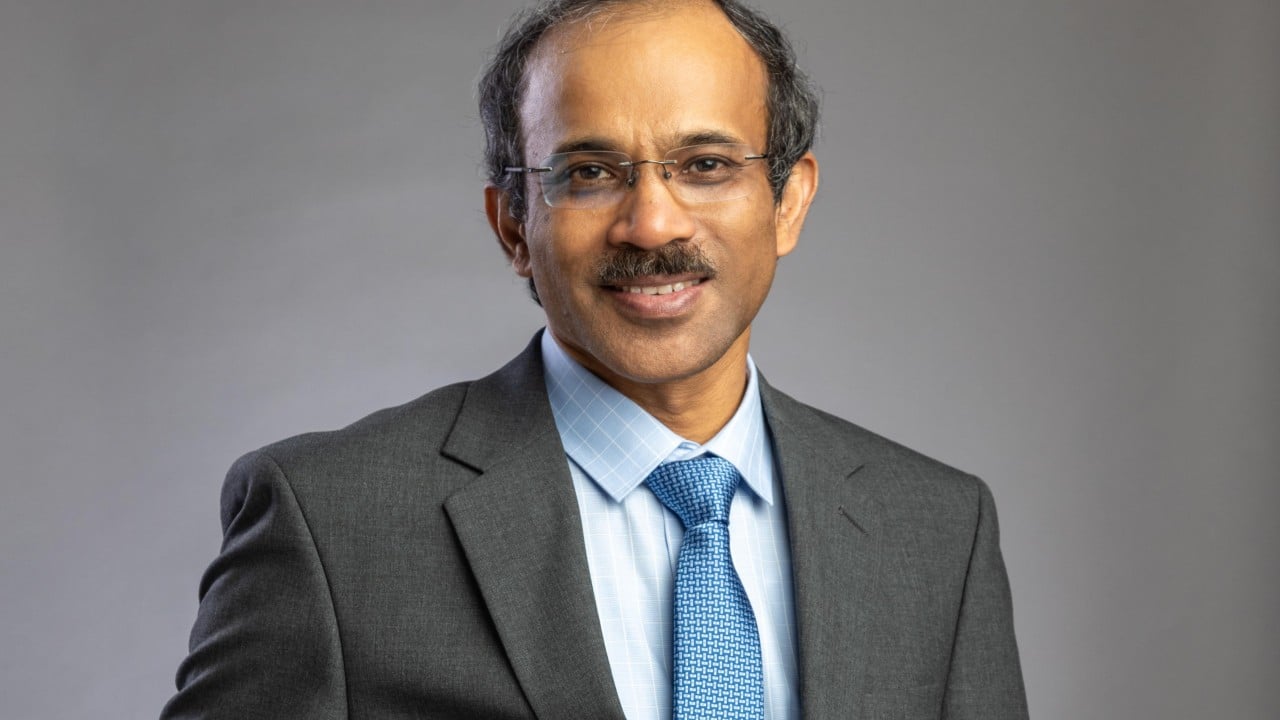
Science journalism loves a single protagonist. It is easy to point to a photograph of Henri Kagan, talk about chiral diphphosphine ligands, mention rhodium complexes, and pretend that asymmetric catalysis sprang fully formed from one man’s notebook.
That is not how chemical breakthroughs happen. The reality is messier, more collaborative, and deeply iterative. William Knowles was working along similar industrial tracks at Monsanto, designing catalytic hydrogenation for L-DOPA while Kagan was systematically laying down the academic groundwork with DIOP ligands. To act as though Kagan is an isolated martyr to committee oversight ignores the web of industrial necessity and academic cross-pollination that made chiral ligands viable in the first place.
When you talk to process chemists who actually scale up pharmaceutical intermediates today, they do not weep over past prizes. They deal with the brutal economics of transition metals. Precious metal catalysts based on rhodium, iridium, and ruthenium are wildly expensive, notoriously difficult to recover from viscous reaction mixtures, and increasingly untenable under stringent environmental regulations.
If you walk into a modern continuous-flow manufacturing plant, you will see teams actively engineering ways to bypass the exact homogeneous catalytic cycles that academic purists spend decades optimizing. They are anchoring those precious metals onto solid supports, trading homogeneous elegance for heterogeneous recoverability, or abandoning transition metals altogether in favor of organocatalysis and photoredox methods.
Kagan opened the door, but the room has been remodeled beyond recognition. Clinging to his legacy as an unrewarded saint is a way to avoid looking at the messy, radical changes happening in synthesis right now.
Why Asymmetric Synthesis Broke Its Own Rules
The entire premise of asymmetric catalysis was simple: use a chiral catalyst to force a reaction down one stereochemical path, yielding a single enantiomer instead of a racemic 50/50 mixture. For decades, this was the holy grail of drug discovery. If you synthesize a chiral drug, getting the wrong hand of the molecule can mean anything from therapeutic inactivity to severe toxicity. Think of thalidomide, though the biological reality of its racemate inversion is far more complex than the textbook simplification suggests.
For thirty years, the academic game was ligand design. Graduate students spent four years synthesizing ever more convoluted phosphine frameworks, tweaking steric bulk and bite angles, hoping to squeeze out an extra two percentage points of enantiomeric excess. It was a cottage industry of molecular architecture.
Then machine learning and combinatorial screening arrived, and the game changed overnight.
Instead of rationally designing a ligand based on intuitive steric models, modern computational platforms generate thousands of virtual catalyst candidates, screen them against high-throughput experimentation rigs, and identify hits in days. The human artisan meticulously crafting the perfect chiral ligand is being replaced by algorithms that do not care about chemical intuition. They care about statistical optimization.
If Kagan's foundational work taught us anything, it was that molecular geometry dictates biological fate. But treating his specific ligand class as the peak of the mountain is like praising the inventors of the vacuum tube while ignoring silicon microprocessors. The elegance of a rhodium-DIOP complex is beautiful on a chalkboard, but in a multi-ton manufacturing campaign, it is often an economic and ecological liability.
The Cost of Looking Backward
Every year the Nobel speculation cycles repeat, real capital and real intellect get misdirected. Young researchers read these pieces and get the impression that chemistry is a sport won by accumulating medals rather than solving thermodynamic and logistical bottlenecks.
I have seen venture-backed biotech firms blow millions trying to optimize proprietary homogeneous catalytic steps because senior advisors were trapped in academic nostalgia. They wanted to publish in high-impact journals with flashy transition-metal mechanisms, ignoring the fact that downstream purification was going to cost them their profit margin. When your catalyst costs five thousand dollars a gram and cannot be cleanly separated from your active pharmaceutical ingredient, your academic elegance is just an expensive way to go bankrupt.
The breakthroughs that matter today are not about finding a slightly better phosphine. They are about electrochemistry that uses electrons instead of stoichiometric chemical oxidants or reductants. They are about biocatalysis, where engineered enzymes perform selective functionalizations in water at room temperature, making traditional transition metal catalysis look primitive and violent.
Enzymes do not need expensive rare-earth metals mined under dubious geopolitical conditions. They evolve. They operate in aqueous buffers. They achieve stereoselectivity that makes classical asymmetric synthesis look like a blunt instrument.
The Uncomfortable Truth About Recognition
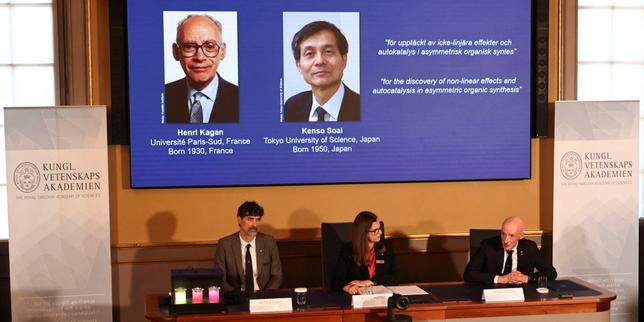
Let us address the elephant in the room: why do people care so much about who wins a Nobel Prize in chemistry anyway?
The Nobel Prize is a nineteenth-century institution trying to slap a twentieth-century medal onto twenty-first-century team science. Chemistry is no longer driven by solitary geniuses working in back-alley laboratories with glass flasks. It is a sprawling, global enterprise involving automated synthesis robots, cryo-electron microscopes, petabytes of simulation data, and multidisciplinary teams spanning chemical engineering, artificial intelligence, and molecular biology.
Henri Kagan is a titan of twentieth-century science. His contributions are permanently etched into the foundation of stereoselective chemistry. But honoring him with a late-career medal does not change the fact that the frontier has moved miles past homogeneous transition-metal hydrogenation.
When we spend our collective energy wringing our hands over who the committee snubbed, we indulge in a comforting conservatism. We look backward at the giants because looking forward at automated bio-synthetic factories and machine-learning-driven retrosynthesis requires confronting the reality that traditional organic chemistry as an academic discipline is undergoing a brutal, necessary identity crisis.
Stop waiting for Stockholm to validate the history of chemistry. The field already left that station decades ago, and the future belongs to those building systems that do not need rare metals or aging validators to prove their worth.