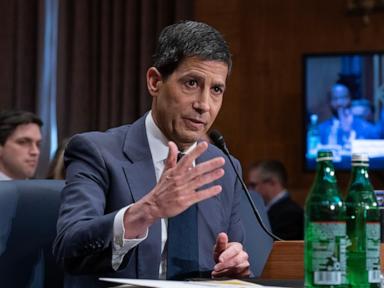
The assumption that a Kevin Warsh-led Federal Reserve would trigger an immediate pivot toward aggressive interest rate cuts ignores the structural constraints of the Federal Open Market Committee (FOMC) and the specific economic philosophy Warsh has refined over two decades. Markets often mistake a "hawk" or "dove" label for a predictable policy path, yet the Chair’s role is one of consensus-building within a massive bureaucratic and intellectual framework. Replacing Jerome Powell with Kevin Warsh does not alter the underlying data—it merely shifts the lens through which that data is interpreted.
The potential for a "Warsh Pivot" is limited by three specific structural anchors: the inflation target mandate, the inertia of the Fed’s professional staff, and the current reality of the neutral rate of interest. To understand why a change at the top may result in policy continuity rather than disruption, one must analyze the mechanics of Fed governance and Warsh’s historical preference for price stability and market-based signaling.
The Consensus Constraints of the FOMC
The Federal Reserve Chair is not a monetary dictator. Policy is determined by the FOMC, a body consisting of seven governors and five rotating regional bank presidents. While the Chair sets the agenda and controls the narrative, they possess only one vote.
A new Chair entering a mid-cycle economy faces "institutional capture." The Fed’s 400+ PhD economists provide the models—such as FRB/US—that dictate the range of "acceptable" policy moves. Deviating sharply from these models requires a level of political capital that new Chairs rarely possess in their first 18 months. Warsh, having served as a Governor during the 2008 financial crisis, is intimately aware that the Fed’s credibility relies on its perceived independence and predictability. Rapid, politically motivated rate cuts would risk a bond market revolt, spiking long-term yields even if short-term rates are lowered.
The Warsh Skepticism of Quantitative Easing
While critics suggest Warsh might bow to executive pressure for lower rates, his record suggests a deep-seated skepticism toward unconventional monetary policy. During his previous tenure, Warsh was a vocal critic of QE2 (the second round of quantitative easing), arguing that the marginal benefits of asset purchases were outweighed by the risks of market distortion and future inflation.
This philosophy creates a high threshold for easing. If Warsh views the current "restrictive" stance of the Fed not as a burden but as a necessary correction to a decade of zero-interest-rate policy (ZIRP), he will likely maintain higher rates for longer than the market currently anticipates. The "cost function" of a Warsh Fed would prioritize the long-term health of the dollar and the elimination of "zombie" companies—those kept alive only by cheap credit—over short-term equity market gains.
Redefining the Neutral Rate
The central debate in current monetary policy is the location of the neutral rate ($R^$), the interest rate at which policy is neither stimulative nor restrictive. If $R^$ has shifted higher due to deglobalization, increased defense spending, and the energy transition, then the current federal funds rate is not as restrictive as it appears.
Warsh has historically focused on market signals—such as the yield curve and credit spreads—rather than purely lagging indicators like the Consumer Price Index (CPI). If credit spreads remain tight and financial conditions are loose, a Warsh-led Fed would likely conclude that $R^*$ is high. Under this logic, there is no "fire" to put out with rate cuts. The mechanism for a cut would require a clear breakdown in market functioning or a spike in real-time unemployment, not merely a desire to reach a 2% inflation target faster.
The Productivity Variable
A distinct feature of Warsh’s economic worldview is his emphasis on the supply side. He frequently argues that monetary policy cannot substitute for structural economic reform. While a typical "dove" might lower rates to stimulate demand, Warsh’s strategy often suggests that stable, predictable prices are the best contribution the Fed can make to growth.
This creates a paradox for those expecting stimulus:
- If the economy is growing due to productivity gains (AI, automation), Warsh may see no reason to cut rates, as the growth is non-inflationary.
- If the economy is slowing due to regulatory or fiscal drag, he may argue that rate cuts are an ineffective "Band-Aid" for structural problems.
In both scenarios, the bias is toward holding steady rather than cutting. The "Warsh Doctrine" views the Fed as a referee, not a player. A referee does not change the score to make the game more exciting; they ensure the rules are followed so the players can perform.
The Inflation Risk Premium and the Term Premia
A significant risk in the transition to a new Fed Chair is the "credibility gap." If the market perceives the new Chair as less committed to the 2% inflation target, the term premia—the extra compensation investors demand for holding long-term debt—will rise.
$$\text{Long-term Yield} = \text{Expected Path of Short-term Rates} + \text{Term Premium}$$
If Warsh were to cut rates prematurely, the "Expected Path" might drop, but the "Term Premium" would likely surge as inflation expectations become unanchored. The result would be higher mortgage rates and higher corporate borrowing costs despite a lower Fed funds rate. This "Policy Inverse" is exactly what a sophisticated strategist like Warsh would seek to avoid. His primary objective upon taking office would be to "out-hawk" the market to squash any notion that he is a political appointee. This suggests that the first six months of a Warsh Chairmanship would likely be more restrictive, not less, than a continued Powell term.
The Geopolitical Risk Overlay
Monetary policy in 2026 is no longer a domestic affair. The weaponization of the dollar and the shift toward bilateral trade agreements have increased the importance of the Fed’s "swap lines" and its role in global liquidity. Warsh’s background in international finance and his time at the White House National Economic Council suggest he would view interest rates through a geopolitical lens.
Maintaining a strong dollar is a strategic imperative in an era of Great Power competition. Lowering rates too aggressively would weaken the dollar’s carry-trade advantage, potentially accelerating the diversification of global reserves into other currencies. Warsh is unlikely to sacrifice the dollar’s international standing for a domestic growth spurt.
The Mechanics of Transition
The logistics of a leadership change at the Fed are intentionally slow. A nominee must undergo Senate confirmation, a process that can take months and involves intense scrutiny of past statements. During this period, the "lame duck" Chair typically maintains a steady hand, and the Fed’s staff begins the "onboarding" of the nominee’s ideas into the committee’s briefing books.
This transition period creates a natural "policy freeze." The Fed is loath to make major moves during a change in leadership to avoid the appearance of pre-empting the new Chair or reacting to the outgoing one. Consequently, the window for significant rate cuts actually closes during the transition months.
Strategic Assessment of the Credit Cycle
The current credit cycle is characterized by a "maturity wall" of corporate debt that was issued during the 2020-2021 period of ultra-low rates. This debt must be refinanced in 2026 and 2027. A populist approach would be to cut rates to ease this refinancing burden. However, a rigorous analyst would note that the Fed’s primary mandate is not "corporate balance sheet protection."
Warsh’s previous writings suggest he views the "cleansing" effect of higher rates as a necessary component of a functional capitalist system. By allowing weaker firms to fail or restructure, capital is reallocated to more productive sectors. Therefore, the "Maturity Wall" is more likely to be met with "Selective Liquidity" (targeted facilities) rather than a "Broad Pivot" (general rate cuts).
Capital Allocation in a High-Rate Environment
Institutional investors should recalibrate their expectations regarding the "Fed Put"—the idea that the Fed will always step in to save the markets. A Warsh-led Fed would likely move the "strike price" of that put much lower. Under Powell, a 20% market correction might trigger a pause; under Warsh, it might take a 30% drop or a total freeze in the repo markets to elicit a response.
The logic here is a return to "Price Discovery." When money is free, risk is mispriced. When money has a cost, investors must perform actual due diligence. Warsh’s appointment would signal an end to the era of "Macro-Driven Everything" and a return to "Micro-Fundamentals."
Execution Strategy for the 2026-2027 Cycle
The transition to a Warsh Fed requires a shift from "Duration Play" to "Quality Play." If rates are to stay higher for longer, the strategy must prioritize:
- Cash Flow Seniority: In a higher-for-longer environment, the cost of capital eats the bottom line. Firms with low leverage and high internal rates of return (IRR) will outperform.
- Short-Duration Fixed Income: Capturing the current high yields without exposing the portfolio to the volatility of the long end of the curve, which remains vulnerable to rising term premia.
- Volatility Hedging: The transition of power at the Fed introduces "Model Risk." Markets will spend months trying to "price" the new Chair’s reaction function, leading to increased swings in the 2-year Treasury note.
The most probable path for a Warsh-led Fed is a disciplined, data-dependent stance that prioritizes the structural integrity of the financial system over the immediate desires of the interest-rate-sensitive sectors. Expect a focus on "Normalizing" the balance sheet and a refusal to use the federal funds rate as a tool for social or industrial policy. The era of the Fed as the primary engine of economic growth is closing; the era of the Fed as a conservative guardian of value is returning.
The strategic play is to ignore the "Cut" headlines and position for a "Plateau." The FOMC’s internal inertia, coupled with Warsh’s own supply-side and market-signal leanings, suggests that the cost of capital will remain a permanent fixture of the corporate landscape. Organizations that have built their business models on the assumption of a return to 2% interest rates will find themselves fundamentally misaligned with the new regime.