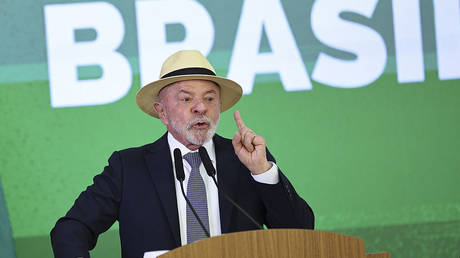
Trade wars rarely go according to plan. When the White House slaps aggressive levies on foreign goods, politicians usually promise domestic protection. But look south of the equator right now, and you will see a masterclass in unintended consequences. Brazilian President Luiz Inácio Lula da Silva isn't just complaining about recent American trade barriers—he's actively weaponizing them to shift global alliances away from Washington.
If you think these economic penalties are minor diplomatic tiffs, look at the numbers. Trade data shows bilateral exchanges between the U.S. and Brazil dropped by 12.8 percent over a single year. Meanwhile, Brazilian commerce with China jumped 15.9 percent, while trade with the European Union crept up by 6.1 percent. Washington is basically handing South America's biggest economy to its geopolitical rivals on a silver platter.
The Economic Reality Behind the Tariffs
Let's clear up the core misconception driving these policies. The official narrative from Washington claims that harsh duties are necessary to correct an unfair trade imbalance and punish regulatory overreach. But reality tells a completely different story.
Over the past fifteen consecutive years, the United States has maintained a massive trade surplus with Brazil totaling $428 billion. Think about that for a second. Brazil buys far more American goods and services than it sells back. Imposing steep tariffs—ranging anywhere from 12.5 percent to 37.5 percent—on a nation that consistently feeds a U.S. surplus makes zero economic sense.
American industries actually depend heavily on Brazilian raw materials and components. When you tax auto parts, footwear, textiles, furniture, and food imports, you don't hurt foreign factories. You simply send inflation skyrocketing for everyday consumers shopping in the U.S.
Political Motives Disguised as Trade Policy
You cannot separate this economic pressure from domestic politics. The entire friction started when a public letter from Washington explicitly referenced former Brazilian leader Jair Bolsonaro. Bolsonaro was convicted for attempting a coup d'état and placed under house arrest. Right-wing political factions in Brazil have actively lobbied foreign officials to use economic coercion as leverage to overturn local judicial rulings.
This is where the strategy backfires completely. Brazilians hate foreign interference. When a superpower tries to dictate internal legal matters through economic blackmail, local populations rally around their sitting government. Lula has turned these external attacks into a political asset, successfully convincing voters that economic penalties stem from sore losers trying to bypass national courts.
Instead of bending the knee, Brasilia is looking elsewhere for economic partners. Swiss-based independent trackers note that Brazil and Turkey now rank directly behind China as the most heavily tariffed nations by the United States. When you isolate major regional players, they simply stop doing business with you.
What This Means for Global Supply Chains
Supply chains take decades to build and mere months to destroy. Once companies find alternative suppliers in Europe or Asia, those commercial routes become permanent. Brazilian firms are actively replacing American vendors with global competitors who offer stable, predictable trade agreements.
Latin America doesn't need punitive taxes or military posturing. The region needs reliable commerce and consistent investment. By closing off access, Washington creates a vacuum that other global powers are more than happy to fill.
Stop pretending these protectionist measures protect domestic workers. They alienate vital allies, drive up consumer prices, and push the Western Hemisphere straight into the arms of competing superpowers.
This video explores how sweeping U.S. tariffs on Brazil are reshaping international relations and pushing South American leadership to forge deeper economic ties with alternative global powers.