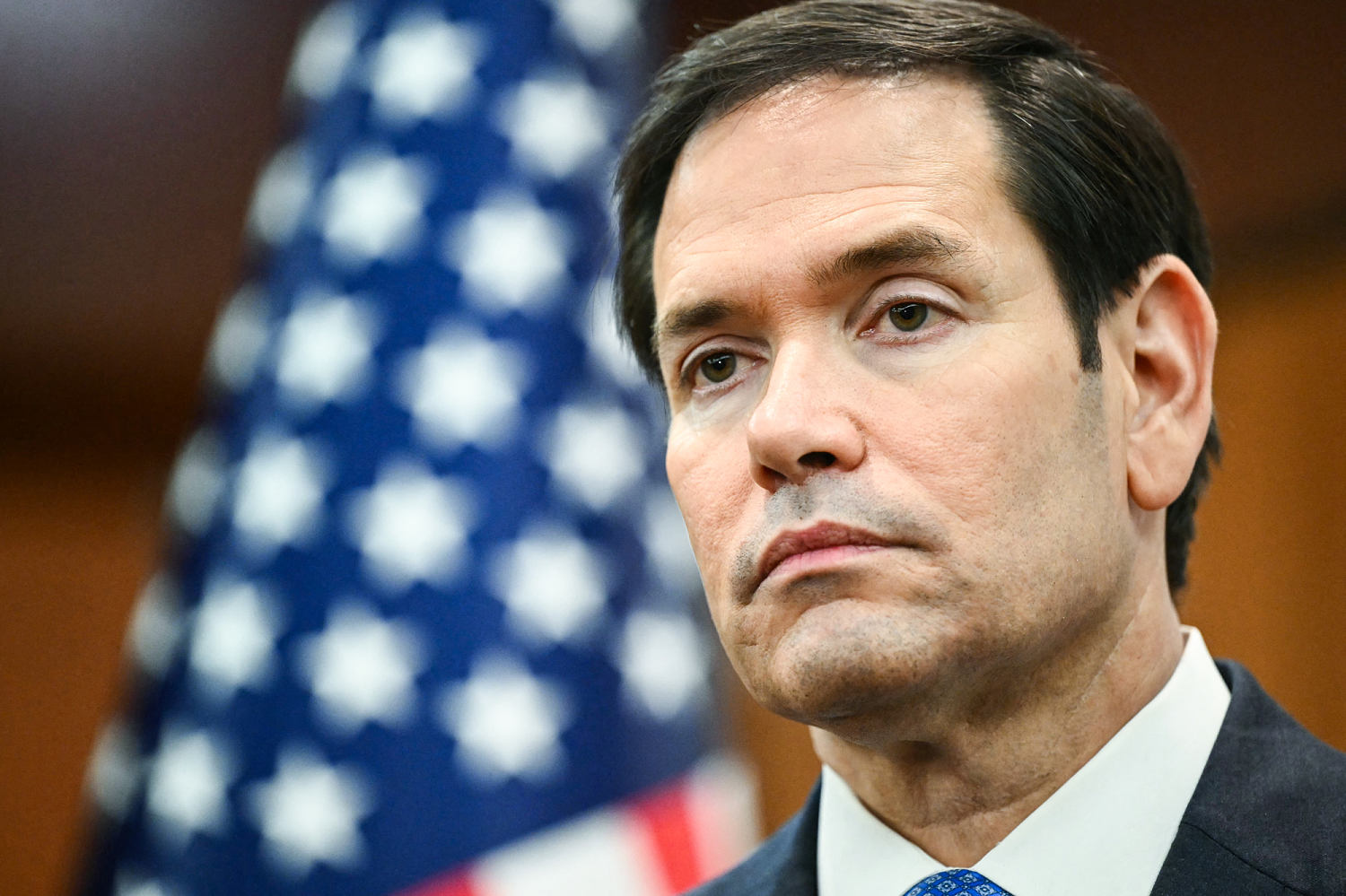
The headlines are predictable. They scream about "secret lobbying," "clandestine operations," and the dramatic courtroom appearance of a sitting Senator. Marco Rubio takes the stand, the media performs its choreographed gasp, and the public is led to believe the Department of Justice is finally scrubbing the swamp.
It’s a fantasy.
The trial of David Rivera, Rubio’s former roommate and ex-congressman, isn't a masterclass in national security. It’s a glaring indictment of a broken, performative system called FARA—the Foreign Agents Registration Act. While the press obsesses over the salacious details of a $50 million contract with a Venezuelan state-owned oil firm, they are missing the systemic rot. The real story isn't that a politician might have broken the rules; it’s that the rules are designed to be a selective weapon rather than a shield for American interests.
The FARA Trap: A Law for Enemies, a Pass for Friends
We are told that FARA exists to ensure transparency. If you work for a foreign power, you put your name on a list. Simple, right?
Wrong. FARA is a 1938 relic that was largely ignored for decades until it became a convenient tool for political scalp-hunting. I’ve watched the D.C. machinery long enough to see how this works: the law is so broad that nearly any interaction with a foreign entity could technically require registration. Yet, the DOJ only seems to find "secret agents" when they need a headline or a high-profile conviction to justify a budget increase.
If David Rivera is a criminal for allegedly failing to file paperwork while trying to prevent sanctions, then half of K Street should be in handcuffs. The distinction between "consulting," "strategic advising," and "lobbying" is a semantic game played by people with $1,000-an-hour lawyers. Rivera’s mistake wasn't just the alleged secrecy; it was his lack of institutional protection. He operated on the fringes of the elite, making him the perfect sacrificial lamb for a DOJ eager to look tough on "malign foreign influence."
The Myth of the Influenced Politician
The core argument of the prosecution—and the media’s favorite narrative—is that Rivera was "buying" influence. They want you to believe that a few meetings and some back-channel messages can redirect the massive, slow-moving ship of U.S. foreign policy.
It’s an insult to your intelligence.
Senator Rubio’s testimony actually highlights the absurdity of the claim. Rubio didn't shift his stance on Maduro. He didn't soften. If anything, he became a more vocal hawk. This "influence" bought the Venezuelan regime exactly nothing.
The obsession with "secret lobbying" ignores the reality of how power actually functions. Real influence isn't a guy in a trench coat handing over an envelope; it’s the multi-decade cultivation of think tanks, university endowments, and "educational" exchange programs. Those are perfectly legal. Those don't require the drama of a criminal trial. We are hyper-fixated on a $50 million bungled contract while billions of dollars in sovereign wealth fund investments shape our tech sector, our real estate, and our media with zero scrutiny.
Why "Transparency" is a Failed God
The "People Also Ask" crowd wants to know: How do we stop foreign interference?
The answer is: You don't. Not like this.
The demand for more transparency via FARA is a dead end. Increasing the paperwork burden doesn't stop the bad actors; it just ensures that only the most sophisticated ones—the ones who can afford the compliance teams to hide their tracks legally—remain in the game.
The Industry Insider’s Reality Check:
- Complexity is a Feature: The more complex the disclosure laws, the easier it is for a savvy firm to find a "carve-out."
- Selective Enforcement: FARA is the "Jaywalking" of federal crimes. Everyone does it to some degree, but only the unlucky or the politically inconvenient get stopped.
- The Venezuela Paradox: If the U.S. is serious about isolating Maduro, why is the most significant "threat" a washed-up ex-congressman trying to get a payday? It suggests the regime’s actual reach is pathetic, not terrifying.
We are witnessing a spectacle designed to make the public feel safe. We see the Senator on the stand, we see the stern-faced prosecutors, and we think the system is working.
The $50 Million Distraction
Let’s talk about the money. The $50 million contract from PDVSA (Petróleos de Venezuela, S.A.) is being used as proof of a massive conspiracy. In reality, it’s a classic example of "Gringo Pricing."
Desperate regimes throw money at anyone who claims to have "access" in Washington. Most of the time, they are being scammed by the lobbyists, not the other way around. Rivera wasn't a mastermind; he was likely a middleman in a high-stakes game of telephone where the only real winners were the banks moving the fees.
If we want to actually protect American policy from foreign meddling, we should stop obsessing over whether David Rivera filed a form and start asking why our policy is so easily bypassed by the highest bidder in the first place. The problem isn't the "secret" lobbyist; it’s the fact that our entire political system is a marketplace where access is a commodity.
Stop Looking for "Spies" and Start Looking at Interests
The mainstream media wants to frame this as a spy thriller. It’s not. It’s a bankruptcy of foreign policy realism.
We’ve created a environment where any attempt at diplomatic back-channeling—even if it’s for the purpose of de-escalation—is immediately branded as "criminal lobbying" if the right forms aren't filled out. This doesn't make us safer. It makes our foreign policy rigid and prone to failure because no one wants to risk a 20-year prison sentence for talking to the "wrong" person.
The Rivera trial is a distraction from the uncomfortable truth: Washington thrives on this money. The outrage is selective. The enforcement is political. The result is a theatrical display of "integrity" that covers up a system where foreign influence is the default, not the exception.
Stop asking if David Rivera is guilty. Start asking why the DOJ needs a high-profile trial to prove they are doing a job they clearly have no interest in doing systematically.
Turn off the trial coverage. It’s a rerun of a show that’s been on the air since 1938, and the ending is always the same: the small fish gets fried, the big fish keep swimming, and the swamp stays exactly as deep as it was before.