The coffee in the paper cup turns cold before anyone remembers to drink it. Across the kitchen table, illuminated only by the pale blue glow of a phone screen refreshing every thirty seconds, a man traces the rim of his mug with a calloused thumb. He is not looking at the news ticker for entertainment. He is looking for a schedule.
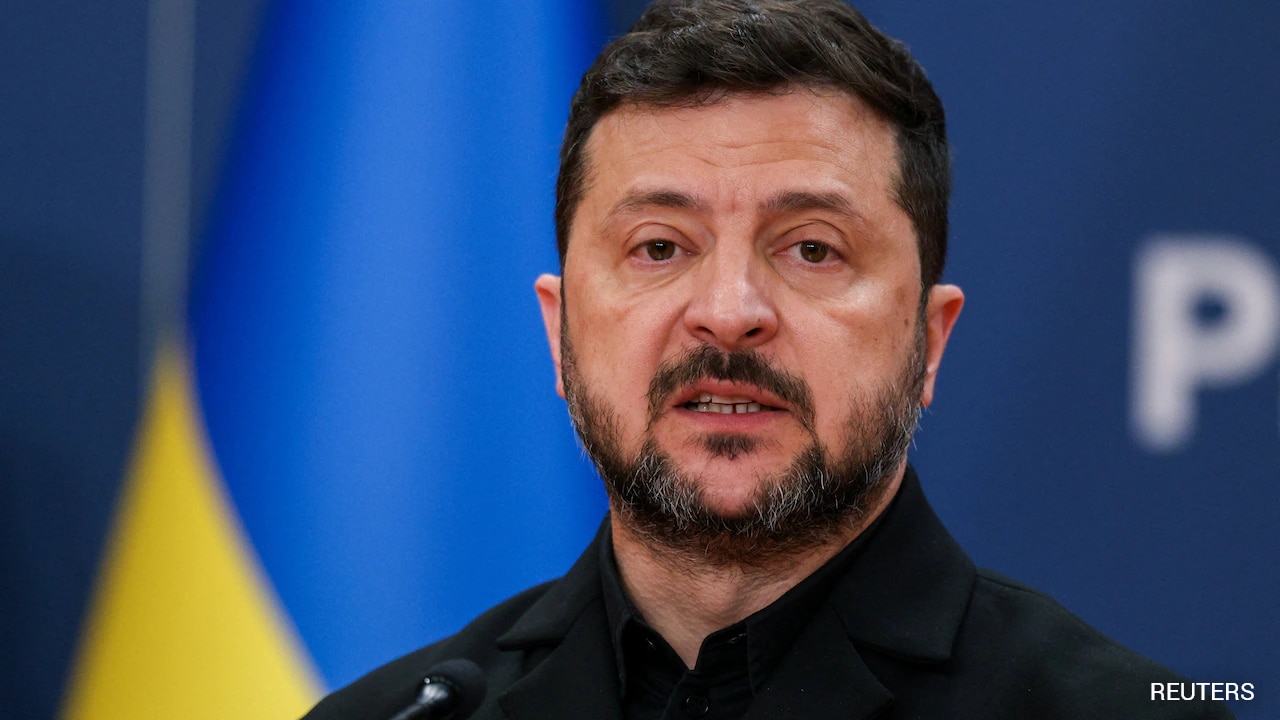
When reports surface that Moscow is preparing another mass assault, another wave of multi-vector devastation aimed at the fragile architecture of civilian survival, the numbers inside the dispatches—missile counts, drone types, estimated trajectories—tend to flatten reality. They turn human breath into statistics. But on the ground, in the quiet hours before dawn when the air tastes of sulfur and damp earth, a warning from President Volodymyr Zelenskyy about an impending aerial onslaught carries a very different weight. It sounds like an alarm clock that has been ringing for three years straight. If you liked this post, you should look at: this related article.
Consider what happens in a city when the air raid sirens stop being an interruption and become the baseline tempo of daily existence.
Oleksandr, a former high school physics teacher who now repairs municipal power transformers under the cover of night, knows this rhythm intimately. His hands are permanently stained with industrial grease and microscopic carbon soot. When the intelligence briefs arrive from Kyiv warning that military planners across the border are stockpiling cruise missiles and calibrating Shahed drones for a renewed campaign against energy grids, Oleksandr does not analyze geopolitics. He checks his inventory of spare copper wire, heavy-duty wrenches, and thermal blankets. For another look on this story, refer to the latest coverage from TIME.
"People think a war is fought only with tanks and treaties," Oleksandr says, his voice dropping an octave as a distant rumble vibrates the windowpanes of his basement workshop. "It is fought in the dark. Literally. They want to turn our winter into a weapon. They want the cold to do what their artillery sometimes cannot finish."
This is the invisible architecture of modern attrition. When military analysts discuss a new mass attack, they often frame it through the lens of strategic capability—salvo sizes, launch platforms, air defense interception rates. Yet the true objective of these coordinated strikes extends far beyond military installations. The target is the nervous system of an entire society. By focusing missiles on substations, water pumping stations, and heating hubs, the strategy aims to fracture morale one blackout at a time.
History teaches us that prolonged bombardment rarely achieves quick capitulation; instead, it hardens resolve into something resembling basalt. Yet, that hardening comes at a brutal human cost.
Picture Sofia, a pediatric nurse working in a makeshift underground maternity ward in Kharkiv. During the worst of the previous winter campaigns, she delivered newborns by the flickering light of emergency headlamps while anti-aircraft guns rattled the foundation above them. When she hears that another large-scale aerial assault is looming, her immediate fear is not for herself. It is for the oxygen concentrators. It is for the premature infants whose tiny lungs depend on a grid that hangs by a thread.
"You learn to listen to the pitch of the sky," Sofia explains, wiping her brow after a twelve-hour shift. "A high, thin whine means a drone. A heavy, tearing roar means a cruise missile. Your body learns the alphabet of violence before your mind has time to be afraid."
Zelenskyy’s persistent warnings to the international community—and to his own citizens—are an exercise in psychological preparation. In a democracy fighting for its survival, withholding ugly truths breeds panic; sharing them builds a grim, collective readiness. When the head of state announces that intelligence points to an imminent escalation, it is a signal to clear the shelves, charge the backup batteries, check the bomb shelter door hinges, and mentally brace for another sleepless night.
The mechanics of these impending attacks are depressingly methodical. Intelligence assessments indicate that Russian forces have spent weeks consolidating missile stockpiles, allowing them to bypass the depletion rates that previously limited their strikes. By pairing hypersonic Kinzhal missiles with swarms of decoy drones, the attacking forces attempt to saturate Ukraine’s Western-supplied air defense networks, such as Patriot and NASAMS systems. The goal is simple math: overwhelm the interceptors, force difficult choices about which targets to protect, and punch holes in the shield.
Yet, behind every radar screen and intercept calculation stands a human operator.
Meet Dmytro, a twenty-four-year-old former IT specialist who now sits in a darkened room filled with glowing monitors tracking incoming aerial vectors. His eyes are bloodshot from staring at green blips crawling across a digital map of Ukraine. Every time a new alert flashes, Dmytro has seconds to calculate trajectory, assign an interceptor team, and issue a radio command that could save a thousand lives in a residential neighborhood fifty miles away.
"The hardest part isn't the fatigue," Dmytro says, his fingers hovering over a mechanical keyboard. "It’s the silence between the warning and the impact. That is when you realize how much is riding on a single keystroke."
The international community watches these developments with a mixture of anxiety and calculated caution. Debates over long-range strike permissions, delivery timelines for advanced munitions, and the economic strain of sustained aid form the backdrop of diplomatic cables in Washington, Brussels, and Berlin. But for the people walking the snow-dusted streets of Odesa, Zaporizhzhia, and Kyiv, diplomacy feels distant, abstract, and slow. Their reality is measured in meters of clear tape crisscrossing glass windows to prevent flying shards, and in the quiet hum of generators outside corner bakeries.
There is a strange dignity in how ordinary citizens adapt to the shadow of impending violence. Grandmothers share tips on which canned goods provide the most calories per ruble. Children learn to distinguish between outgoing artillery fire and incoming explosions with the casual expertise other kids reserve for baseball statistics. This is not militarism; it is the desperate, stubborn preservation of normalcy in a landscape where normalcy has been outlawed.
When the first snow begins to fall over the Dnipro River, it carries a double meaning. It is winter, beautiful and quiet, covering the scars of shrapnel on stone facades and softening the harsh lines of concrete barricades. But it is also the countdown. Every drop in temperature increases the stakes of the anticipated bombardment.
The air grows biting. In millions of kitchens across the country, families boil water on portable gas burners, wrap themselves in extra wool sweaters, and wait. They know what is coming. They know the sirens will wail, the horizon will flash with orange light, and the power may vanish for days.
Yet, as the digital clock ticks toward midnight and the latest defense updates confirm that air defense units are locked, loaded, and watching the skies, something else remains unbroken. It is not loud or cinematic. It is simply the refusal to let the dark win.
The kettle whistles on the small gas ring. Oleksandr pours the hot water into two cracked mugs, hands one to his wife, and looks out the window toward the silent, freezing horizon, waiting for the first light of dawn.