The frost does not care about sovereignty. It settles over the rusted iron of abandoned tractors and the frozen mud of trench lines with the same cold indifference, whitening the scarred earth where orchards used to bloom.
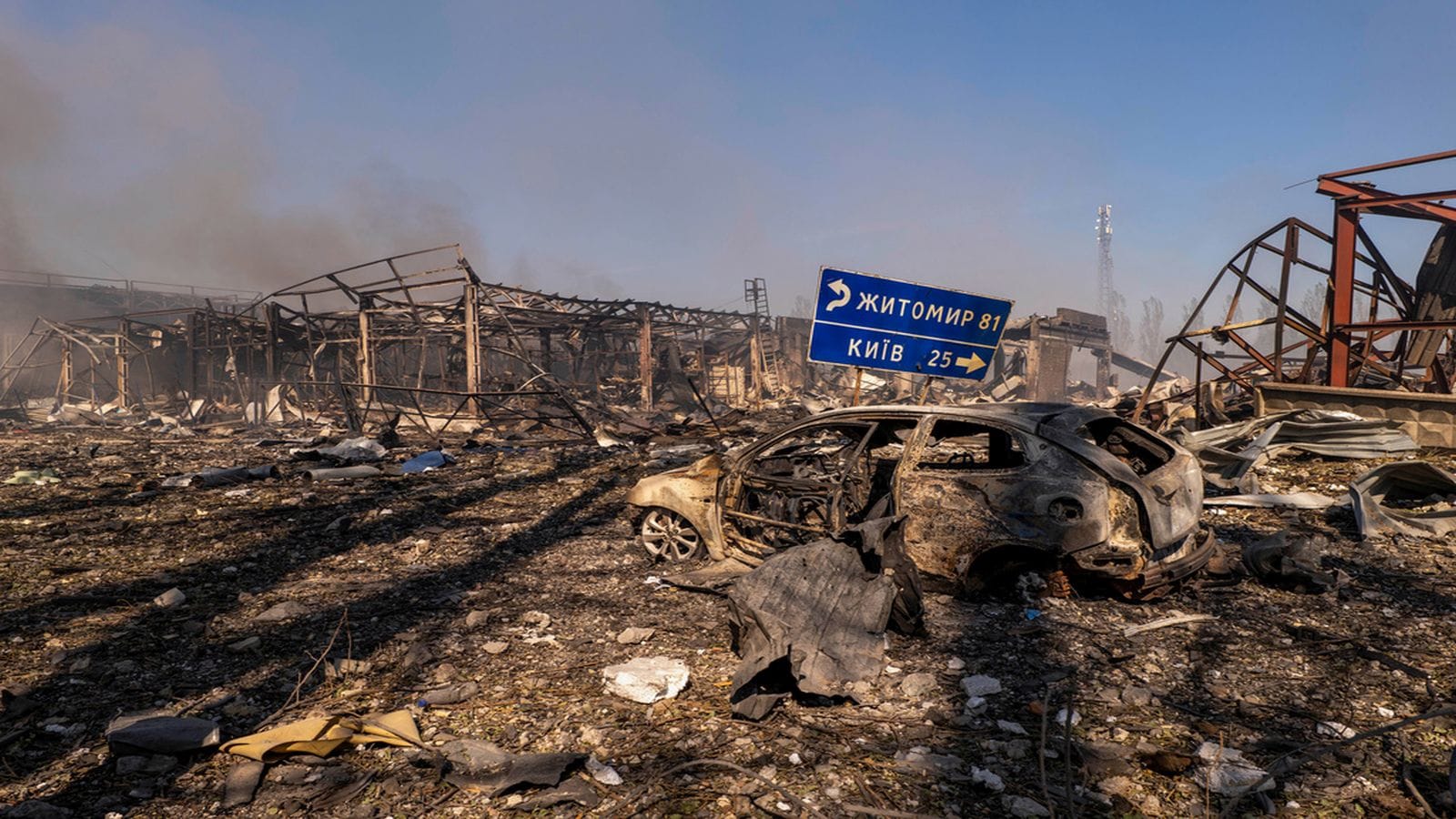
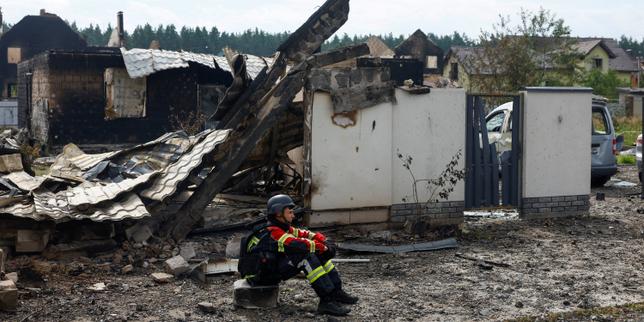
Ask anyone who has stayed behind in the grey perimeter of the eastern front, and they will tell you that the war has its own weather. It is not just the concussive thump of artillery that shakes the tea in the cup, though that becomes a rhythm as familiar as breathing. It is the silence that follows. That stretching, elastic vacuum where a village used to hum with the low chatter of neighbors, now reduced to skeletal brick walls and the sharp, anxious barking of dogs abandoned to the winter.
Consider Maria, whose existence has been distilled into a single subterranean room. She is a hypothetical distillation of thousands of real grandmothers who refuse to leave their cellars in Donetsk and Kharkiv, but her calloused hands and stubborn dignity are entirely authentic. She boils well water on a cracked camp stove, rationing wood she gathers at dusk when the drone operators above are blinded by the long shadows. Every morning, she sweeps the threshold of a home that no longer has a roof, a ritual of defiance against an entropy that wants to erase her entire life.
We look at maps on glowing screens thousands of miles away. We trace red arrows and blue salients with clean fingers, arguing over logistics lines and armor concentrations as if we were moving pieces on a polished wooden board. But war is never abstract to those who inhabit its margins. It is the smell of damp wool and kerosene. It is the torn photograph of a grandson found in the rubble of a kitchen. It is the agonizing calculation of whether to walk to the well during a lull in the shelling.
The daily updates from the front lines speak of movements measured in hundreds of meters, of supply convoys threading through mud, of diplomatic cables shuttling between capitals like frantic couriers in the night. Yet behind these sterile reports lies a grinding war of endurance. It is a contest of attrition fought not just with steel and high explosives, but with the human capacity to absorb grief without shattering.
When the electric grid fails, as it does with terrifying regularity under the impact of winter strikes, the darkness does not merely arrive; it descends with physical weight. Children huddle under layers of heavy quilts, their breath pluming in the icy air of classrooms converted into makeshift shelters. Teachers who once taught geometry now teach the children how to identify the whistle of an incoming mortar from the whine of a generator. This is the invisible infrastructure of survival. It is built from shared flasks of lukewarm tea, whispered stories to distract from the concussions outside, and the stubborn insistence that tomorrow will demand an answer.
The political capitals debate packages and thresholds. They weigh the cost of artillery shells against the cost of inaction, calculating budgets in parliamentary chambers where the air is warm and the coffee is fresh. But every delay on a spreadsheet translates directly into a longer night for Maria. Every hesitation in a supply chain echoes in the cold cellars where families wait out the barrage.
Scale is the great deceiver of modern conflict. We are told of tens of thousands, of millions displaced, of billions spent. These numbers act as armor for the human mind, shielding us from the unbearable specific weight of a single destroyed life. To truly understand the map, you have to look past the arrows and find the kitchen table buried under plaster.
History teaches us that conflicts of this magnitude are rarely resolved in a single cinematic clash. They wear down until something snaps or something gives. But long before the treaties are signed in gilded rooms with heavy mahogany tables, the human spirit has already undergone its own quiet transformation. People adapt. They learn to sleep through the tremor in the floorboards. They plant onions in window boxes lit by the faint, flickering glow of dying batteries.
The horizon in the east remains heavy with smoke. The cold deepens with every passing hour. Yet beneath the frozen crust of the earth, the roots wait. They do not consult the headlines. They do not wait for the diplomats to finish their coffee. They simply endure, holding onto the dark soil until the spring finally decides to break.