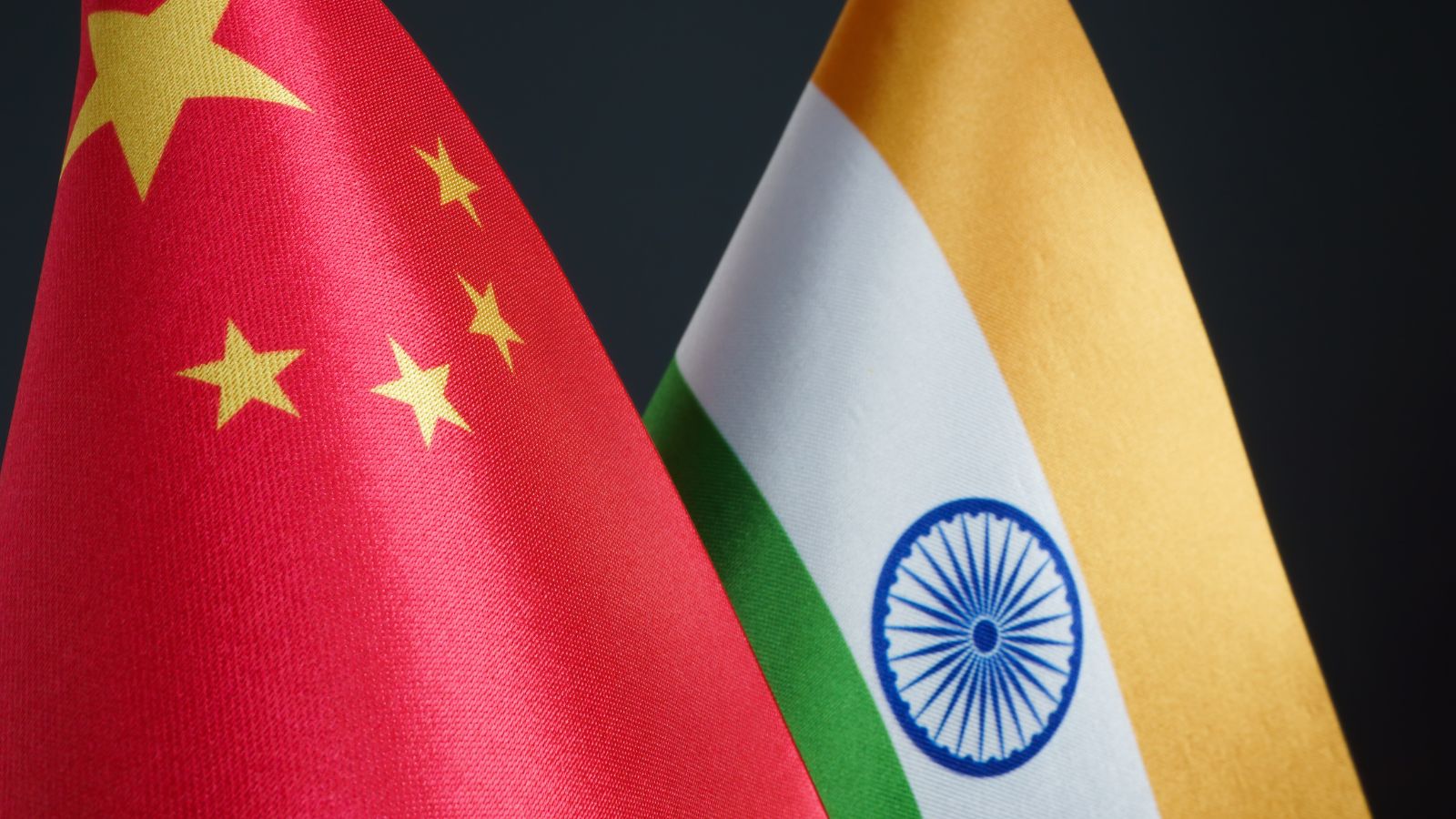
The wind does not care about diplomacy. It sweeps down the barren gravel flats of the Himalayas, tearing at prayer flags, carrying the dry, biting chill of an altitude where every breath feels earned. Stand long enough on the high frontier between two of the world's most populous nations, and you realize that geopolitics is rarely written in grand stone palaces. It is written in boots frozen to the ground, in the silent stare of sentries across a frozen ridge, and in the quiet anxiety of farmers thousands of miles away who wonder if the next trade shipment will clear customs.
Let us step back for a moment from the official statements. Let us leave behind the podiums in Beijing and the press briefings in New Delhi.
Imagine a hypothetical watchtower, perched on a jagged precipice three miles above sea level. Call him Ramesh. He is a young soldier whose skin has been weathered deep brown by the fierce mountain sun, his eyes perpetually bloodshot from the thin air and glaring ice. Ramesh does not read diplomatic cables for breakfast. He reads the wind. He reads the subtle shifts in patrol schedules across the valley. When the other side clears a patch of earth or drives a new stake into the permafrost, Ramesh notices. To him, stability is not a press release. Stability is whether he will spend his birthday huddled behind a windbreak or sharing a cautious cup of sweet tea with a peer who wears a different flag on his shoulder.
Yet, hundreds of miles away in sleek conference halls, words carry a very different weight.
Recently, the official narrative from Beijing delivered a familiar verdict: the border is "generally stable." It is a carefully chosen phrase. Diplomats love words like "generally." It is a linguistic safety net. It means things are quiet today, while leaving enough room to maneuver if the guns start talking tomorrow.
Across the aisle, New Delhi offered a starkly different tune, tying the elusive ghost of border peace directly to the broader health of bilateral ties.
India's position is blunt. You cannot shake hands with one hand while the other is tightening a vice around your throat. Trade, commerce, cultural exchanges, and diplomatic trust cannot thrive in a vacuum while tens of thousands of heavily armed troops stare each other down across a disputed line of actual control.
This is the central friction of our era. Two nuclear-armed giants, bound by history, geography, and a billion-plus populations, locked in a tense waltz.
To understand why this matters to anyone outside military command centers, consider what happens when a border freezes. Supply chains stutter. Technology components face invisible bottlenecks. Investment capital grows nervous. Markets twitch. A dispute over a few square miles of desolate rock might seem distant to a software engineer in Bangalore or a factory worker in Guangzhou, but the economic tremors travel fast. When political trust evaporates, economic cooperation becomes collateral damage.
History whispers a warning here. Nations do not usually stumble into major conflicts overnight. They slide into them through a slow accumulation of small miscalculations. A patrol goes too far. A radar locks on a second too long. A diplomatic snub closes a door that took decades to open.
This is where the human element becomes terrifyingly fragile.
I remember speaking with a retired diplomat years ago who spent his life untangling these exact knots. He poured a cup of lukewarm coffee, stared out a rain-streaked window, and said something that stayed with me. He said, "Peace is not a monument. It is a garden. You have to weed it every single day. The moment you assume it looks after itself, the thorns take over."
Right now, the garden is choked with thorns of suspicion.
The border may be "generally stable" in the cold calculus of military logistics, but stability without trust is just a ceasefire waiting for an excuse to expire. It is a fragile shell of ice over a roaring river.
Consider what happens next if both sides refuse to budge. The militarization of the high Himalayas accelerates. Roads, tunnels, and airbases slice deeper into pristine wilderness. Billions of dollars that could lift millions out of poverty are instead poured into concrete bunkers and high-altitude interceptors. The opportunity cost is astronomical. Every missile bought is a school unfunded, a hospital unbuilt, a future compromised.
Yet, hope rarely dies completely in these desolate places. Even in the dead of winter, flowers manage to push through frozen cracks.
Diplomatic channels remain open. Military commanders still sit across tables in cavernous tents, drinking tea and arguing over millimeters of map coordinates. They talk because the alternative is unthinkable. They know that once the machinery of escalation truly spins out of control, no one gets to steer the outcome.
The world watches with bated breath, waiting to see if leadership can transcend old grudges.
We are left standing on the edge of that frozen precipice, looking down at the winding paths below. The wind howls across the peaks, whispering ancient secrets to the stone. Whether those peaks will witness a new era of pragmatic cooperation or a tragic descent into perpetual hostility depends entirely on the courage of men sitting far away from the snow, realizing too late that peace is the only victory that truly matters.


