The sea does not care about passports. It does not look at a child and see a statistic, a political talking point, or a line item on a legislative agenda. It sees only mass, displacement, and gravity.
When the wooden hull splintered against the dark water off the coast of Cyprus, the Mediterranean didn't roar. It swallowed. Learn more on a similar issue: this related article.
I have spent years standing at the edges of these tragedies, listening to the silence that follows. That particular kind of quiet is heavier than any noise. It hangs in hospital corridors where fluorescent lights buzz like dying insects. It sits in the hollow spaces of a mother's chest when her hands are suddenly, terrifyingly empty.
To understand what happened that night, we have to strip away the dry language of international maritime reports. We have to look past the bureaucratic euphemisms. Additional analysis by NPR explores similar perspectives on this issue.
The Distance Between Hope and the Horizon
Elena stood on the deck, feeling the bite of salt spray against skin that had already been weathered by months of uncertainty. Beside her, seven-year-old Maya clutched the hem of a frayed woolen coat. The boat was a ghost vessel long before it hit the water, carrying far more bodies than its rotting planks could ever justify. Every wooden rib groaned under the pressure. Every wave felt like a physical blow.
(Note: While Elena and Maya represent the lived reality of countless families making this perilous crossing, their specific dialogue here is a narrative reconstruction based on verified accounts from survivors of the Cyprus boat capsize.)
"Mama, are we there yet?" Maya asked, her voice small against the roaring engine.
"Soon, my love," Elena whispered. Her throat was tight with a lie she prayed would become true.
They weren't looking for luxury. They were looking for air. When the ground beneath your feet becomes a graveyard, the sea looks like a door, even when you know it's locked.
The capsize didn't happen in slow motion. That is a myth born of movies. Real disaster arrives with brutal efficiency. One moment, the horizon is a distant gray smudge. The next, the deck tilts at an impossible angle. Gravity ceases to be a law and becomes an executioner.
Elena remembered the cold water hitting her chest like a solid wall. She remembered the screech of terrified voices cut short as the brine rushed into open mouths. And above all, she remembered the desperate, frantic reach of her fingers as Maya slipped away into the ink-black depths.
Why the Statistics Fail Us
We read the numbers on morning news feeds. Twelve missing. Three confirmed dead. Dozens rescued.
We digest them with our coffee and scroll past. But numbers are an anesthetic. They dull our capacity for outrage. They let us believe that these are isolated incidents, tragic anomalies in an otherwise orderly world.
Consider what happens next: The headlines fade. The rescue vessels return to port. Politicians issue measured statements expressing deep regret while tightening the very borders that forced families onto those rotting hulls in the first place. The cycle resets.
The human cost of migration policy is rarely measured in boardrooms. It is measured in lungs filled with seawater. It is measured in the agonizing wait of relatives sitting thousands of miles away, staring at a phone that will never ring again.
When we talk about maritime tragedies in the Mediterranean, we are not talking about weather events. We are talking about choices. We are talking about a system that treats human desperation as a logistical nuisance rather than a humanitarian emergency.
The Echo After the Storm
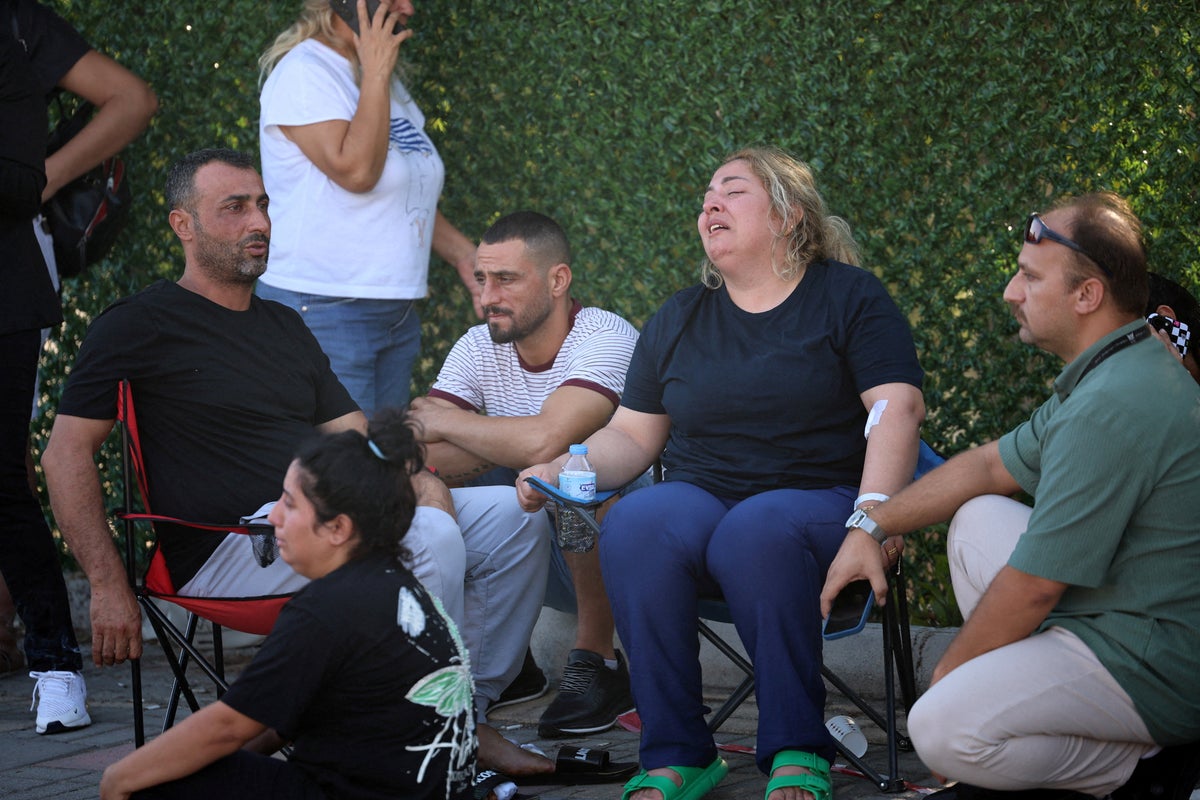
Back on solid ground, in a makeshift shelter smelling of antiseptic and damp wool, Elena sat wrapped in a silver foil blanket. She didn't cry anymore. The well had run dry.
A volunteer knelt beside her, offering a paper cup of lukewarm tea. Elena didn't look at the cup. Her eyes were fixed on the window, where the sun was beginning to bleed over the Mediterranean, indifferent to the wreckage resting on the seabed below.
The water outside looked calm now. Deceptively calm. Glassy. Smooth.
As if it hadn't just swallowed a universe.
The coast guard boats have long since docked. The rescue reports are filed away in metal cabinets, gathering dust under fluorescent lights. But in rooms with drawn curtains, mothers still reach out in their sleep, their fingers closing around nothing at all, searching for a small hand that will never touch them back.