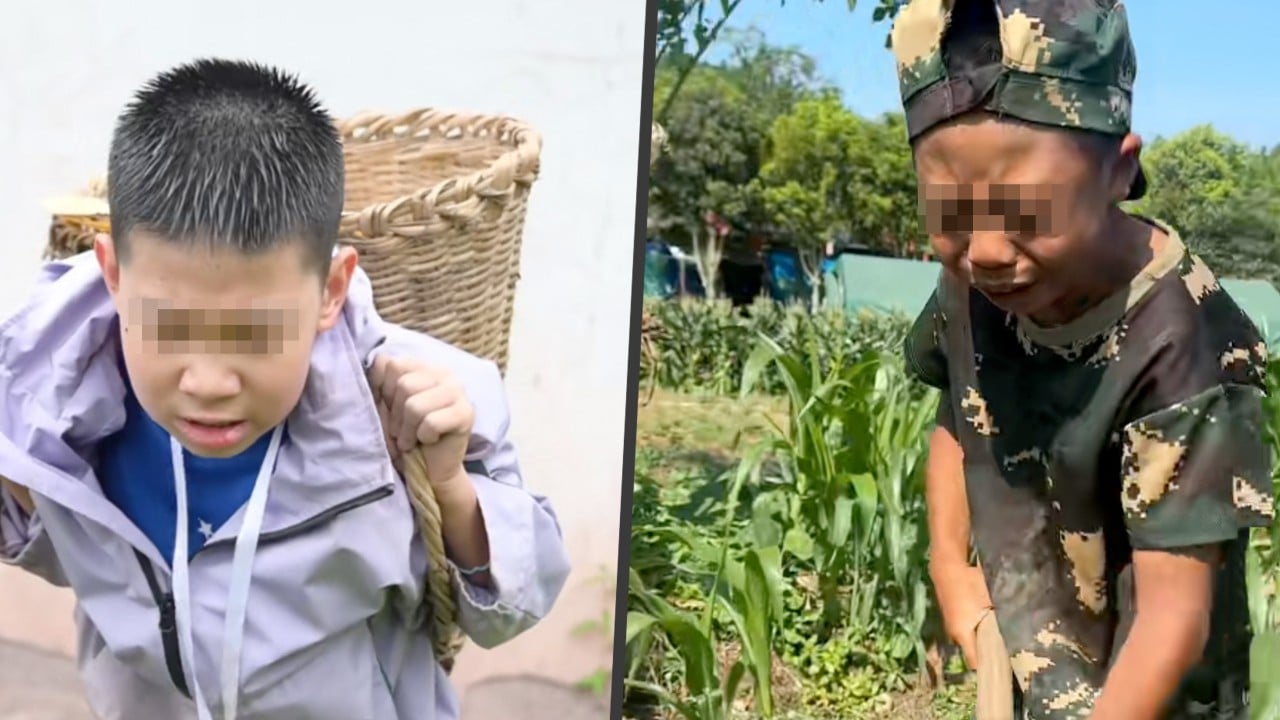
The blister on the palm begins as a hot, stubborn pinch before it swells into a fluid-filled dome. Then, it bursts. The raw skin underneath meets the dry, splintered bark of an oak branch, and the resulting pain is sharp, immediate, and entirely unyielding.
Ten-year-old Jun does not drop the wood. He cannot.
Around him, a dozen other children haul heavy timber through the damp mountain air of rural China. Their breath plumes in gray wisps against the morning mist. Some are crying, their tears carving clean tracks through soot-smeared cheeks. Others move in a heavy, exhausted silence, shoulders hunched under the dead weight of logs meant to feed the cooking fires.
This is not a Boy Scout Jamboree. Nor is it a weekend camping trip designed to build character through toasted marshmallows and ghost stories. This is a hardship camp.
These programs have quietly proliferated across provinces like Zhejiang and Shandong, drawing desperate parents who feel they are losing an invisible war. The enemy is not a foreign power or a failing grade. The enemy is convenience. Modern Chinese cities—slick with neon, humming with high-speed rail, and dominated by high-rise apartments—have bred a generation of children who have never touched raw dirt, let alone earned their daily bread.
To understand why a mother in Shanghai willingly pays thousands of dollars to send her only son to chop wood, slaughter chickens, and scrub latrines, one must first look at the architectural design of modern childhood.
In China, the single-child policy legacy lingers in the psyche long after its formal repeal. Grandparents and parents form a protective phalanx around a single child, often referred to as the "Little Emperor" phenomenon. Four adults hover over one homework desk. Fruit is peeled; shoes are tied; water bottles are carried. The child becomes the axis of the family solar system, receiving light from every direction while giving none back.
The consequences are psychological, not just domestic. Teachers report a rising tide of learned helplessness. Teenagers who throw tantrums because their favorite sneakers are dirty. College students who mail their dirty laundry home through express delivery services. When every obstacle is cleared by a loving adult, the child never develops the internal muscle required to endure discomfort.
Enter the hardship camps.
Strip away the marketing brochures, and you find a stark, militaristic routine. Wake-up calls at five in the morning. Ten-hour days of physical labor. Minimal rations of plain rice, salted vegetables, and watery soup. No smartphones. No tablets. No air conditioning.
The stated curriculum is simple: cultivate family appreciation.
When a child spends four hours hacking through a stubborn knot of hickory with a dull axe, they begin to comprehend the physical toll of labor. When they wash their own uniform by hand in freezing well water, scrubbing until their knuckles turn raw, they stop tossing garments onto the floor for an invisible maid to collect.
Consider what happens next: the psychological pivot.
On the third night of one such camp, organizers typically stage a letter-reading session. The children, exhausted and aching in muscles they never knew they possessed, sit cross-legged on a concrete floor. They are handed letters written by their parents.
In a normal domestic setting, a teenager might skim such a letter with sullen indifference, tossing it onto a cluttered bed. Here, stripped of sensory distractions, the words land with the force of a physical blow. A mother writes about the hours she spends standing at an assembly line, or the humiliation she swallows in a corporate office, just to pay for her son’s cram school tuition.
The silence in the room breaks. First, a muffled sniffle. Then, a dry, wracking sob. Finally, a chorus of weeping as children realize, with sudden, agonizing clarity, that their comfort was purchased with the silent suffering of others.
Critics call it psychological trauma packaged as traditional discipline. Child psychologists have raised valid alarms about the efficacy of shock therapy parenting. Can empathy truly be forged through exhaustion and induced guilt? Does a week of chopping wood permanently alter a child's relationship with their parents, or does it merely teach them how to endure temporary misery to appease adult authorities?
The answer is complicated.
Human beings do not change overnight. A week of manual labor does not erase a decade of coddling. Many children return home, slip back into their silk pajamas, and within a fortnight, demand the latest smartphone upgrade. The old grooves of domestic life run deep, carved by habit and cultural expectation.
Yet, for others, the shift is tectonic.
A father in Beijing recounts how his fourteen-year-old daughter returned from a rural hardship program, walked silently to the kitchen sink, and began washing the dishes piled high from dinner. She didn't announce it. She didn't ask for praise. Her hands, still bearing faint red scars from rope burns, moved with a deliberate, steady rhythm.
That is the hidden mechanism at play here. It is not about the wood. It is not about the pigs. It is about gravity.
Modern life floats. We drift through temperature-controlled rooms, clicking glass screens, detached from the physical reality that keeps us alive. We do not grow our wheat, we do not weave our clothes, and we rarely witness the physical exhaustion of our parents. We float above the earth, weightless and unanchored.
The hardship camp is an artificial gravity machine. It forces the child down, hard, against the unyielding surface of physical reality.
Jun drops his log. It hits the damp earth with a dull thud, kicking up a tiny cloud of dark-brown dust. His shoulders burn. His palms sting. He looks down at his hands, marveling at the new geography of his skin—the blisters, the dirt, the hardening calluses.
He bends down, hooks his fingers beneath the rough bark, and lifts it again.