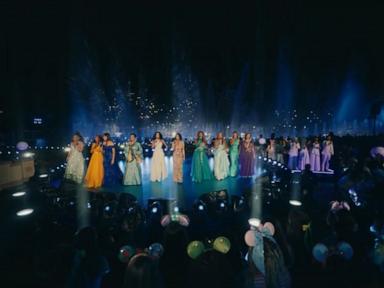
Most directors use music to tell you how to feel. Wes Anderson uses it to show you who his characters are trying to be. When the Hollywood Bowl staged its massive tribute to Anderson's cinematic soundtracks, it wasn't just a nostalgia trip for film nerds. It was a live validation of a directing style that treats pop music not as background noise, but as core script material.
Think about the standard Hollywood formula. A character gets sad, the strings swell. A car chases another car, the percussion kicks into overdrive. It is predictable. Anderson threw that playbook out decades ago. By pairing deeply flawed, meticulously dressed characters with obscure 1960s British Invasion rock, French pop, and melancholic folk, he created a new visual and auditory language. The Hollywood Bowl performance proved that these musical choices hold up even when you strip away the symmetrical framing and pastel color palettes.
The Magic Behind the Wes Anderson Needle Drop
A great needle drop requires more than a good record collection. It demands an understanding of irony and emotional friction. Critics often accuse Anderson of prioritizing style over substance. They say his films are cold, mechanical dollhouses. But the music is where the raw, bleeding heart of his stories hides.
Take the iconic attempted suicide scene in The Royal Tenenbaums. Richie Tenenbaum stands in front of a bathroom mirror, quietly shaving off his hair and beard before cutting his wrists. The background track isn't a tragic orchestral score. It is Elliott Smith's "Needle in the Hay." The acoustic guitar is sparse. The vocals are a haunting, flat whisper. The contrast between the rigid, clean visual composition and the raw despair of the music creates a gut-punch that stays with you for days. It works because the music refuses to dramatize the moment. It simply sits with the character in the dark.
This technique relies heavily on his long-standing collaboration with music supervisor Randall Poster. Together, they dig through archives to find tracks that feel simultaneously timeless and completely forgotten. They don't look for hits. They look for moods.
Recreating Cinematic Intimacy for Ten Thousand People
Translating this intimate approach to a massive outdoor venue like the Hollywood Bowl is a logistical nightmare. Anderson’s musical cues are famous for being small. They are meant for headphone listening or quiet theater audio systems. How do you make the fragile acoustic strumming of Nick Drake or the quirky toy instrumentations of Mark Mothersbaugh resonate across a massive amphitheater?
The tribute concert succeeded by embracing the eclectic nature of the source material. Instead of relying solely on a traditional orchestra, the performance utilized a rotating lineup of specialized musicians. You had chamber pop ensembles, rock rhythm sections, and traditional choirs sharing the stage.
When the opening chords of The Kinks' "This Time Tomorrow" rang out, the venue transformed. The song, which drives the opening sequence of The Darjeeling Limited, lost none of its driving, kinetic energy in the open air. The live setting actually amplified the communal understanding of Anderson's work. Everyone in the crowd knew the exact cinematic frame tied to that specific drum beat.
The French Pop Factor
You can't talk about Anderson’s sonic world without talking about France. His love affair with European culture peaked with The French Dispatch, but the seeds were planted much earlier. The Hollywood Bowl tribute dedicated a massive segment to this specific obsession.
Hearing live renditions of tracks by Georges Delerue and pop anthems by Françoise Hardy highlighted a specific tool in Anderson's kit: using foreign language pop to establish a sense of displaced romance. When a song like "Le Temps de l'Amour" plays in Moonrise Kingdom, it perfectly mirrors the awkward, intense, and slightly theatrical nature of young love. The audience at the Bowl didn't need to speak French to feel the exact weight of that adolescent rebellion.
The Seu Jorge Phenomenon
Perhaps the highest point of the evening was the celebration of The Life Aquatic with Steve Zissou. The film itself received mixed reviews upon release, but its soundtrack remains a undisputed masterpiece. Brazilian musician Seu Jorge’s Portuguese covers of David Bowie classics are legendary.
Seeing a live acoustic performance of "Starman" and "Life on Mars" in that style reminded everyone of Anderson's greatest strength. He knows how to reinvent the familiar. Bowie’s glam rock anthems are massive, theatrical space operas. Stripped down to a classical guitar and sung in Portuguese, they become intimate sailor songs, filled with longing and isolated grief. It fits the world of Steve Zissou perfectly. It turns a massive pop culture staple into a folk myth.
Why This Live Tribute Matters Now
We live in an era where film music has become increasingly standardized. Major studios rely heavily on generic, interchangeable ambient drones or predictable hit-parade pop songs designed to trend on social media. The art of the curated soundtrack feels endangered.
Anderson’s approach is a stark reminder that curation is an art form. His needle drops work because they are deeply personal. They feel like a mixtape handed to you by a friend who knows your secrets. The Hollywood Bowl tribute wasn't just celebrating a director; it was celebrating the idea that popular music can elevate cinema to something transcendent when handled with genuine care and specificity.
If you want to understand why these tracks work so well in your own creative projects or playlist curation, stop looking for songs that match the action on screen. Look for the track that represents what the character wishes was happening instead. Match the internal longing, not the external reality.
Go back and watch the sequence in Rushmore set to The Who’s "A Quick One, While He's Away." Watch how the manic, multi-part rock opera mirrors the escalating prank war between Max Fischer and Herman Blume. The music isn't commenting on the war. It is fueling it. That is the genius of Wes Anderson. He doesn't just put music in his movies. He builds his movies inside the music.