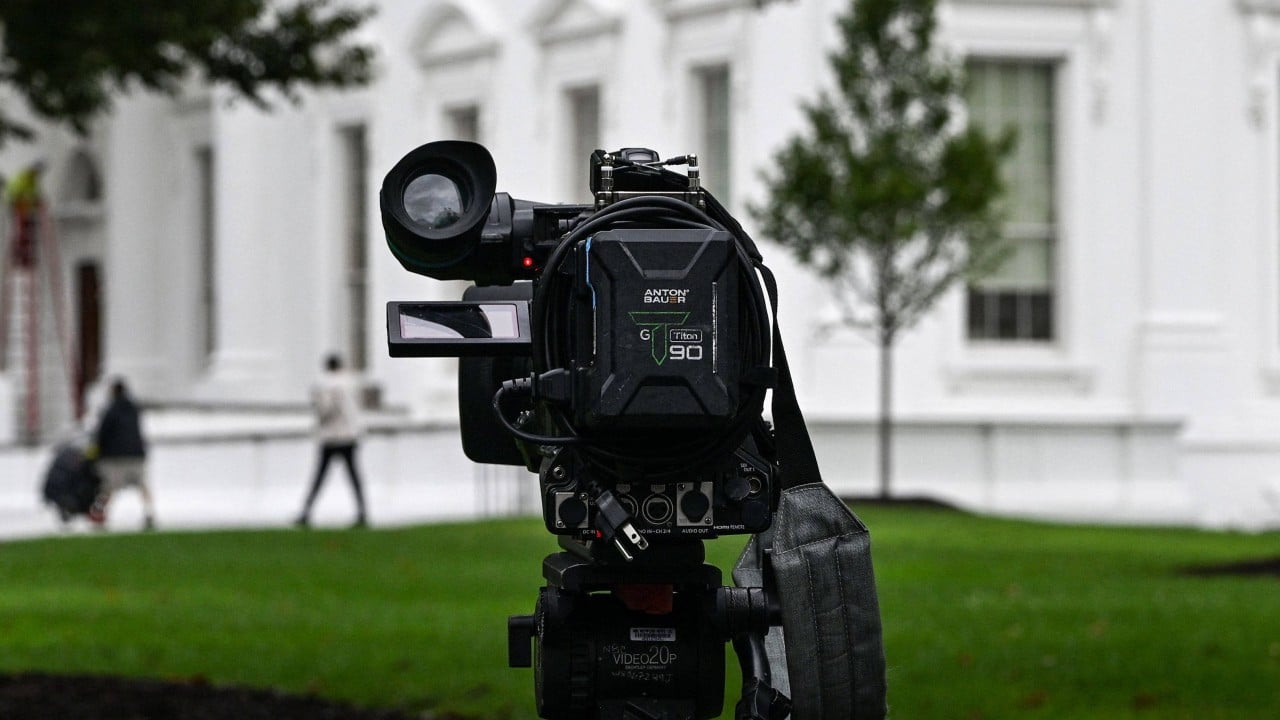
When a federal judge orders the executive branch to restore press credentials stripped from journalists, the immediate headlines celebrate a monumental defense of the First Amendment. Yet beneath the theater of courtroom triumphs lies a harsher administrative reality. Access to the seat of American power has always been treated by presidents as a privilege to be managed rather than an unconditional right guaranteed by the text of the Constitution. Judicial interventions force compliance on paper, but they rarely alter the underlying power dynamics between an administration determined to control its message and reporters fighting for baseline operational transparency.
Let us examine the mechanics of this perennial conflict. Every modern presidency has chafed against hostile questioning. From Richard Nixon compiling enemies lists to Barack Obama utilizing aggressive leak crackdowns, executive hostility toward critical reporting is an embedded feature of American political history. However, the escalation witnessed in recent years transformed routine institutional friction into an open-air brawl. When reporters are barred from the grounds or stripped of hard passes under vague pretexts of professional misconduct, the conflict shifts rapidly from political sparring to administrative law. Discover more on a connected topic: this related article.
The Evolution Of Press Pass Jurisprudence
To understand why these court battles feel both crucial and ultimately limited, one must look back beyond the immediate controversies to established legal precedent. The foundational case governing White House press credentials is Sherrill v. Knight, decided by the D.C. Circuit Court of Appeals in 1978. In that landmark ruling, the court established that because the White House press facilities are public trust property intended for the exercise of First Amendment rights, the executive branch cannot deny a journalist press credentials arbitrarily or without procedural due process.
That precedent has served as the shield for journalists across decades of presidential administrations. Whenever an official decides that a reporter is too aggressive, too critical, or simply persona non grata, lawyers dust off Sherrill v. Knight and march into federal court. Judges, bound by administrative law and constitutional due process requirements under the Fifth Amendment, routinely rule that the government must provide written notice of why a pass is being revoked, an opportunity to respond, and a clear standard of conduct. More reporting by TIME highlights similar views on the subject.
Yet relying on a judicial ruling from the late 1970s exposes the glaring inadequacy of current legal protections in a media environment that has completely mutated. Back in 1978, the White House press corps consisted largely of wire services, major television networks, and established metropolitan newspapers. Today, the press room is populated by a fragmented ecosystem of digital outlets, partisan commentators, niche independent investigators, and traditional correspondents. This diversification has made credentialing a political landmine, giving administrations endless administrative pretexts to separate friendly voices from perceived adversaries.
The Anatomy Of Access As Political Leverage
Administrations understand the boundaries of Sherrill v. Knight far better than their public critics do. When a court orders a credential reinstated, the White House complies with the letter of the ruling while simultaneously rewriting the operational rules of engagement. If an official hard pass must be returned, the administration can alter the criteria for daily access, restrict physical seating arrangements, or bypass the briefing room entirely in favor of direct-to-consumer social media broadcasts and friendly podcasters. A federal judge can compel the return of a piece of plastic identification, but no court can force an administration to answer a question or treat a journalist with professional respect.
Consider how this legal reality alters the daily rhythm of governance. The traditional press briefing was originally conceived as a semi-transparent conduit between the people and the executive branch. Over the past three decades, it degenerated into a televised debate stage. Network anchors and digital reporters started treating the podium as a venue for viral confrontation rather than factual inquiry. Officials responded by treating reporters as hostile political operatives rather than independent watchdogs. When both sides treat the exchange as combat, mutual destruction becomes the default operating procedure.
When a ban is ordered lifted by a federal court, the victory is frequently pyrrhic. The targeted journalist returns to the briefing room under a glaring spotlight, marked by the administration as an antagonist. Colleagues tread carefully, fearing guilt by association or worrying that their own access might be collateral damage in an ongoing feud. The chilling effect does not require a formal executive order; it operates through the quiet, pervasive threat of professional exclusion. Officials stop taking phone calls. Background briefings exclude certain outlets. Leaks dry up. The machinery of transparency finds ways to circumvent judicial oversight without leaving a paper trail.
The Weaponization Of The Briefing Room
Furthermore, the public perception of these legal battles has fractured along deeply partisan lines. To supporters of an aggressive populist executive, a judge ordering the White House to reinstate a reporter is viewed not as a defense of the Constitution, but as evidence of a biased judicial system interfering with legitimate executive authority. The press is no longer seen as an objective pillar of democracy, but as another entrenched political faction engaged in trench warfare. Every court order deepens the cynicism of an electorate that views mainstream journalism through a lens of profound distrust.
Behind the scenes, veteran reporters know that real information has never flowed freely from the official podium. The juiciest scoops and most vital accountability reporting happen away from the cameras, forged through years of cultivating sources among mid-level bureaucrats, disgruntled staffers, and independent investigators who care more about institutional integrity than prime-time television ratings. When a high-profile ban dominates the headlines, it often distracts from the slower, more tedious work of actual investigative reporting.
The White House Correspondents Association sits in an awkward middle ground in these conflicts. As an independent organization representing the press corps, it is tasked with negotiating access and maintaining standards. Yet the association often finds itself caught between institutional appeasement and militant defense of its members. If it pushes too hard against executive restrictions, it risks losing whatever backchannel access remains. If it remains too passive, it becomes complicit in the steady erosion of press freedoms. This institutional compromise has weakened the collective bargaining power of journalists facing an increasingly hostile executive branch.
The Quiet Workarounds Behind Closed Doors
When judicial rulings force an administration to back down publicly, creative bureaucrats simply invent new administrative hurdles. Background checks become interminable. Security clearances are delayed indefinitely. Office space in the basement of the White House is reallocated under dubious pretexts. The ingenious ways in which the executive branch can make life miserable for an uncooperative news outlet are bounded only by imagination and administrative inertia. A court order cannot legislate good faith.
This brings us to the core contradiction of modern media reporting on executive power. The press demands transparency while practicing its own brand of theatrical confrontation. When an administration retaliates against that confrontation with petty bureaucratic tyranny, the media turns to the courts for rescue. The judiciary steps in, invokes due process, and restores the pass. The news cycle records a victory for the First Amendment. And tomorrow, the cycle repeats under a slightly different guise.
We are witnessing a permanent transformation of the relationship between the executive branch and the press corps. The old model of gentlemanly access and deferential norms is dead. In its place is an era of transactional hostility, where information is hoarded as a strategic asset and access is granted selectively to friendly voices while critics are starved of institutional oxygen. A federal judge can command the doors to be unlocked, but the occupants of the West Wing retain absolute control over who gets to speak once inside.
Institutional Decay And The Future Of Reporting
The legal victories won in federal court will continue to serve as vital speed bumps against total executive authoritarianism. They establish crucial precedents that prevent administrations from acting with complete impunity. Yet journalists and editors must recognize these rulings for what they are: defensive maneuvers in a war of attrition. Waiting for a judge to rescue the press from political marginalization is a perilous gamble. The survival of independent oversight depends less on what happens in a courtroom and more on the willingness of reporters to bypass the managed spectacles of the West Wing entirely and dig where power actually resides.
The architecture of American democracy relies on tension between its branches and institutions. When that tension collapses into partisan warfare and bureaucratic sabotage, the public loses its primary safeguard against abuse of power. A lifted ban is not freedom. It is merely a pause in the struggle for control over the narrative of the American presidency.