A mother's phone call to local police in Ohio just saved the lives of some of the most powerful people on earth.
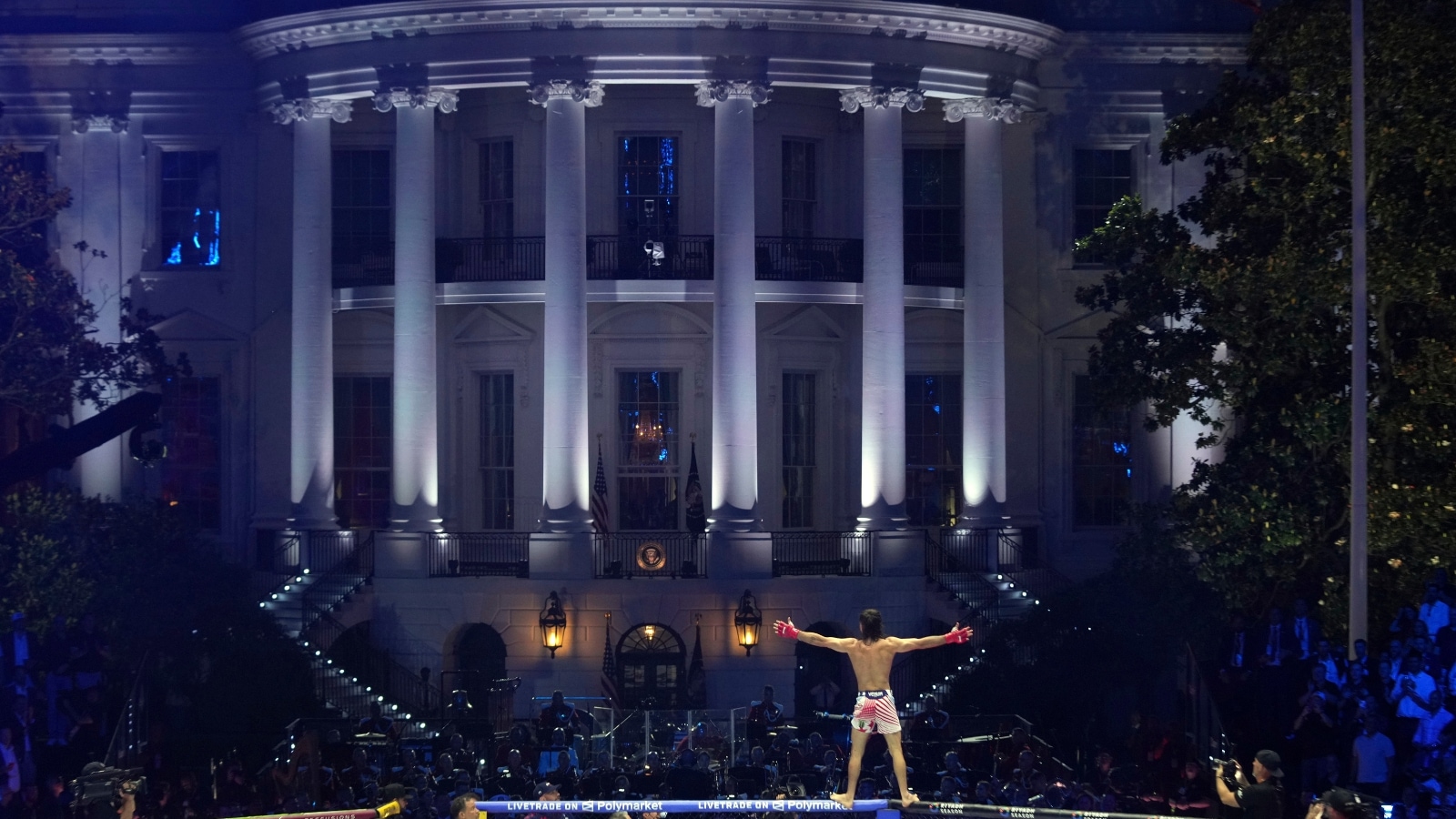
Federal authorities unsealed criminal complaints revealing a chaotic, multi-state terror plot aimed directly at the UFC Freedom 250 event held on the White House South Lawn. The plan sounded like a bad action movie. It involved explosive-laden drones detonated to cause mass panic, a pre-staged sniper team waiting to pick off fleeing high-value targets, and a second wave of attackers ready to storm the gates.
If you think our current political security apparatus is flawless, this reality check hurts. The targets on the hit list weren't just President Donald Trump on his 80th birthday. The group also eyed Vice President JD Vance, Elon Musk, Israeli Prime Minister Benjamin Netanyahu, and multiple members of Congress.
We need to stop looking at security through an old lens. The nature of threats has transformed completely, and the details coming out of this federal investigation show exactly how vulnerable our public spectacles really are.
Inside the Vanguard of the Old Plot
This wasn't a highly trained foreign cell. It was a messy, loosely organized group of conspiracy theorists who met on TikTok under the name "Vanguard of the Old." They migrated to Signal, utilizing an encrypted group chat of roughly 19 individuals along with smaller side chats to coordinate their logistics.
The FBI arrested five men across four states:
- Abraham Hermosillo Alvarez (31, Nebraska): Allegedly went by the moniker "Shepherd" online. Investigators peg him as the leader who devised a four-tier operational structure, organized maps of Washington, D.C., and gave tactical directions.
- Tycen Proper (19, Ohio): The teenager whose mother ultimately blew the whistle after growing alarmed by his heavy firearm purchases. Proper had already amassed an AR-style rifle, body armor, and thousands of rounds of ammunition.
- Michael Alan Thomas (32, California): Self-described as the "planner and advisor" who wanted to guide others on how to overthrow the government without pulling a trigger himself.
- Daniel K. Eskridge (32, Missouri): Allegedly pushed the group to raise $1,300 to acquire drones and explosives, arguing that the target needed to be "big and someone a majority of the country knows."
- Bryan Omar Roa (24, California): Claimed he only meant to attend as a protester, though his participation was cut short when his car broke down on the way.
The group's ideology was a tangled, muddled mess. They didn't fit into a clean political box. Court documents reveal a bizarre cocktail of anti-government sentiment, antisemitic grievances, and intense fury over the handling of the Jeffrey Epstein files. Their stated goal? To "jumpstart" a revolution in the United States.
The Nightmare Tactical Scenario
The mechanics of the thwarted plan expose a massive vulnerability in how we protect open-air events. The plotters didn't want to fight their way through Secret Service checkpoints. They planned to bypass them from above.
According to the unsealed affidavits, the group intended to stage a distraction on the north side of the White House. Simultaneously, they planned to fly small drones rigged with explosives over the temporary South Lawn arena, dubbed "The Claw."
The detonation wasn't necessarily meant to kill everyone instantly. It was designed to trigger blind panic. The plotters anticipated that security forces would evacuate the thousands of attendees out of the arena. That's where the horror multiplies. The fleeing crowd would be intentionally steered straight into the line of fire of a pre-staged sniper team.
Honestly, the terrifying part isn't that they had a plan. It's how close it came to reality despite the massive security bubble surrounding the executive mansion.
Reality Check vs political Rhetoric
While FBI Director Kash Patel announced that the planned attacks were "stopped cold," a fascinating political rift has opened up regarding how dangerous these guys actually were.
Vice President JD Vance downplayed the immediate execution capability of the suspects, noting on Fox News that the individuals weren't even in town yet and their vehicle logistics were failing. He called the planning "not that advanced." Yet, in the same breath, Vance argued that a network of 23 people doesn't get to the point of planning a mass terror incident without serious funding and coordination, pointing fingers at radical left-wing networks.
Meanwhile, the court documents show a much more pathetic reality. The suspects were literally arguing in encrypted chats about scraping together $1,300 to buy basic drones and components. Law enforcement sources confirmed that while they seized high-powered firearms and tactical gear during search warrants, they didn't actually recover any drones.
This highlights a massive issue in modern counter-terrorism. You don't need millions of dollars or military-grade hardware to create an absolute disaster. A handful of radicalized individuals with commercial tech and a couple of rifles can paralyze the nation.
Moving Past the Security Illusion
The UFC event went off without a hitch on Sunday. High-profile guests like Meta CEO Mark Zuckerberg, House Speaker Mike Johnson, and tech billionaires sat in front-row seats while fighters traded blows in the Octagon. The Secret Service, led by Deputy Director Matthew Quinn, kept the venue sealed tight.
But relying on a mother in Ohio to notice her son buying too many bullets isn't a sustainable national security strategy. If she hadn't called the police on June 10—just four days before the event—the outcome on the South Lawn could have been catastrophic.
We have to accept that public figures are facing a radically decentralized threat environment. Security teams can no longer just look at perimeter fences and metal detectors. They have to dominate the airspace and heavily monitor the digital fringes where these chaotic plans come together.
If you manage security for any large-scale public gathering, your immediate next steps are clear. Invest heavily in counter-drone jamming technology. Treat open-air venues as multi-dimensional spaces where the sky is just as dangerous as the street. Most importantly, ensure your evacuation routes don't channel crowds into exposed, unsecure bottlenecks where a secondary attack can take place. The line between a successful event and national tragedy is getting thinner every day.