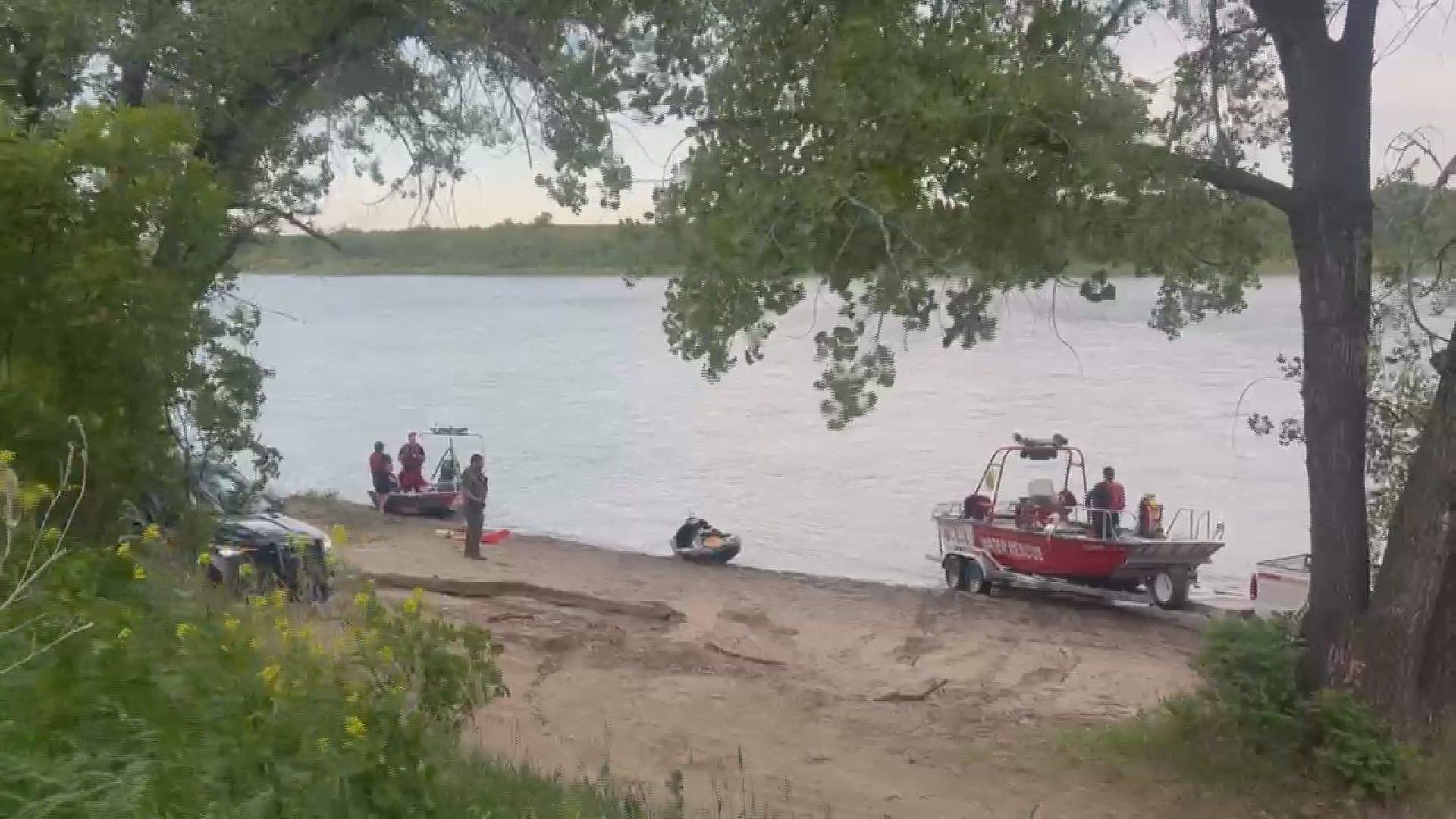
The South Saskatchewan River looks peaceful from the riverbank. On a warm afternoon in Saskatoon, the water reflects the wide prairie sky, a shifting mirror of blue and gold. People walk their dogs along the Meewasin Trail. Families picnic. From a distance, the river seems like a playground, an open invitation for a city built around its curves.
But rivers are deceptive. They possess a quiet, relentless physics that cares nothing for human error, mechanical failure, or a sudden lapse in judgment. If you liked this post, you should check out: this related article.
At the center of Saskatoon sits the weir. Built in the 1930s as a relief project during the Great Depression, it is a concrete low-head dam spanning the water. To the casual observer, it looks like a minor drop, a gentle waterfall barely a few feet high. Foam bubbles at the bottom. Mist rises into the air. It looks harmless, almost scenic.
It is actually a drowning machine. For another angle on this story, see the latest coverage from Associated Press.
On a recent afternoon, that concrete ledge became the line between an ordinary summer day and a desperate, race-against-time rescue operation. A jet ski, carrying two riders, ventured too close to the crest. In a fraction of a second, the machine slipped over the edge. One rider managed to struggle free, fighting through the turbulent currents to reach the safety of the shore. The other disappeared into the churning white water below.
What followed was a sudden, jarring shift in the city’s atmosphere. The quiet afternoon shattered. Sirens wailed down Spadina Crescent. The Saskatoon Fire Department’s water rescue team launched boats into the current. Spotters lined the bridges, binoculars pressed to their eyes, scanning the frothing water for any sign of life. A police plane circled overhead, its engine a steady drone against the panic building on the riverbanks.
To understand why this happens, you have to understand the invisible mechanics of a low-head dam.
When water flows over a smooth, straight drop like the Saskatoon weir, it creates a phenomenon known to hydrologists and rescue teams as a hydraulic jump. As the water plunges over the crest, it drops with immense force, striking the riverbed below. It then recirculates, pulling backward and upward toward the dam face. This creates a perpetual rolling motion—a horizontal whirlpool that spins beneath the surface.
Imagine a washing machine cylinder turned on its side, spinning at high speed, completely submerged.
Anything caught in that pocket—a kayak, a jet ski, a swimmer—is pulled down to the bottom, dragged backward toward the dam, brought up to the surface, and then slammed back down by the falling water. The air in this zone is highly oxygenated, filled with foam and bubbles. Because bubbly water is less dense than solid water, life jackets lose much of their buoyancy. Swimming becomes impossible. There is no solid water to push against. You cannot get traction. You simply spin, trapped in a relentless loop of concrete and foam.
This isn't just about a jet ski rider making a mistake. It is about a fundamental misunderstanding of the spaces where humanity tries to tame nature.
For decades, low-head dams have been scattered across North America, built for irrigation, flood control, or aesthetic purposes. They are unique in their danger because they do not look threatening. Unlike a massive hydroelectric dam with towering concrete walls, warning signs, and roaring spillways, a low-head dam looks like a step in the river. It looks like something you could ride over for fun.
But the hydraulics do not care about intention.
Consider what happens next when a rescue team arrives at a scene like the weir. The danger extends to the rescuers themselves. A standard rescue boat cannot simply drive into the hydraulic jump; the rolling current will catch the bow, flip the vessel, and trap the firefighters in the exact same cycle. Rescuers must use specialized techniques, sometimes deploying boats anchored from bridges or using high-tension ropes to steer craft into the edge of the danger zone. Every second is a calculation of risk against a ticking clock.
The search at the Saskatoon weir quickly became an agonizing exercise in endurance. As the sun began to dip toward the horizon, casting long shadows across the water, the initial adrenaline of the emergency call faded into a heavy, tense quiet. The plane continued its grid pattern in the sky. Boats maneuvered through the treacherous currents just downstream of the drop, using sonar and visual sweeps.
Onlookers gathered along the shore, speaking in hushed tones. The collective realization settled over the crowd: the river is a living thing. We live alongside it, we cross its bridges every day, we use it to define our city's identity, but we never truly control it.
The human element of these stories often gets lost in the statistics and the official press releases. We read about "crews searching," "vessels deployed," and "areas cordoned off." But the reality is measured in the knots in the stomachs of the family members waiting on the bank. It is measured in the exhaustion of the rescue divers who know the window of survival is closing with every tick of the clock. It is measured in the quiet dread of a community forced to acknowledge that a familiar, beloved landmark carries a lethal edge.
Safety advocates have long argued for structural changes to low-head dams. In some cities, weirs have been modified into rock ramps—sloping series of rapids that break up the dangerous hydraulic loop and allow water, fish, and stray watercraft to pass through safely without creating the deadly recirculating current. But such engineering overhauls take time, millions of dollars, and immense political will. Until those changes happen, awareness is the only shield.
The river keeps moving. The water that pushed over the weir an hour ago is already miles downstream, replaced by a fresh, endless supply of force.
As night fell over Saskatoon, the search lights cut through the darkness, reflecting off the white foam of the weir. The machinery of the city continued to hum in the background, but at the river's edge, the focus remained locked on the water. The mystery of what lies beneath the foam is a heavy, sobering reminder of our own fragility against the elements we so often take for granted.