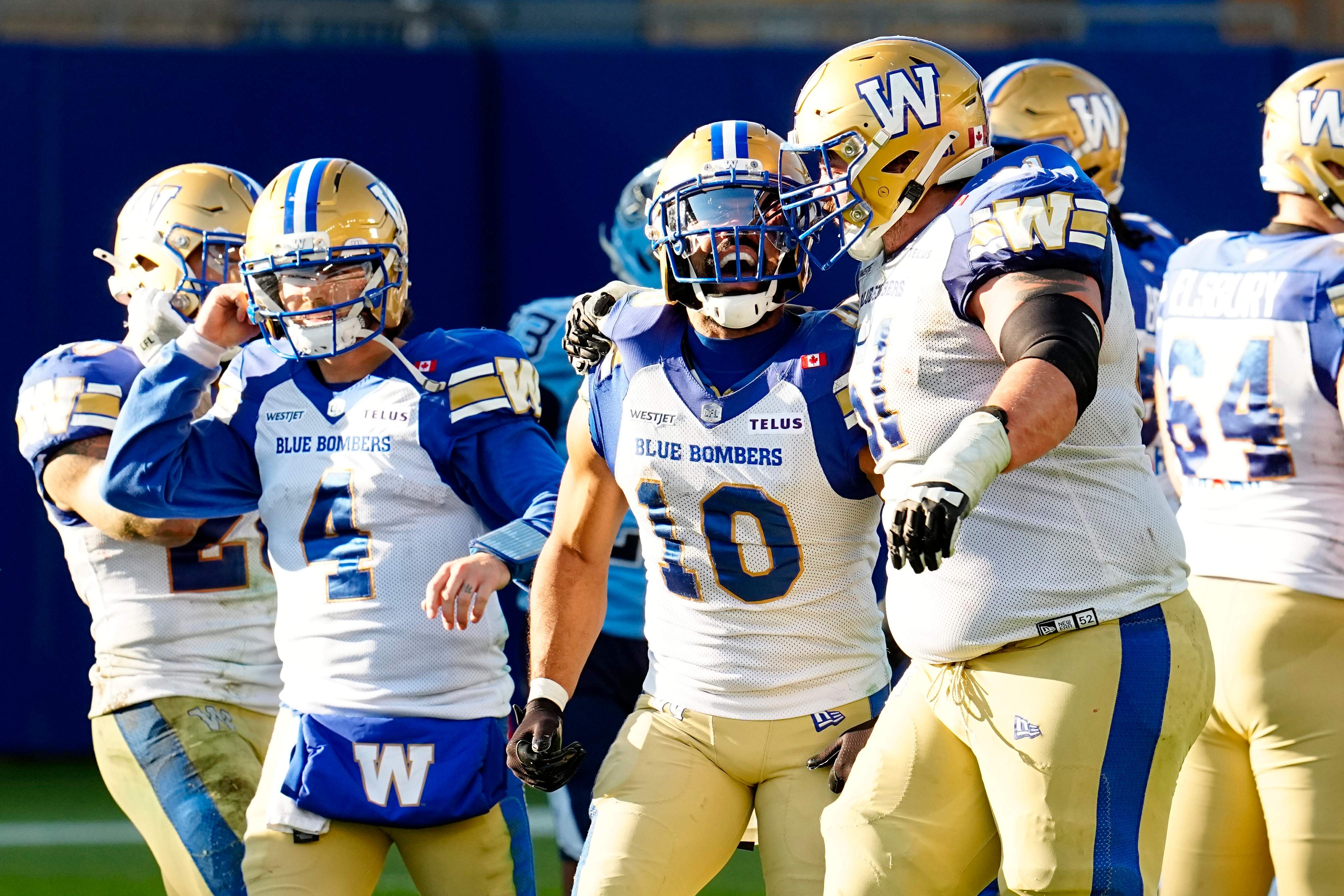
The Winnipeg Blue Bombers survived a brutal, fourth-quarter slugfest to defeat the Toronto Argonauts 25-22 in the CFL East Semifinal, punching their ticket to the East Final on the strength of a late touchdown pass. While casual observers will chalk this three-point margin up to a single lucky throw in the dying moments, the film tells a completely different story. Winnipeg did not win this game because of a miraculous heave. They won because their coaching staff systematically exploited a structural flaw in Toronto's late-game defensive shell, turning a conservative preventive scheme into a fatal liability.
In Canadian football, a three-point lead inside the final three minutes is a mirage. The CFL rulebook—specifically the 20-second play clock, the wide 65-yard field, and the clock stoppages after every play inside the three-minute warning—turns a narrow deficit into an eternity for a disciplined offense. Toronto entered the final stretch protecting a slim advantage, leaning on a soft zone coverage designed to keep receivers in front of the defensive backs and force Winnipeg to burn time. Instead, Winnipeg quarterback Zach Collaros and offensive coordinator Buck Pierce carved up the intermediate middle of the field, marching into scoring position before delivering the decisive strike to the end zone.
The Anatomy of a Late-Game Collapse
Most post-game recaps treat a fourth-quarter comeback as an act of pure willpower. That is lazy analysis. Games at this level are won and lost in the chess match between coordinators when fatigue sets in and playbooks shrink.
Throughout the first three quarters, Toronto's defensive front dictated the terms of engagement. They collapsed the pocket, disrupted timing routes, and forced Winnipeg into long second-and-ten situations where the Canadian game becomes notoriously difficult to navigate. With only three downs to gain ten yards, an offense cannot afford negative plays on first down. Toronto understood this and attacked the line of scrimmage aggressively.
Then the fourth quarter arrived, and Toronto blinked.
Rather than maintaining the press-man coverage and exotic blitz packages that stalled Winnipeg's drives earlier in the afternoon, the Argonauts retreated into a passive, three-deep zone. The logic behind this shift is familiar to anyone who has watched gridiron football for more than a decade: prevent the explosive play, force the offense to execute ten or twelve consecutive snaps without a mistake, and let the clock do the heavy lifting.
In the NFL, where the field is narrower and the clock runs continuously between plays, that philosophy often works. In the CFL, it is coaching malpractice.
With twelve men on the field and an extra five yards of width on either side of the hash marks, a passive zone leaves massive pockets of green turf open between the linebackers and the deep safeties. Winnipeg recognized the coverage shift immediately. Collaros stopped looking for deep vertical shots along the sidelines and began targeting the seams at twelve to fifteen yards. Because Toronto's defensive backs were bailing out at the snap to protect the goal line, Winnipeg's receivers were catching the ball in stride with a five-yard cushion, turning routine completions into chain-moving gains and stopping the clock every time they stepped out of bounds.
Why the CFL Crossover Rule Changes the Psychology
To understand the weight of this 25-22 result, you have to look at the structural quirk that put Winnipeg in the East Division playoffs in the first place.
The CFL crossover rule allows the fourth-place team in one division to cross over and take the third playoff spot in the opposite division if they finish with a better regular-season record than the third-place team in that other division. Historically, crossing over has been a death sentence. Teams forced to travel across time zones and play away from home in November almost always wash out before the Grey Cup.
Winnipeg broke that mold because they never played like a desperate road underdog. They played like a roster built on institutional muscle memory.
When a franchise reaches multiple consecutive championship games, the locker room develops a specific kind of scar tissue. Panic does not set in when the offense stalls in the third quarter, nor does it appear when the opposing team takes a late lead in front of a hostile crowd. Toronto, despite playing on home turf with rest and familiarity on their side, looked tight in the final five minutes. Penalties crept in. Assignments were missed in the secondary.
Championship pedigree is an overused phrase in sports media, usually deployed when a writer cannot explain why a team won. Here, it has a tangible, mechanical definition. It means the offensive line does not flinch on a hard count in a noisy stadium, and the quarterback progresses through his third and fourth reads while a 280-pound defensive end bears down on his blind side. On the game-winning drive, Winnipeg's protection held up just long enough for the secondary route to clear the linebacker's zone, creating the exact window needed for the winning touchdown pass.
The Myth of the Heroic Touchdown Pass
Highlight reels will show the final touchdown throw on an endless loop. That single snap, however, was merely the punctuation mark on a drive that was actually won four plays earlier.
Facing a crucial second-and-long near midfield, Winnipeg needed roughly nine yards to keep the drive alive. A failed conversion there ends the game; Toronto takes over on downs, kneels out the clock, and advances to the East Final. Instead of forcing the ball into double coverage downfield, Winnipeg ran a delayed handoff against a light defensive box—a direct consequence of Toronto dropping seven men into coverage. The play gained eleven yards, moved the chains, and forced Toronto's defense to stay on the field for another series of snaps.
That single rushing gain broke the back of the Argonauts' defensive plan.
Suddenly, Toronto's defensive coordinator could no longer sell out against the pass. The linebackers had to creep closer to the line of scrimmage to respect the run and the short flat routes. That slight hesitation—a fraction of a second where the second-level defenders stepped forward instead of dropping back—opened the exact vertical lane Winnipeg used for the decisive touchdown pass moments later.
The Hidden Cost of Conservative Play-Calling
Toronto's offense bears just as much responsibility for this loss as their defense. Holding a lead late in the fourth quarter, the Argonauts had a chance to ice the game with one sustained drive. Instead, they ran two predictable, between-the-tackles rushing plays that yielded minimal yardage, followed by an incomplete pass on third-and-long that took barely forty seconds off the game clock.
When you hand the ball back to a veteran quarterback with over two minutes left in a CFL game, you are not playing safe. You are inviting an execution.
What This Result Exposes About Modern CFL Roster Construction
Beyond the tactical mistakes on the sidelines, the 25-22 outcome highlights a growing divide in how CFL front offices build winning teams for November football.
Early in the season, when the weather is warm and the turf is fast, teams built around speed at the skill positions and flashy perimeter passing attacks dominate the standings. Come November, when temperatures drop and the wind swirls off the lake, those finesse offenses shrink. Winning in the postseason requires a dominant interior offensive line, a bruising running back who can fall forward for four yards on first down, and a defensive front that can generate pressure without blitzing.
Winnipeg has spent the better part of a decade pouring salary cap resources into the trenches. Even as their roster has aged and key veterans have moved on or battled injuries, their foundational philosophy has remained unchanged. They control the line of scrimmage.
Toronto built a roster capable of winning a track meet, and for three quarters, their athleticism kept Winnipeg off balance. Yet when the game narrowed down to brute force and execution in the fourth quarter, Winnipeg's physicality wore them down. Toronto's defensive linemen, visibly gassed from chasing plays across the wide field, lost their leverage at the point of attack during the final drive. Collaros had a clean pocket on the game-winning throw because Toronto's pass rushers simply had nothing left in the tank.
The Brutal Reality Facing the East Final
Advancing out of the East Semifinal is only half the battle for Winnipeg, and pretending their performance against Toronto was flawless would be a mistake.
For large stretches of this contest, the Blue Bombers' offense looked stagnant. They settled for field goals when touchdowns were available, struggled to establish a consistent rhythm in the passing game during the middle quarters, and left points on the board that nearly cost them their season. Relying on a last-minute touchdown pass to escape a three-point game is not a sustainable formula for winning a championship.
If Winnipeg brings that same sluggish third-quarter execution into the East Final against a rested division winner, they will find themselves trailing by two scores instead of three points. Even with the quirks of the Canadian rulebook, a two-score deficit late in the fourth quarter against an elite defense is almost impossible to overcome.
Tactical Lessons From a Three-Point Margin
Every close playoff game leaves behind a blueprint for the teams still standing, as well as a warning for the coaches heading into the offseason.
- Never abandon the pressure that got you the lead. Toronto's defense was at its best when dictating tempo at the line of scrimmage. Shifting to a passive zone in the fourth quarter surrendered initiative to an offense that thrives on rhythm.
- First-down efficiency dictates November survival. In a three-down game, gaining five or six yards on first down opens the entire playbook. Losing yardage on first down forces predictable passing situations that elite defenses feast upon.
- Clock management in the CFL requires aggression. Playing not to lose in the final three minutes almost always backfires when the clock stops after every snap. Securing a single first down on offense is infinitely more valuable than punting the ball away and trusting a tired defense to make one more stop.
The final scoreboard reads 25-22, a number that suggests a coin-flip game decided by a single heroic play. The reality is far less romantic. Winnipeg recognized that Toronto was playing to survive rather than playing to win, systematically dismantled their soft defensive coverage, and executed when the margin for error hit zero. Toronto did not lose because of a lucky bounce or a blown call by the officials; they lost because they stopped attacking the moment the finish line came into view.