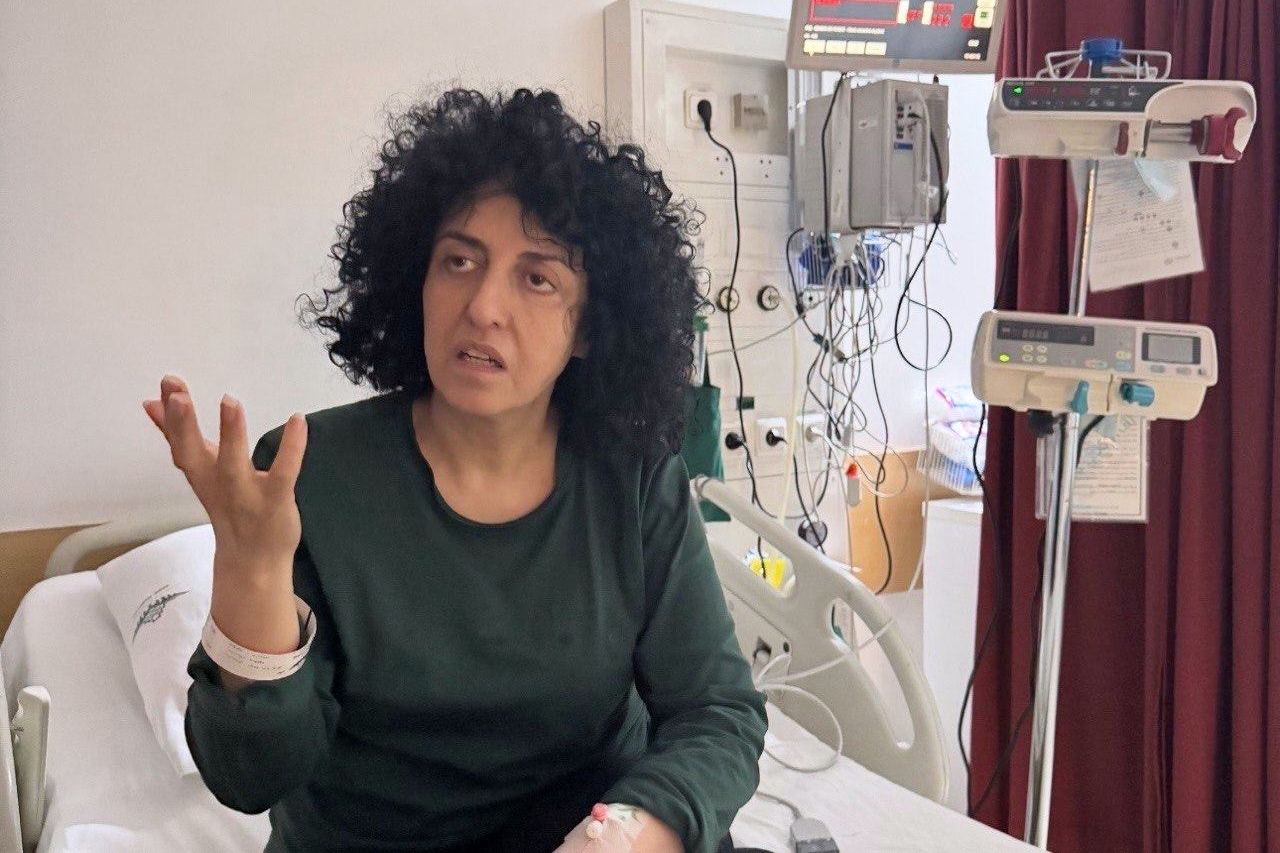
Narges Mohammadi is finally out of Evin Prison. But she isn't free. After months of her family screaming into the void about her deteriorating health, the Iranian government finally allowed the Nobel Peace Prize winner to be transferred to a hospital. This isn't a gesture of mercy. It’s a calculated move by a regime that knows the optics of a Nobel laureate dying in a cell are disastrous.
Mohammadi has been the face of "Woman, Life, Freedom" from behind bars for a long time. Her heart is failing. She has a bone marrow issue. She's been denied basic medical care for years as a form of slow-motion torture. If you think this transfer means the pressure is working, you're only half right. The pressure is keeping her alive, but it hasn't broken her chains.
The high price of a Nobel Peace Prize in Iran
Winning the Nobel Peace Prize usually brings a layer of protection. For Narges, it seemed to bring more spite from her jailers. She’s currently serving a sentence that totals over 13 years. That’s not a single sentence, by the way. The Iranian judiciary keeps stacking "crimes" on top of her—propaganda against the state, acting against national security—every time she manages to smuggle a letter out to the international community.
The Free Narges Coalition has been documenting her decline with brutal clarity. They've reported that she underwent an angiography recently, which showed serious blockages. Imagine needing heart surgery while being dragged back to a concrete room where the air is stale and the stress is constant. That's her reality. The Narges Mohammadi Foundation confirmed the transfer took place after weeks of delays, but they were quick to point out that a "transfer" isn't "release."
We often talk about activists like they're superheroes. They aren't. They’re humans with bodies that break. Mohammadi is 52. She’s spent the better part of two decades in and out of some of the most notorious prisons on earth. You don't walk away from that with your health intact. Her family, living in exile in France, hasn't heard her voice in over a year because the prison cut off her phone privileges. Think about that for a second. No calls to her children. No updates for her husband. Just silence and systemic neglect.
Why the timing of this hospital move matters
The Iranian regime is currently juggling a lot of fire. They've got internal dissent that refuses to stay buried and external pressure that's tightening by the day. Allowing Mohammadi to go to a hospital is a pressure valve. It’s a way to tell the UN and the Nobel Committee, "Look, we’re being reasonable," while keeping her under heavy guard in a medical wing that is effectively just another cell.
The medical neglect in Iranian prisons is a feature, not a bug. It’s used to break the spirit of political prisoners. If they can’t break your mind, they’ll break your lungs or your heart. Human Rights Watch and Amnesty International have called this out for years. They call it "denial of medical care as punishment." It’s a death sentence by proxy.
Breaking down the medical crisis
Narges isn't just dealing with one issue. It’s a laundry list of trauma-induced ailments.
- Cardiovascular disease: She’s had multiple heart procedures, including stent placements that require specific medication and follow-ups she rarely gets.
- Bone marrow complications: This is the most recent and perhaps most terrifying development, requiring specialized hematological care that simply doesn't exist in Evin.
- Respiratory issues: Years in overcrowded, poorly ventilated cells take a toll on the lungs.
When the foundation says she was transferred, they mean she was moved under armed escort. She isn't sitting in a regular hospital room with flowers and visitors. She’s likely in a secured wing, still separated from the people she loves. The "Woman, Life, Freedom" movement didn't end when the street protests dimmed. It just moved into the infirmaries and the courtroom docks.
The international community's role in her survival
If we stop talking about Narges, she dies. It’s that simple. The only reason she’s in a hospital today instead of a cell is because the noise reached a volume the Iranian government couldn't ignore. The Nobel Committee has been vocal, but they need help from world leaders who actually have diplomatic leverage.
The tragedy here is that Narges is one of hundreds. There are activists, journalists, and everyday citizens sitting in those cells right now whose names we don't know. They don't have Nobel Prizes to shield them. They just have the hope that someone on the outside is paying attention.
Mohammadi’s struggle is a reminder that the fight for human rights isn't a series of Instagram graphics. It’s a grueling, physical endurance test. She is literally giving her life for the idea that Iranian women deserve to choose how they live. You don't have to be a geopolitics expert to see the courage in that.
Supporting the movement from the outside
Don't just read the news and feel bad. That doesn't help her. The Iranian government tracks international sentiment. They care about their image, even if they pretend they don't. Here is what needs to happen to keep the pressure on.
First, demand that independent medical observers get access to her. A state-run hospital in Tehran is still under the thumb of the intelligence services. We need to know her actual condition, not just the sanitized version the authorities release. Second, push for her "medical furlough" to be converted into a permanent release. She's not a threat to anyone. She’s a woman who needs a doctor and her family.
Keep her name in the headlines. Share the reports from the Narges Mohammadi Foundation. Tag your representatives. It sounds like digital shouting, but in the world of high-stakes diplomacy, visibility is the only currency these prisoners have.
Narges Mohammadi has spent years fighting for the rights of others. Now, she's in a hospital bed, still a prisoner, fighting for her own heartbeat. The least the rest of us can do is make sure she doesn't have to do it in the dark. Watch the updates. Stay loud. Don't let the regime think the world has moved on to the next trend. Her life depends on our memory.