The First Scents of Summer
You notice it in your lungs before you see it in the sky.
It starts as a faint, burnt-wood tang lingering around the edges of a crisp morning breeze. If you grew up near the woods, your brain might register a cozy campfire, a neighbor clearing brush, or perhaps a distant summer barbecue. Also making headlines in this space: The Weight of a Dollar (And the Face We Choose to Put on It).
Then noon arrives. The sun loses its blinding golden glare, transforming into a dull, neon-orange disk hanging suspended in a bruised purple haze.
The air tastes like metallic ash. Your eyes sting. A dull ache blossoms behind your forehead. Additional insights on this are covered by Reuters.
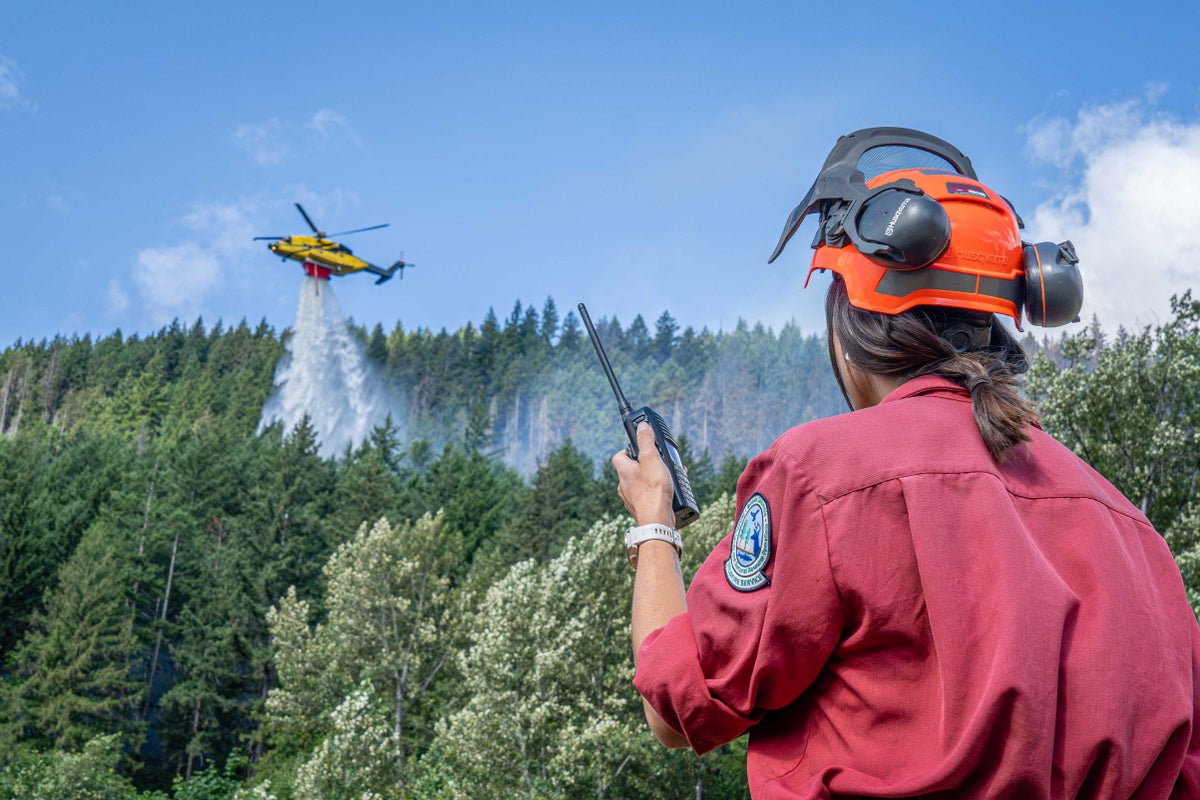
Hundreds of miles to the north, millions of acres of Canadian boreal forest are burning. Deep within these vast wilderness stretches, lightning strikes dry peat, and heatwaves ignite timber, turning ancient pines into chimneys of fire. The infernos generate their own weather, pumping immense plumes of particulate matter tens of thousands of feet into the stratosphere.
And then, carried by the invisible conveyor belts of high-altitude winds, the smoke begins its long, quiet migration south. It does not respect state lines, borders, or coastlines. It arrives without a noise, draping a suffocating veil over tens of millions of Americans across the Midwest, the East Coast, and deep into the Sun Belt.
The Microscopic Invader
Consider a single strand of human hair. Hold it up to the light. It measures roughly 70 micrometers in diameter.
Now imagine something nearly thirty times smaller.
That is PM2.5. Fine particulate matter measuring 2.5 micrometers or less.
When wildfire smoke settles over a city, it isn’t just ash floating in the breeze; it is a complex, toxic soup of carbon monoxide, volatile organic compounds, and these tiny, airborne specks. Standard dust or pollen gets caught in the cilia and mucus of your nose and throat. You cough, you sneeze, your body expels it.
PM2.5 is different.
Because of its microscopic stature, it slips past your body's front-line defenses with terrifying ease. You inhale, and the particles travel deep into the branching pathways of your lungs, plunging all the way down to the tiny air sacs called alveoli. From there, they cross directly into your bloodstream.
The body reacts to this invasion the only way it knows how: systemic panic.
Immune cells swarm the particles, triggering localized and widespread inflammation. For a healthy adult, a day spent outside in a orange-hued haze can feel like a sudden hangover—fatigue, dry cough, itchy throat. But for an asthmatic child breathing in that same air, or an elderly neighbor with heart disease, those microscopic specks act like a slow, deliberate poison. Blood pressure spikes. Arteries constrict. The heart works twice as hard to pump oxygenated blood through an inflamed system.
Life Behind Sealed Windows
Across the country, the rhythm of daily life breaks down in subtle, heartbreaking ways.
Imagine a young mother standing at her back door, watching her seven-year-old son bounce a basketball on the driveway. The kid has been stuck inside all winter, desperate for summer break. He wants to play until the streetlights turn on. But checking the air quality index app on her phone reveals a bold, alarming red box: 185. Unhealthy.
She calls him inside. He protests, tears welling up in his eyes, unable to fathom how invisible air can be dangerous when he can see his basketball hoop clearly through the yellowed light. She closes the doors, latches the windows, and turns on the HVAC unit, hoping her filter is fresh enough to keep the invisible cloud at bay.
Across town, construction workers continue to pour concrete under the hazy dome, their throats raw, wearing paper dust masks that do almost nothing to filter out particles a fraction of the size of a red blood cell. Delivery drivers weave through traffic with their windows rolled up, the smell of charred wood seeping through every air vent.
This is the hidden toll of modern wildfire season. It steals small joys and forces a quiet, ambient anxiety into every breath we draw. It turns our sanctuaries—our backyards, public parks, and playgrounds—into hazardous ground.
Navigating the Haze
Protecting yourself when the northern skies bleed downward requires shifting how you interact with the environment around you.
The most effective barrier between your lungs and PM2.5 is not a standard cloth mask or a surgical cover; those are designed to stop large droplets, not microscopic specks. You need an N95 or KN95 respirator, fitted snugly against the bridge of your nose and cheekbones. When pulled tight, its electrostatic fibers catch those tiny particles before they ever reach your throat.
Inside your home, seal the perimeter. Keep doors and windows tightly shut. If you have a central heating and cooling system, run the fan continuously and upgrade your air filter to a MERV 13 rating or higher, which is specifically engineered to capture fine combustion particles. High-efficiency particulate air (HEPA) purifiers placed in high-traffic rooms can drastically reduce indoor particle counts within hours.
Pay close attention to air quality index (AQI) forecasts. When numbers climb above 100, sensitive groups should limit prolonged outdoor exertion. When they cross 150 or 200, everyone—regardless of fitness level—needs to pull their activities indoors.
The sun sinks lower now, transformed by the thick atmospheric blanket into a deep, blood-red ember. Streetlights flick on early, throwing weird, diffuse shadows across empty sidewalks. A faint breeze rustles through the maple trees, but it brings no real relief, carrying only the dry, bitter memory of a forest burning a thousand miles away. You step inside, pull the heavy wooden door tight against its frame, and listen to the soft, steady hum of the air filter working silently in the corner.