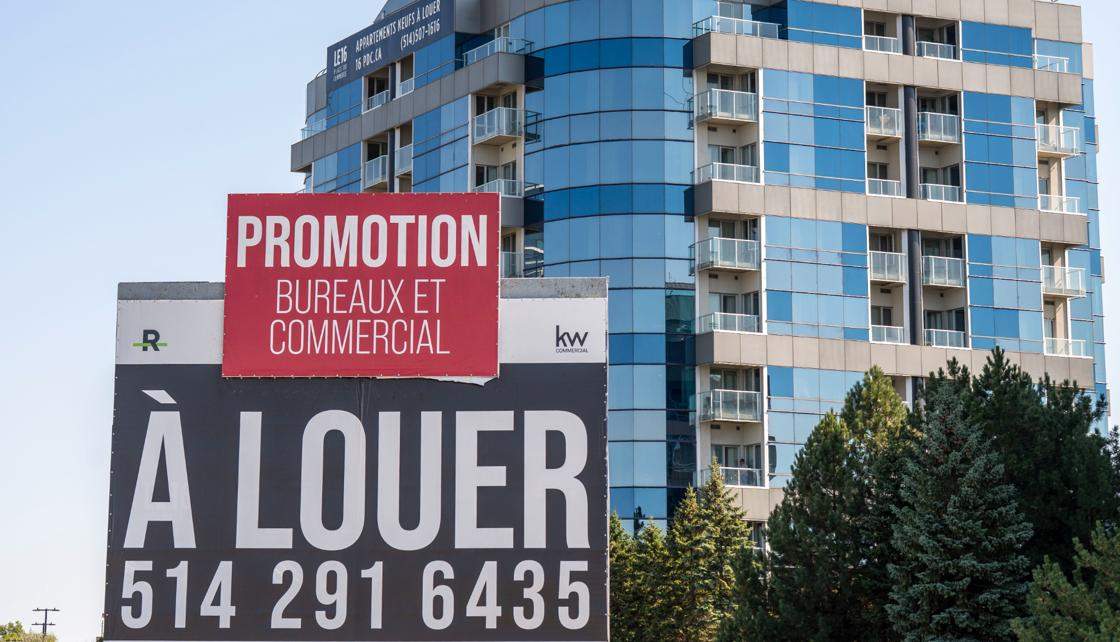
The Canadian multifamily rental asset class is undergoing a fundamental structural adjustment. Data from across the nation indicates that approximately 20% of active rental listings now incorporate upfront concession packages—primarily structured as two months of complimentary rent. This operational pivot occurs as the national apartment vacancy rate ascends to 5.1%, representing a distinct inflection point driven by asynchronous supply injections and a simultaneous contraction in the renter pool.
To evaluate this paradigm, analysts must move past superficial narratives regarding a "softening market" and dissect the precise mathematical and strategic imperatives dictating landlord behavior.
The Strategic Architecture of the Rent Concession
The decision by one in five Canadian landlords to offer non-repayable incentives, rather than permanently resetting contract rents, is governed by a strict economic calculation designed to protect capital values. This mechanism can be understood through two distinct structural pillars.
The Net Effective Rent Equation
Landlords prioritize the preservation of the Gross Nominal Rent (the baseline price stated on the lease agreement) over Net Effective Rent (the actual cash collected over the lease term after factoring in incentives). When a landlord provides two months of free rent on a 12-month lease, they are effectively executing a 16.7% discount on cash collection for that cycle. On an average national in-place rent of $1,761, a nominal lease signed at that baseline with two months free yields a net effective monthly revenue of $1,467.50.
The primary structural bottleneck preventing landlords from simply lowering the nominal price tag to $1,467.50 is asset valuation. Multi-unit residential properties are valued by institutional lenders and appraisal networks based on Capitalization Rates (Cap Rates) tied directly to Net Operating Income (NOI). Because concessions are classified as temporary operational marketing expenses rather than permanent adjustments to the baseline revenue schedule, the underwriting model protects the underlying terminal valuation of the property. Dropping the nominal rent permanently degrades the asset's paper value and risks triggering loan-to-value covenant breaches with commercial lenders.
The Operational Cost of Friction
The second limitation driving incentives is the structural cost of asset vacancy. Every month a multiunit apartment sits unoccupied, the landlord incurs a total loss of revenue alongside fixed operating costs.
Vacancy Cost = Monthly Nominal Rent + Marginal Fixed Utility Overhead + Customer Acquisition Cost
Offering an immediate upfront incentive compresses the Days on Market (DOM) metric. In a competitive ecosystem where the national vacancy rate has climbed 110 basis points year-over-year, absorbing a structured, predictable concession over a 12-month contract provides greater fiscal certainty than leaving a unit exposed to an extended, indefinite period of zero yield.
The Asynchronous Forces of Supply and Demand
The current operational realities of Canadian real estate are the direct consequence of a lagging supply pipeline intersecting with an abrupt deceleration in demographic demand.
Market Disequilibrium = [Lagged Purpose-Built Completions + Condo Conversions] - [Immigration Retraction + Youth Labor Contraction]
The Supply Pipeline Lag
The volume of new purpose-built rental inventory entering major census metropolitan areas (CMAs) reached historic thresholds due to development cycles initiated between 2021 and 2023. Driven by historically low interest rates during that period, alongside subsequent federal interventions like the GST rebate on purpose-built rentals, apartment completions rose 22.3% year-over-year in early quarters. Because large-scale multifamily projects require a multi-year capitalization and construction timeline, this massive wave of inventory is hitting the market precisely as broader macroeconomic conditions cool.
The Demand-Side Structural Shock
Simultaneously, the aggregate renter acquisition pipeline has experienced a sharp contraction due to policy and economic shifts:
- Macro-Demographic Policy Adjustments: Federal restrictions on international student study permits and a broader reduction in non-permanent resident targets have thinned the core demographic that historically stabilized entry-level urban rental stock.
- Youth Labor Disruption: Escalating underemployment and stagnant wage growth among demographics aged 18 to 24 have fundamentally altered household formation patterns. Rather than entering the leasing market as independent economic units, a growing subset of this population is opting for co-living arrangements or remaining within parental households.
This intersection of factors has altered product performance across specific asset classes. Bachelor and studio units—previously insulated by international student demand—now face the highest baseline vacancy metrics, hitting a national average of 6.7%. In Toronto, bachelor suite vacancy has detached further, ascending to 8.9%.
Regional Variations in Structural Health
The national 5.1% vacancy metric masks severe regional divergence. Property management groups cannot execute blanket national strategies; they must navigate highly localized supply-demand dynamics.
| Census Metropolitan Area (CMA) | Vacancy Rate Target | Year-over-Year New-Lease Rent Performance | Primary Drivers |
|---|---|---|---|
| Vancouver | Historical Highs | Stagnant (+1.4%) | Elevated purpose-built completions overlapping sharp declines in net international migration. Suburbs face heavy competition from recent condo completions. |
| Calgary | 5.8% | Negative (-3.0%) | Supply overcorrection following the 2023–2024 migration boom. Landlords forced into aggressive lease-over-lease rent reductions. |
| Montreal | 5.6% | Moderate Growth (+4.6%) | Inventory rose 3.3% due to rapid developer deployment during the previous zero-vacancy cycle, outpacing immediate absorption capacity. |
| Halifax | 2.8% | High Growth (+4.9%) | Tight structural supply counterbalanced by sustained technology sector employment and strong interprovincial migration. |
This geographic breakdown reveals that former market leaders like Calgary and Toronto are experiencing the most severe compression in new-lease pricing power. Conversely, secondary markets or regions with structurally constrained development pipelines continue to post modest rent gains despite broader macroeconomic cooling.
Risk Mitigation Protocols for Multifamily Operators
For asset managers overseeing Canadian portfolios, navigating this environment requires transitioning away from defensive, reactive concession matching toward data-driven yield optimization.
Granular Cohort Underwriting
Deploying a uniform "one-month-free" or "two-months-free" incentive across an entire portfolio degrades net effective margins unnecessarily. Operators must segregate incentives by unit topology. Given that bachelor and one-bedroom units are experiencing the highest structural vacancy, concessions must be concentrated heavily on these asset profiles while preserving nominal and effective pricing on scarce two- and three-bedroom family units, which remain insulated by different demographic realities.
The Illusion of Rent Control Shielding
In provinces like Ontario, where rent control guidelines restrict annual increases for existing tenancies, landlords frequently leverage vacancies to reset units to market rates. However, in an ecosystem where new-lease rent growth has decelerated to 2.4% nationally—and turned negative in major metropolitan segments—the strategy of forcing turnover to capture a market premium has broken down. The operational mandate must shift from engineered turnover to proactive tenant retention. Stabilizing an existing tenant at the current indexed guideline rate yields a higher net present value than risking a vacant unit cycle that requires a 13% to 16% upfront concession to re-lease.
Strategic Capital Allocation over Cash Concessions
Rather than sacrificing 16.7% of gross annual cash flow via a two-month rent holiday, institutional operators should pivot toward utility value underwriting. Allocating capital toward permanent unit upgrades—such as high-speed enterprise internet packages, integrated smart-home climate systems, or subsidized EV charging access—achieves two objectives simultaneously. It meets the immediate consumer demand for lowered living costs while transforming an operational expense into a permanent capital improvement that enhances the underlying value of the real estate asset.