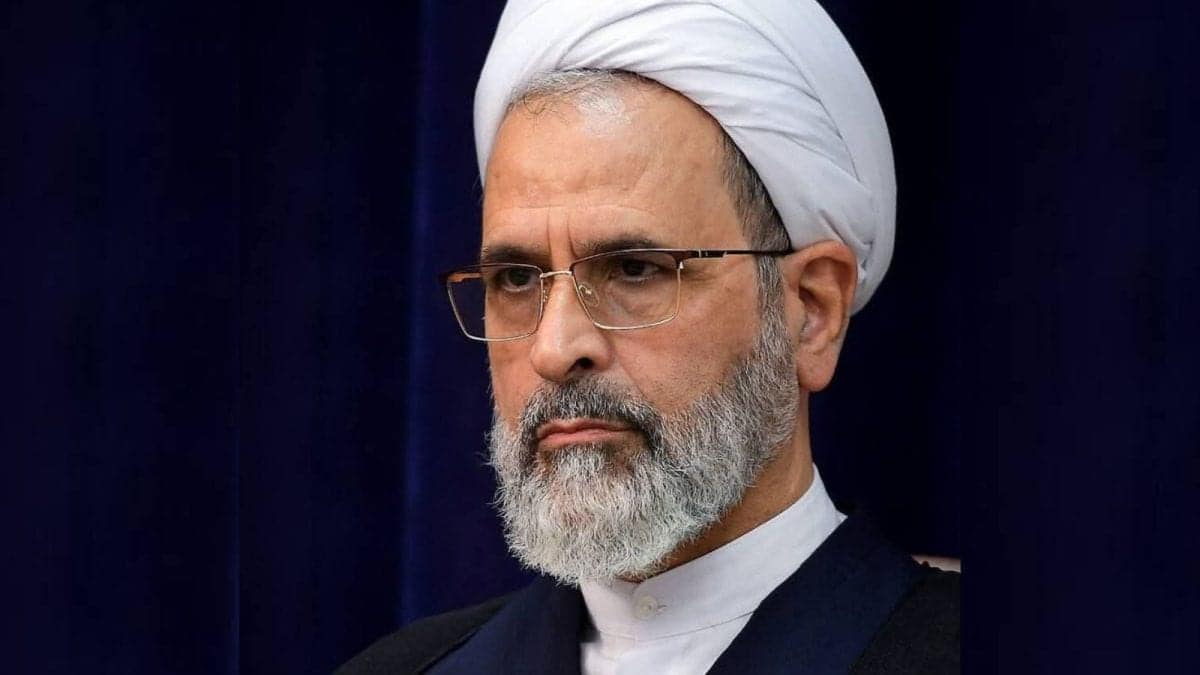
Ahmad Vahidi is back in a uniform that defines the very backbone of the Iranian establishment. While international headlines often fixate on diplomatic posturing in Tehran, the real story usually happens within the internal hierarchy of the Islamic Revolutionary Guards Corps (IRGC). His recent appointment as a commander within the IRGC isn't just a standard personnel shuffle. It's a loud signal about where Iran is heading internally and how it plans to project power abroad.
If you've followed Iranian politics for any length of time, you know Vahidi isn't a fresh face. He's a veteran. He’s a man whose career trajectory mirrors the evolution of the IRGC from a revolutionary militia into a massive military and economic conglomerate. By placing a figure with his specific history back into a top command role, the leadership in Tehran is doubling down on a hardline stance. They're prioritizing experience, ideological loyalty, and a very specific kind of strategic ruthlessness.
A Career Built in the Shadows
To understand why this appointment matters, you have to look at Vahidi's resume. This isn't just about military tactics. Vahidi was the first commander of the Quds Force, the elite unit responsible for extraterritorial operations. Think about that for a second. He didn't just join the unit; he helped build the framework for Iran’s entire regional influence strategy.
His influence extends far beyond the battlefield. He served as the Minister of Defense and later as the Minister of Interior. Transitioning from a military role to high-level civilian governance is a classic move for IRGC elites. It blurs the lines between the state and the Guards. When Vahidi moves, the gravity of Iranian policy moves with him.
His time at the Ministry of Interior was particularly telling. He oversaw domestic security during periods of intense internal pressure and protests. He’s seen as a "safe pair of hands" for the Supreme Leader. He's someone who doesn't flinch when the regime faces existential threats. Bringing him back into a direct command role suggests the leadership feels a need to tighten the ship. They want a commander who understands the intersection of domestic stability and foreign deterrence.
The Global Implications of the Vahidi Return
The world reacts differently to Vahidi than they might to a career bureaucrat. He’s a wanted man in some circles. Specifically, he’s been linked by Argentinian authorities to the 1994 bombing of the AMIA Jewish community center in Buenos Aires. Interpol notices and international sanctions have followed him for decades.
His appointment sends a clear message to the West: Iran doesn't care about your "red notices." It’s a defiant gesture. By elevating someone with such a controversial international profile, Tehran is signaling that internal loyalty and "revolutionary credentials" outweigh any desire for global optics.
Strategically, Vahidi's expertise in asymmetric warfare and his deep ties to regional proxies make him a formidable asset. He understands the "Axis of Resistance" better than almost anyone else alive. Under his influence, we can expect the IRGC to refine its support for regional allies. They’ll likely focus on more sophisticated coordination and tech-sharing. He’s a big-picture thinker. He doesn't just look at the next skirmish; he looks at the next decade of regional dominance.
Why the Timing is Everything
Timing in Tehran is never accidental. This move comes at a moment when Iran is navigating a complex web of regional tensions and a transition of power within its own borders. The IRGC is the ultimate kingmaker in Iranian politics. Whoever commands its top tiers holds the keys to the future.
We’re seeing a consolidation of power. The "old guard"—men like Vahidi who were forged in the fires of the 1979 Revolution and the Iran-Iraq War—is asserting its dominance to ensure the system’s survival. They’re skeptical of Western overtures. They believe in the "Resistance Economy" and military self-reliance.
Vahidi’s return to command might also be a move to bridge the gap between different factions within the Guards. He has the respect of the rank-and-file and the absolute trust of the clerical leadership. He’s a unifying figure for the hardliners.
Internal Security and the IRGC Grip
Don't ignore the domestic angle. The IRGC has increasingly taken over roles traditionally held by the police or intelligence services. Vahidi’s experience at the Ministry of Interior makes him uniquely qualified to integrate these functions.
The regime is worried about internal dissent. They’ve seen how quickly protests can spin out of control. By putting a veteran of internal security back into a military command position, they’re preparing for any eventuality. It’s about ensuring the IRGC remains the ultimate guarantor of the Islamic Republic’s survival.
They’re also looking at the economy. The IRGC controls huge swaths of Iran's industry, from construction to telecommunications. Vahidi understands how to use these resources to sustain the military machine despite heavy sanctions. He’s a pragmatist when it comes to survival but an ideologue when it comes to the mission.
What This Means for Regional Stability
If you’re looking for a de-escalation of tensions in the Middle East, this appointment isn't the sign you wanted. Vahidi represents the "forward defense" doctrine. This is the idea that Iran is safer when its battles are fought far from its own borders.
Expect to see a more disciplined approach to proxy coordination. Vahidi isn't a fan of chaotic or uncoordinated actions. He likes structure. He likes long-term planning. This could mean more sophisticated drone programs for regional allies or more integrated intelligence-sharing networks.
It’s also a signal to regional rivals like Saudi Arabia and Israel. Iran is placing its most experienced "shadow warrior" back on the chessboard. It’s a move designed to project strength and remind everyone that the architects of Iran’s regional strategy are still very much in charge.
Breaking Down the Hierarchy Shift
The IRGC isn't a monolith. It has various branches: the Ground Forces, the Aerospace Force, the Navy, and the Quds Force. While the specific title within the command structure can sometimes be opaque, Vahidi’s presence at the top level influences all of them.
He acts as a strategic advisor as much as a tactical commander. His role likely involves high-level coordination between the regular military (the Artesh) and the Guards. This synergy is vital for Iran’s overall defense posture.
The appointment also serves as a mentorship role. A new generation of IRGC officers is coming up. They didn't fight in 1980. They didn't experience the revolution first-hand. Vahidi is there to instill that original revolutionary zeal while teaching them the modern realities of hybrid warfare.
The Sanctions Game and Economic Resilience
Vahidi is a master at navigating a sanctioned environment. He’s lived under various forms of international pressure for most of his adult life. His leadership will likely emphasize self-sufficiency.
Under his watch, we might see the IRGC-linked companies take an even larger role in "sanctions-busting" activities. This includes everything from illicit oil sales to the development of indigenous military hardware. He knows that the Guards' power depends on their bank account just as much as their arsenal.
Critics often point out that this consolidation of power in the hands of the IRGC stifles the private sector. They’re right. But from the regime's perspective, the private sector is a liability. The IRGC is a known quantity. Vahidi is the man to ensure that the IRGC remains the most powerful economic actor in the country.
Looking Past the Headlines
When you see "Ahmad Vahidi appointed" in a news crawl, don't just think of it as a name on a list. Think of it as a strategic pivot. It’s a move toward a more "security-first" domestic policy and a more sophisticated, "resistance-focused" foreign policy.
It tells us that the Iranian leadership isn't interested in compromise right now. They’re leaning into their strengths. They’re trusting the people who built the system to defend it.
Vahidi’s career has come full circle. From the early days of the Quds Force to the halls of the Interior Ministry, and now back to the heart of the IRGC command. He is the personification of the Islamic Republic’s enduring defiance.
Keep an eye on the types of military exercises and regional maneuvers that follow this appointment. The "Vahidi style" is usually characterized by careful preparation followed by decisive, often unconventional, action. The chessboard has changed, and one of the most experienced players just took a seat at the table.
Start tracking the movements of Iranian-backed groups in the Levant and the Gulf. Changes in their operational patterns will be the first real-world evidence of Vahidi's influence in his new role. Look for increased technical sophistication in their hardware and a more unified rhetorical front. The era of the "Old Guard" command is far from over. It’s just entering its next phase.