We spend billions of dollars on liquid restrictions, millimeter-wave body scanners, and theatrical shoe-removal stations at every major airport on earth. Passengers submit to invasive cross-examinations at check-in counters. Governments write endless compliance manuals based on the assumption that danger always arrives via a stranger in a terminal.
Then a co-pilot turns an emergency axe against his own captain at thirty-four thousand feet, and the entire house of cards collapses.
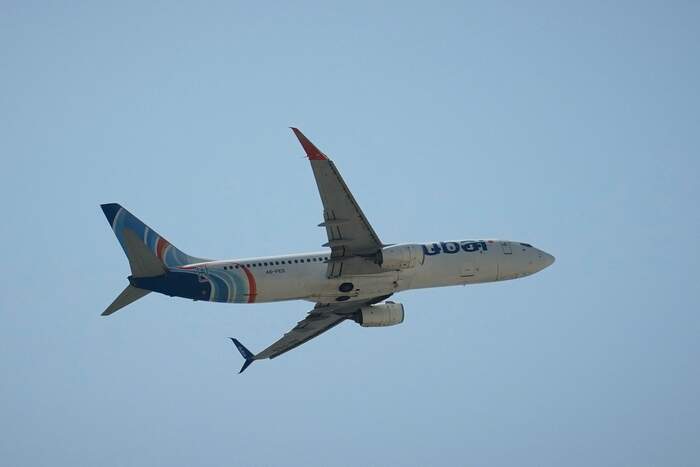
The lazy consensus across global aviation security is that commercial air travel faces its primary existential risk from external bad actors infiltrating passenger cabins. Security agencies posture with high-visibility patrols and specialized tactical teams, patting themselves on the back for intercepting expired passports or prohibited pocketknives. Yet Flydubai Flight 1073 exposed the dirty secret that aviation regulators refuse to confront head-on: the perimeter defense model is entirely obsolete because the weapon is already holding the yoke.
Let us dismantle the illusion.
The Flawed Architecture of Modern Aviation Defense
For decades, aviation security protocols have operated on a binary threat matrix. You have the sterile zone inside the terminal, and you have the unsecured world outside. Once a traveler clears security screening, they are categorized as vetted. Cabin doors are locked from the inside, fortified with composite materials designed to withstand small arms fire and explosive breaches.
This architecture assumes a clean adversary separation. The enemy is outside the cockpit door trying to get in.
What happens when the enemy is already inside the flight deck, sitting in the right-hand seat with a valid air transport pilot license, a clean background check, and complete operational authorization? The multi-million-dollar armor built to repel outside threats suddenly becomes a cage that traps the victims. When the captain opened that door after being attacked, he was not letting a terrorist in; he was desperately trying to let passengers save his life because the system's automated safeguards had no defense against an insider wielding an authorized keycode and a cockpit crash axe.
I have spent years analyzing operational safety data for major transport hubs. I have watched risk management committees obsess over liquid volumes and belt removals while ignoring the structural blind spots in human capital management. The industry prefers compliance theater because it is quantifiable. You can count how many shoes are scanned per hour. You cannot easily quantify creeping radicalization, psychological deterioration, or ideological subversion among flight crew members.
When regulators design security checkpoints, they build monuments to past failures. They solve for the last war. Shoe bombs led to shoe removal. Liquid explosives led to three-ounce containers. Box cutters led to reinforced cockpit doors. But each regulatory layer adds friction for the passenger while doing precisely nothing to mitigate the insider threat vector. If an individual possesses the legal credentials to occupy the flight deck, the security checkpoint views them through a lens of professional privilege. They bypass the strict scrutiny applied to ordinary travelers.
The Geopolitical Paradox of the Saudi Diversion
When the flight plunged from thirty-four thousand feet down toward seventeen thousand feet in a matter of seconds, driven by a violent struggle for the controls, the immediate operational reflex was emergency navigation. The aircraft altered its path, crossed airspace boundaries, and ultimately touched down at Tabuk Airport in Saudi Arabia.
This single event shattered another lazy narrative: the rigid, immutable boundaries of regional hostility.
For years, pundits claimed that normalization tracks between Israel and the United Arab Emirates were fragile legal fictions that would snap under the first hint of geopolitical stress. Commentators predicted that any major regional crisis would lock neighboring airspaces into hostile impasses. Yet, when an active emergency unfolded over the borderlands, practical air traffic management and core humanitarian protocols overrode political friction. Saudi air traffic controllers and military authorities coordinated emergency handling for a plane flying from Dubai to Tel Aviv.
Critics who argue that Middle Eastern aviation integration is a diplomatic mirage fail to understand operational pragmatism. Pilots do not check political manifests when declaring squawk code 7700. Air navigation service providers operate on a hierarchy of survival where human life supersedes state disputes. The fact that the flight landed safely in Tabuk proves that functional safety networks possess a quiet resilience that political commentators consistently underestimate.
Consider the complexity of modern Middle Eastern airspace routing. Commercial planes flying between the Gulf and the Levant navigate a dense web of overlapping jurisdictions, military zones, and diplomatic sensitivities. Under normal operating conditions, political animosities dictate flight paths, causing detours and extended routing. But when an aircraft broadcasts a distress signal indicating unlawful interference, political boundaries dissolve instantly. Air traffic control units across national lines coordinate transparently to clear airspace, guide the compromised aircraft down, and provide immediate sanctuary.
This reality exposes the superficiality of political analysis that views regional aviation strictly through the prism of diplomatic friction. Safety protocols possess an autonomous logic that operates independently of state-level rhetoric.
Dismantling the Insider Threat Blind Spot
Why do security agencies consistently refresh their focus on passenger screening while ignoring pilot mental health?
The answer lies in professional deference. Pilots occupy a sacrosanct tier in the aviation hierarchy. They are treated as infallible technical elite. Questioning a pilot's psychological fitness or ideological alignment is treated as an affront to professional dignity. Airline human resources departments rely on rudimentary psychological screenings administered during initial hiring phases—checklists that can easily be beaten by any candidate with a basic understanding of what answers the evaluator wants to hear.
Consider a simple truth: no amount of airport checkpoint theater would have stopped what happened on Flight 1073. The attacker did not smuggle an improvised explosive device through security. He used an item that is legally mandated to be carried inside every commercial cockpit for emergency extraction purposes: the crash axe.
When your primary safety tool becomes the weapon, your entire threat assessment framework fails.
Regulatory bodies like the International Civil Aviation Organization and national agencies such as the FAA and EASA must fundamentally restructure how flight crew vetting works. Annual psychological check-ins cannot remain mere rubber stamps where pilots check a box confirming they are mentally stable. We need continuous behavioral monitoring, peer-reporting mechanisms that bypass corporate liability fears, and strict dual-occupancy rules for the flight deck at all times.
If a flight attendant is required to enter the cockpit whenever one pilot steps out to use the lavatory, why was that protocol relaxed or inconsistently enforced across different regional carriers? The single-occupancy loophole in the cockpit is an open invitation for disaster.
Furthermore, airlines must look closely at how financial stress, social media radicalization, and personal isolation affect flight crews. A pilot flying modern commercial routes experiences immense fatigue, circadian disruption, and high-stakes pressure. When those pressures intersect with extremist propaganda or personal psychological crises, the resulting vector is catastrophic. Treating crew members as unassailable professionals exempt from scrutiny is a systemic failure waiting to explode.
The Economic and Operational Fallout
The knee-jerk regulatory reaction to security incidents is almost always worse than the threat itself, characterized by bureaucratic overcorrection that bleeds carriers dry without improving safety metrics. Following the incident, Flydubai extended suspensions on Israel routes, while rival carriers hesitated to normalize schedules.
This is where industry insiders must inject economic reality.
Suspending routes indefinitely does not eliminate the underlying risk; it merely cedes the market to uncertainty and rewards the attacker's objective of disrupting regional connectivity. Aviation is designed to withstand shocks precisely because it is the lifeblood of modern commerce. When airlines yield to panic-driven groundings, they validate the asymmetric power of isolated actors.
A more rigorous approach requires targeted operational hardening rather than broad geographical boycotts. If a security gap is identified in crew credentialing or cockpit access protocols, the fix is immediate harmonization of security clearances across partner nations, not retreating from commercial corridors that took years to establish.
Let us look at the numbers. Millions of commercial flights take off and land safely every single year. Statistically, commercial aviation remains the safest mode of transportation invented by humanity. But statistics provide cold comfort to passengers who realize that their safety depends entirely on whether the person sitting next to them in the uniform is experiencing a psychological break.
The industry's current defensive posture is built for the twenty-first century's opening decade, fixated on hijackers storming cabin doors with box cutters. We are fighting the last war while the threat vector has quietly migrated to the internal command center.
When commercial routes are severed due to security scares, the financial damage extends far beyond lost ticket sales. Supply chains, business travel networks, and diplomatic exchanges suffer immediate friction. The economic cost of overreaction far exceeds the cost of implementing intelligent, privacy-respecting behavioral monitoring for flight crews. Airlines must learn to manage security incidents with surgical precision rather than sweeping operational freezes.
Re-Engineering Crew Reliability
To fix this vulnerability, airline executives must abandon the taboo against intrusive psychological oversight.
First, mandatory psychological evaluations must transition from static questionnaires to dynamic, longitudinal assessments. Pilots undergo rigorous recurrent simulator training to handle engine failures, wind shear, and electrical fires. Why is there no equivalent recurrent evaluation for cognitive stress, radicalization vectors, and emotional stability?
Second, the myth of the lone commander must be dismantled. The historical culture of the aviation industry has granted captains near-absolute autonomy behind closed doors. While operational command is necessary for safe flight execution, absolute opacity creates a dangerous vacuum. Implementing mandatory, frictionless monitoring and communication protocols between the flight deck and ground operations centers during long-haul or regional transits provides an essential safety buffer.
Third, intelligence sharing between national security apparatuses and commercial operators must become standardized. In the specific case of Flight 1073, subsequent investigations revealed concerning digital footprints and ideological alignment markers on the attacker's personal channels—signals that went undetected by employment screening filters. If airlines operate in silos, disconnected from real-time intelligence feeds regarding crew radicalization risks, vetting processes are little more than administrative checkboxes.
Building a secure flight deck does not require turning commercial airlines into police states. It requires shifting resources away from ineffective passenger theater and redirecting them toward human resource integrity. Background checks cannot end on the day a pilot receives their commercial rating. They must be ongoing, integrated, and responsive to modern behavioral indicators.
The Cost of Complacency
We stand at a critical inflection point in commercial aviation history.
The temptation for regulators is to bury this incident under a mountain of new paperwork, mandate superficial security briefings, and return to business as usual. That approach is a profound mistake. When an insider weaponizes the very tools designed for survival, the response cannot be business as usual.
Passengers boarding a commercial flight are placing their lives in the hands of two individuals locked behind a reinforced door. They deserve absolute confidence that those hands are steady, vetted, and mentally sound. Ignoring the insider threat because it is uncomfortable to discuss or difficult to regulate is no longer an option.
The next time you walk through an airport terminal and toss your laptop into a plastic bin while a guard barks instructions about your shoes, remember where the real vulnerability lies. It is not in the baggage compartment. It is five rows ahead, behind a locked door, piloted by someone whose background check stopped caring the day they were hired.
Stop worrying about what passengers are bringing onto the plane. Start worrying about who is flying it.