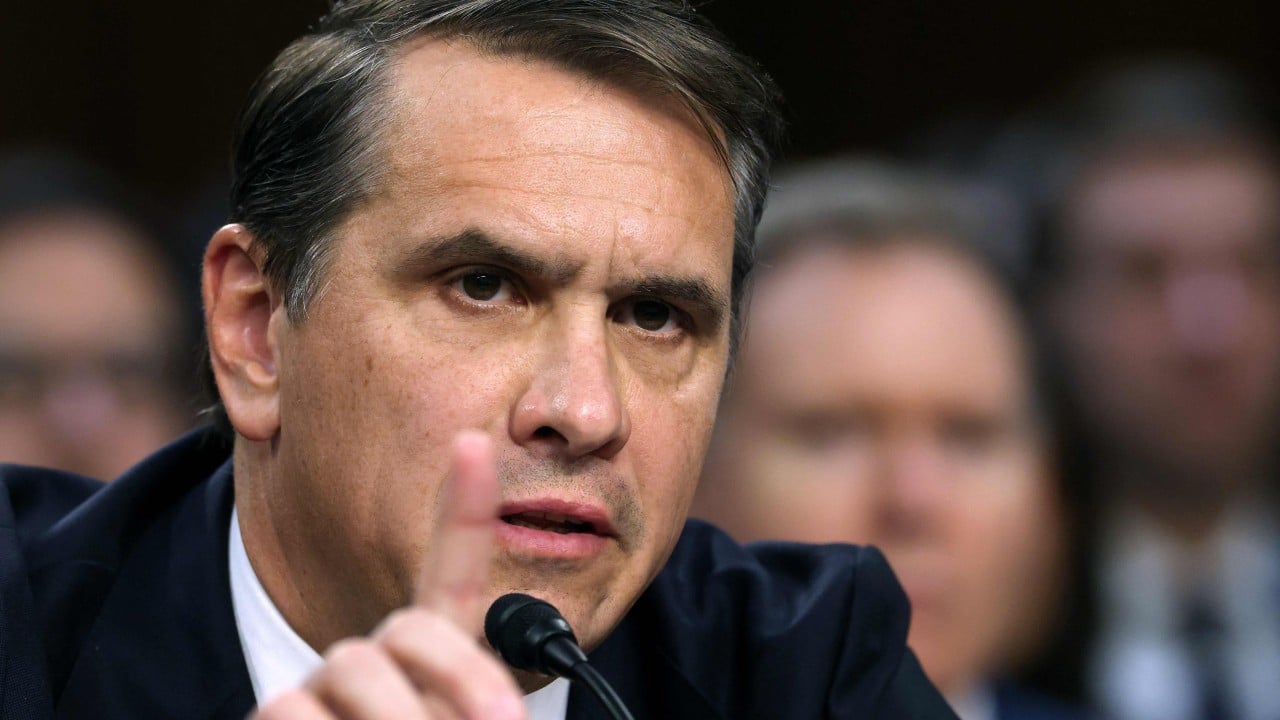
Federal Reserve Chair Kevin Warsh’s early-stage communications strategy represents a deliberate departure from the forward-guidance models of his predecessors. During his second day of congressional testimony, Warsh systematically declined to offer concrete policy pathways regarding inflation, artificial intelligence, or direct communications with the executive branch. This strategic silence is not merely a political defense mechanism; it is the implementation of a specific monetary framework designed to dismantle the predictive guidance paradigm.
The strategy relies on a structural reset of market expectations. By refusing to commit to deterministic rate paths, the central bank aims to reclaim policy flexibility at the cost of short-term market volatility. However, this transition exposes critical analytical vulnerabilities, particularly regarding supply-side technological shifts and the operational definition of monetary independence.
The Forward Guidance Reductions and Market Disregard
For over two decades, the Federal Reserve relied on forward guidance—such as the dot plot and qualitative policy statements—to manage long-term interest rates by signaling future short-term rate decisions. This approach turned the central bank into an active manager of market volatility.
The current administration at the Fed seeks to reverse this paradigm. This strategic shift rests on two primary operational pillars:
- Asymmetric Data Reception: Explicitly downplaying short-term favorable data to prevent the premature pricing-in of rate cuts. This was illustrated by the dismissal of the June inflation data—which showed a drop in year-over-year consumer price index inflation to 3.5% from 4.2% in May—as "imperfect measures."
- The Predictive Disarmament: Refusing to detail how the Federal Reserve will react to macroeconomic shocks. The objective is to force market participants to price risk based on fundamental economic variables rather than parsing central bank adjectives.
The cost function of this strategy is immediate. Without clear policy guides, the term premium on longer-dated sovereign debt must rise to compensate investors for increased uncertainty. By eliminating forward guidance, the central bank is structurally shifting volatility from the economic data space directly into the bond market.
The Microeconomic Fallacy of One-Time Tech Price Shocks
In addressing the massive infrastructure buildout of artificial intelligence, the chair argued that a spike in the cost of data centers, memory chips, and computing equipment represents a "one-time change in prices" rather than systemic inflation, citing an inevitable "supply response."
This thesis overlooks the transmission mechanism of structural capital expenditure shocks. The microeconomic reality of AI infrastructure deployment does not follow a simple supply-demand equalization curve for three reasons:
The Capital Intensity Bottleneck
The demand for high-performance silicon and specialized grid power is highly inelastic in the medium term. When tech firms spend hundreds of billions of dollars on physical data infrastructure, they crowd out other capital-intensive sectors. The localized price increases for electrical components, copper, and utility-scale power generation do not remain isolated; they elevate the base operating costs of the broader industrial sector.
Long-Term Amortization Cycles
A "one-time" capital expense does not vanish from the price system once the infrastructure is built. These investments are depreciated over multi-year horizons. To preserve operating margins, corporations must pass these multi-billion-dollar amortization costs down to end-users of software and cloud services. What appears on a corporate balance sheet as a temporary capital expenditure surge becomes a persistent service-sector price increase in the wider economy.
The Lagged Supply Curve
While supply eventually rises to meet demand, the gestation period for semiconductor fabrication facilities and power generation plants is measured in years, not quarters. In the intervening period, the excess demand continues to exert upward price pressures across interconnected supply chains.
The assertion that the Federal Reserve will simply determine "whether that's inflationary or not" represents a policy bottleneck. The central bank cannot easily separate a localized tech-driven price shock from systemic, generalized inflation when the localized inputs are foundational to the modern service economy.
The Bureaucratic Deflection: Task Forces as Monetary Policy Delaying Tactics
When pressed on how the central bank will distinguish between transitory and structural inflation, the response was a reliance on five newly created task forces. This organizational structure is designed to study the Fed's inflation framework, AI’s impact on productivity, data collection methodologies, and the central bank's balance sheet holdings.
From a structural standpoint, delegating fundamental analytical questions to internal task forces serves a specific tactical purpose:
[Macroeconomic Uncertainty] ──> [Establish Task Force] ──> [Decline Immediate Policy Commitments] ──> [Preserve Rate Optionality]
By placing active intellectual debates into formal study groups, the central bank buys time. This allows the Fed to avoid making premature policy commitments during periods of high data noise.
The structural risk of this strategy is the creation of an informational vacuum. If the central bank does not define its operational parameters for "persistent inflation," market participants will construct their own. This can lead to divergent pricing in credit markets and a potential misallocation of capital.
The Autonomy Paradox and Executive Communications
The final tension in this policy regime is the boundary between executive collaboration and central bank independence. While reiterating commitment to institutional autonomy, the refusal to disclose whether discussions have occurred with the executive branch since appointment reveals a fundamental governance dilemma.
Monetary policy does not operate in a vacuum; it interacts directly with fiscal policy. The modern central bank faces a structural trade-off between operational coordination and political subordination:
- Operational Coordination: High-level communication between the Federal Reserve, the Treasury Department, and the White House is functionally necessary to align debt-issuance strategies with liquidity management.
- Political Subordination: Direct, non-public communications regarding interest rate preferences risk introducing political business cycles into monetary calculations, eroding the long-term credibility of the currency.
The strategy of maintaining ambiguity around these communications is intended to protect the institution from public political fights. However, in practice, this lack of transparency often achieves the opposite effect. By withholding the simple confirmation or denial of communication, the central bank risks raising doubts about its independence. This, in turn, can cause markets to demand a higher risk premium on sovereign debt to protect against perceived political influence.