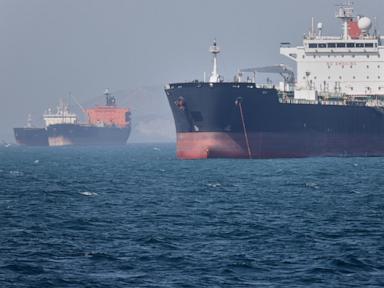
Saudi Aramco’s 25% surge in first-quarter profitability represents a triumph of logistical agility over geographic constraint. While the headline figure suggests a simple correlation with global price recovery, the underlying driver is a deliberate optimization of internal midstream infrastructure—specifically the aggressive utilization of the East-West Pipeline (Petroline). By rerouting crude volumes away from the Bab el-Mandeb Strait and the Strait of Hormuz toward the Red Sea port of Yanbu, Aramco has effectively decoupled its export security from the volatility of the Persian Gulf, capturing a structural premium that competitors cannot access.
The Logistics of Margin Expansion
The core of this profit growth is not merely the extraction of crude, but the reduction of the Total Landed Cost (TLC). Aramco’s strategy rests on three operational pillars: Discover more on a connected topic: this related article.
- Risk-Weighting Reduction: By bypassing the Strait of Hormuz, the company minimizes the insurance premiums and freight surcharges associated with high-risk maritime chokepoints.
- Geographic Proximity Gains: Loading crude at Yanbu on the Red Sea places Saudi oil significantly closer to European and Mediterranean markets. This reduces the Ton-Mile Demand, allowing for faster vessel turnaround times and lower fuel consumption per barrel delivered.
- Inventory Velocity: The ability to shift 5 million barrels per day (mb/d) across the 1,200-kilometer Petroline creates a "buffer" system. This infrastructure allows the company to modulate supply destinations in real-time based on regional price differentials (Brent vs. Dubai-Oman benchmarks).
The East-West Pipeline as a Strategic Lever
The Petroline serves as more than a transport utility; it is a tool for Asymmetric Market Access. While competitors in the UAE, Kuwait, and Iraq remain geographically tethered to the Persian Gulf, Saudi Arabia has engineered a dual-coast export capability. This creates a supply-side elasticity that provides a hedge against geopolitical blockades.
The 25% profit increase indicates that Aramco successfully converted this infrastructure into a profit center. When the spread between Mediterranean and Asian delivery prices widens, the Petroline allows for an immediate shift in export flow. The cost of pumping through the pipeline is a fixed operational expense ($OPEX$), whereas the savings in maritime insurance and the gains from regional price premiums are variable upsides. As the volume of throughput increases, the unit cost of transport drops, directly inflating the netback margin per barrel. More reporting by MarketWatch highlights related views on the subject.
The Mechanics of Netback Optimization
To understand how a 25% profit jump occurs without a corresponding 25% jump in global production, one must analyze the Netback Formula:
$$Netback = Price_{Market} - (Lifting Cost + Transport + Insurance + Duties)$$
Aramco’s lifting costs remain the lowest in the world, often cited near $3 per barrel. The leverage, therefore, exists entirely in the transport and insurance variables. By shifting the export point to the Red Sea, Aramco effectively lowers the $Transport$ and $Insurance$ components of the equation for every barrel destined for the West.
This shift creates a Structural Arbitrage. Even if the global price of oil remains flat, Aramco increases its profit by capturing the delta between the "Hormuz-route cost" and the "Yanbu-route cost." The Q1 performance confirms that the internal capacity to move volume westward has reached a scale where it significantly impacts the consolidated bottom line.
Operational Bottlenecks and Infrastructure Limits
The strategy is not without physical constraints. The East-West Pipeline has a rated capacity, and utilizing it at near-peak levels increases the Systemic Maintenance Burden.
- Pumping Station Energy Intensity: Moving high-viscosity fluids over 1,200 kilometers requires immense power. As throughput reaches its ceiling, the marginal cost of pumping increases due to friction losses and the need for chemical drag-reducers.
- Yanbu Terminal Throughput: The Red Sea ports must possess the storage capacity and deep-water berths to handle Very Large Crude Carriers (VLCCs). If terminal processing lags behind pipeline delivery, the system faces "backpressure," forcing a reversion to the more expensive Persian Gulf routes.
- Blending Complexity: Managing different grades of crude (Arab Light vs. Arab Heavy) through a single pipeline system requires sophisticated scheduling to prevent contamination. Any failure in this sequencing results in a lower-value "slop" oil that erodes the very margins the system was designed to protect.
De-risking the Sovereign Balance Sheet
The increase in profitability directly supports the Saudi state's Vision 2030 capital expenditure requirements. However, the reliance on midstream optimization highlights a critical vulnerability: the centralization of infrastructure. While the Petroline mitigates maritime risk, it creates a concentrated terrestrial risk. A single point of failure along the 1,200-km expanse could instantly revert Aramco's export profile back to the high-cost, high-risk maritime routes of the Gulf.
The Q1 data suggests that the "Infrastructure Premium" is now a permanent fixture of Aramco's valuation. Investors are no longer just buying a resource play; they are buying a logistical monopoly that controls the most efficient route between the largest remaining oil reserves and the hungry refineries of the Atlantic Basin.
The Capital Allocation Pivot
Aramco is using this surplus cash flow to fund a dual-track investment strategy. First, it is expanding the maximum sustainable capacity (MSC) of its upstream assets. Second, it is aggressively investing in downstream integration—specifically crude-to-chemicals technology.
The logic is simple: if the company can maximize the value of every carbon atom before it leaves Saudi soil, it reduces its exposure to the volatility of raw commodity markets. The East-West Pipeline is the bridge in this transition. It ensures that even as the world moves toward an energy transition, Saudi Arabia remains the "last man standing" by being the lowest-cost, most reliable, and most logistically flexible supplier.
Strategic Execution Framework
To maintain this trajectory, the following operational shifts are required:
- Digital Twin Integration: Implementation of real-time sensor arrays across the Petroline to predict mechanical fatigue before it causes a shutdown.
- Storage Expansion at Yanbu: Increasing the strategic reserve at the western terminus to allow for "lumpy" shipping schedules without throttling pipeline flow.
- Downstream Synchronization: Aligning the output of Red Sea refineries with the specific crude blends being moved through the Petroline to ensure zero-waste processing.
The 25% profit rise is a validation of midstream dominance. The company has moved beyond being a price-taker in the global market to becoming a logistics-maker, using its geography as a competitive moat that rivals cannot replicate through exploration or production alone. The focus now shifts to the sustainability of these infrastructure-driven margins in an environment of fluctuating global demand.
Aramco must now accelerate the expansion of the Petroline’s capacity to 7 mb/d. This is not merely an engineering goal but a geopolitical necessity. By making the Red Sea the primary exit point for Saudi energy, the company fundamentally alters the power dynamics of the Middle East, rendering the maritime threats of the Persian Gulf increasingly irrelevant to the kingdom’s fiscal health. The strategic play is to ensure that the "Hormuz Risk" becomes someone else’s problem, while Saudi Arabia enjoys the expedited, lower-cost lanes of the West.