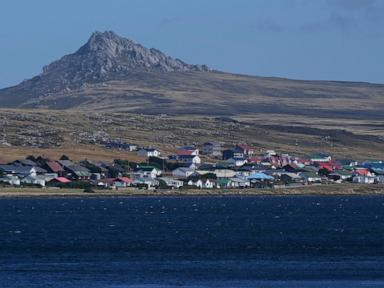
Every time Buenos Aires runs out of dollars, prints too many pesos, or faces another default, a familiar script rolls out across the Río de la Plata. The political establishment dusts off maps from the nineteenth century, fires up nationalist rhetoric about Las Malvinas, and demands immediate international attention for a manufactured grievance.
The lazy consensus in mainstream media treats this ongoing territorial dispute as a legitimate, unresolved diplomatic standoff between two equal sovereign claimants. That frame is entirely wrong. It misses the structural reality of modern geopolitics and domestic diversionary tactics. For another look, check out: this related article.
Strip away the emotional speeches at the United Nations and the historical theatrics. What remains is a convenient smoke screen used by successive Argentine administrations to mask domestic structural failure.
The Sovereignty Myth and the Right of Self-Determination
The core argument deployed by Argentina rests on geographic proximity and eighteenth-century colonial transfers of power. It conveniently ignores the foundational principle of modern international law: self-determination. Further coverage on the subject has been shared by The Washington Post.
The residents of the Falkland Islands are not temporary administrators, military occupiers, or colonial placeholders. They are a distinct community with a continuous generational presence spanning nearly two centuries. They speak English, use the British Pound, govern their own internal affairs through a democratically elected legislative assembly, and have voted overwhelmingly to maintain their status.
In a 2013 referendum, 99.8 percent of participating voters cast ballots to remain a British Overseas Territory. Voter turnout reached 92 percent. You cannot manufacture that level of democratic consensus.
When international commentators treat Buenos Aires as an aggrieved party with a valid title claim, they erase the fundamental human rights of the people actually living on the land. Sovereignty without the consent of the governed is nothing more than imperialism disguised as anti-colonialism.
The Economics of Distraction
Let us look at the internal numbers driving these periodic flare-ups. I have spent years analyzing sovereign debt restructurings and emerging market crises, and the correlation is too consistent to ignore. Whenever inflation surges past triple digits, central bank reserves evaporate, or the International Monetary Fund threatens to withhold loan tranches, the rhetoric regarding the South Atlantic intensifies tenfold.
Blaming a foreign power for national woes is the oldest trick in the populist playbook. It requires zero fiscal discipline, zero monetary reform, and zero structural adjustment of a bloated state apparatus.
- Argentina maintains recurring cycles of hyperinflation and currency devaluation driven by domestic overspending.
- The Falkland Islands maintain a thriving, self-sufficient economy fueled by sustainable fisheries management, tourism, and hydrocarbons.
- The local government operates with a fiscal surplus, requiring no financial subsidies from London.
The contrast drives nationalist politicians in Buenos Aires mad. How can a tiny community of under four thousand people achieve economic stability while a resource-rich nation of forty-six million stumbles from one economic catastrophe to the next? The answer lies in institutional quality, property rights, and the rule of law—elements that populist regimes routinely sacrifice for short-term political control.
International Law is Not a Menu
Critics of the current arrangement often point to United Nations General Assembly Resolution 2065, passed in 1965, which invited Britain and Argentina to find a peaceful solution to the sovereignty dispute.
What the pundits forget to mention is that international law evolves. The UN Charter explicitly prioritizes the principle of self-determination for non-self-governing territories above nineteenth-century colonial title claims. The International Court of Justice and various human rights bodies have consistently reinforced that the wishes of the inhabitants are paramount.
If we accepted the logic that geographic proximity trumps local democracy, global borders would descend into endless chaos. Nations would constantly cast covetous eyes on neighboring islands and borderlands, ignoring the living, breathing populations within them.
The Military Reality Check
Beyond diplomacy and economics, let us address the strategic absurdity of any modern conflict scenario.
Imagine a scenario where a future Argentine administration attempts a repeat of 1982. The outcome would not be a drawn-out struggle; it would be an immediate logistical impossibility compounded by modern defense technology. The United Kingdom maintains a permanent garrison at Mount Pleasant, complete with Typhoon fighter jets, rapid-response ground forces, and naval patrols. The deterrent posture is absolute.
More importantly, the people of the islands possess zero desire for integration. Any forced change in governance would require subjugating a hostile local population—an endeavor that violates every modern norm of international conduct.
Stop Falling for the Trap
The next time an Argentine politician steps up to a podium in New York or Buenos Aires to demand negotiations over the islands, do not analyze it through the lens of international jurisprudence. Analyze it through the lens of domestic approval ratings.
The dispute is settled. It was settled by the inhabitants at the ballot box, secured by deterrence, and validated by the failure of successive continental regimes to put their own economic house in order.
Stop treating a domestic distraction campaign as a legitimate geopolitical debate.