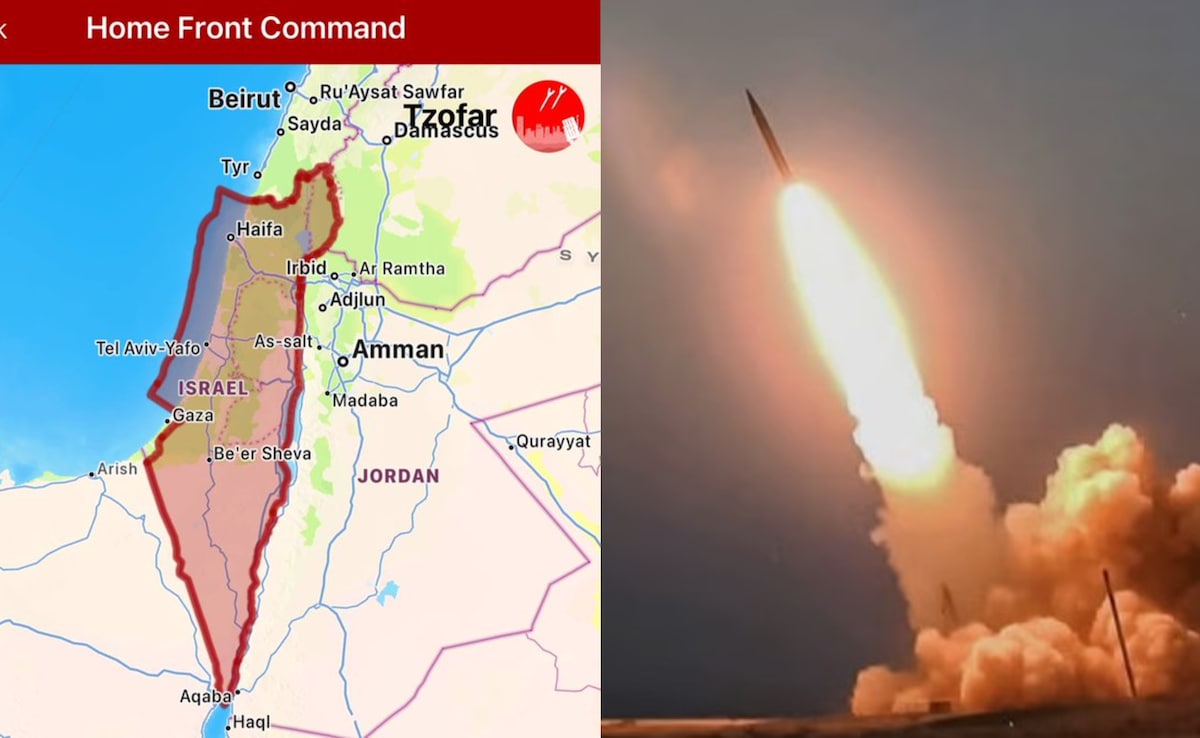
The April 2024 strike near Isfahan serves as a definitive case study in calibrated escalation, where the choice of the Blue Sparrow delivery vehicle was not merely a tactical decision but a sophisticated exercise in signaling over-match. While initial reporting focused on the "explosion" or "strike," the technical reality lies in the deployment of an Air-Launched Ballistic Missile (ALBM) designed specifically to bypass sophisticated Integrated Air Defense Systems (IADS). This operation demonstrated that the primary objective was the systematic demonstration of a "penetration-on-demand" capability, rather than maximum physical destruction.
The Mechanics of Air-Launched Ballistic Suppression
Standard cruise missiles or drones operate on a low-altitude, high-attrition model, relying on terrain masking or sheer volume to overwhelm defenses. The Blue Sparrow represents a pivot toward high-altitude kinetic energy. As a derivative of the Sparrow target missile series—originally designed to simulate Iranian Shahab-3 trajectories for testing the Arrow interceptor system—the missile utilizes a two-stage solid-fuel rocket motor to reach exo-atmospheric or high-mesospheric altitudes.
The physics of this approach creates a distinct three-phase advantage:
- Launch Displacement: By launching from a standoff distance—reportedly outside Iranian airspace—the platform avoids the high-risk engagement zone of long-range Surface-to-Air Missiles (SAMs) like the S-300.
- Velocity as Counter-Measure: Upon reentry, the missile achieves terminal velocities that significantly compress the defender's decision loop. The time between radar acquisition and impact is reduced to seconds, rendering manual command-and-control intervention impossible.
- Radar Cross-Section (RCS) Minimization: Unlike larger ballistic missiles, the Sparrow's smaller profile and modular warhead section allow for a reduced signature during the most critical phases of flight.
The Strategic Calculus of the "Empty" Strike
A core misunderstanding in general reportage is the perceived lack of damage at the Isfahan site. In strategic consulting terms, this is a confusion of output with outcome. The output was a localized kinetic event; the outcome was the verified degradation of the S-300 radar system's perceived invulnerability.
The targeting of a specific S-300 "Flap Lid" or "Tomb Stone" radar array—the "brain" of the air defense battery—serves as a bottleneck operation. By disabling the radar without leveling the surrounding facility, the attacker proves they can blind the defender at will. This creates a psychological and operational "checkmate" scenario. If the most advanced defense system in the national inventory cannot protect itself, it certainly cannot protect the high-value hardened assets, such as the Natanz nuclear facility located in the same geographic corridor.
Modularity and the Sparrow Family Framework
The Blue Sparrow is part of a modular family (Black, Blue, and Silver) that allows for varying ranges and payloads. This modularity provides a "Mission Configurable" advantage that dictates the strike’s logic:
- The Black Sparrow: Optimized for short-range ballistic simulation (SCUD-B equivalent).
- The Blue Sparrow: Medium-range capability (900km+), designed to replicate the flight characteristics of the Iranian Ghadr and Shahab series.
- The Silver Sparrow: The heaviest variant, designed to simulate long-range, high-velocity threats.
The use of the Blue variant suggests a specific range-to-payload optimization. It allowed the IAF to launch from a safe distance while maintaining enough kinetic energy to ensure the warhead reached the target through atmospheric friction and potential electronic warfare interference. The missile carries a separable warhead, which increases the difficulty for interceptors; the booster falls away, leaving a smaller, faster, and harder-to-hit reentry vehicle as the primary threat.
Vulnerability Analysis of Integrated Air Defenses
The Isfahan engagement exposed a fundamental breakdown in the "Sensor-to-Shooter" pipeline of the S-300 system. For an effective intercept, a defense system must complete the following chain: Detect, Track, Discriminate, and Engage.
The Blue Sparrow’s flight path likely exploited the "cone of silence" or the specific elevation limits of the S-300’s engagement envelope. Ballistic missiles approaching from extreme high-angle trajectories (steep descent) can bypass the scanning sectors of older or poorly positioned radar units. This tactical bypass suggests a deep intelligence-driven understanding of the radar's blind spots and its electronic counter-countermeasure (ECCM) limitations.
Economic and Logistical Asymmetry
The cost-benefit analysis of using a Sparrow derivative is heavily weighted in favor of the attacker. While an S-300 battery represents a multi-billion dollar national investment, an ALBM like the Blue Sparrow is a fraction of that cost.
- Attrition Math: If the defender fires two interceptors (the standard doctrine) to stop one incoming missile, the attacker wins the economic war of attrition.
- Platform Reusability: Unlike ground-launched ballistic missiles, which require mobile launchers that are vulnerable to "Scud hunting" missions, the Blue Sparrow is launched from a multi-role fighter. The aircraft returns to base, refuels, and can be back in the air with a fresh payload within hours.
This creates a persistent threat capability that forces the defender to remain at a constant state of "High Alert," leading to operator fatigue and increased risk of friendly-fire incidents or system failures.
Geopolitical Signaling via Kinetic Precision
The strike fundamentally altered the deterrent equation by removing the "deniability" of vulnerability. When an actor uses a missile designed to simulate an enemy’s own weapons, the subtext is clear: "We understand your technology better than you do, and we can replicate its behavior to defeat your defenses."
The lack of a massive secondary explosion indicates the use of a low-collateral or inert kinetic penetrator. This is a deliberate choice to prevent a full-scale regional war while still achieving the strategic objective. In the hierarchy of escalation, this sits exactly one step below "Counter-Value" targeting (cities/population) and "Counter-Force" targeting (military bases), occupying a niche defined as "Systemic Degradation."
Operational Constraints and System Limitations
No weapon system is infallible, and the Blue Sparrow has clear operational boundaries. Its effectiveness is contingent upon:
- Air Superiority/Standoff Access: The carrier aircraft must be able to reach the launch point. If the airspace between the origin and the target is heavily contested, the ALBM loses its primary advantage.
- Intelligence Dependency: To hit a specific radar unit without destroying the entire base requires sub-meter accuracy and real-time electronic intelligence (ELINT).
- Weather and Atmospheric Drag: While ballistic trajectories are less affected by weather than cruise missiles, high-altitude winds and thermal gradients can affect the accuracy of an unguided or inertial-only reentry vehicle.
Strategic Recommendation for Regional Actors
The deployment of the Blue Sparrow necessitates a total reassessment of defensive posture for any state relying on traditional static SAM sites. The move toward "Mobile, Distributed, and Dispersed" defense is no longer optional.
Future defensive strategies must prioritize:
- Multi-Spectral Sensing: Moving beyond pure radar to include Infrared Search and Track (IRST) and passive coherent location systems to detect the heat signature of a ballistic reentry.
- Hardened Redundancy: The "Flap Lid" radar failure proves that centralized nodes are fatal flaws. Defensive networks must transition to "mesh" configurations where multiple smaller sensors feed data to a distributed firing command.
- Kinetic Interception Over-match: The requirement for "Hit-to-Kill" technology (like the Arrow-3 or SM-3) becomes the baseline for survival against ALBM threats.
The Isfahan strike proved that in modern kinetic signaling, the most powerful message is not how much you destroy, but how precisely you can touch the most protected asset of your adversary. The Blue Sparrow was the pen used to write that message.
Analyze the satellite imagery of the Isfahan airbase pre- and post-April 19 to identify the exact coordinates of the radar displacement to verify the "blind spot" theory.