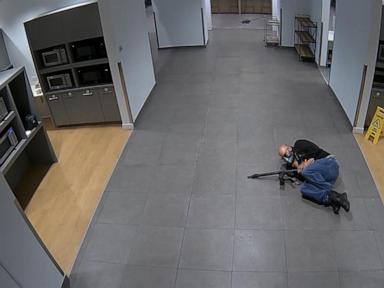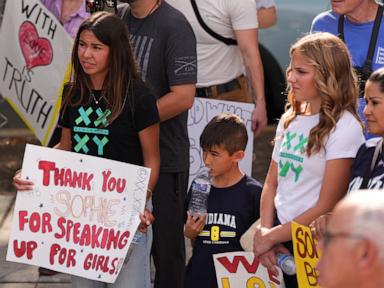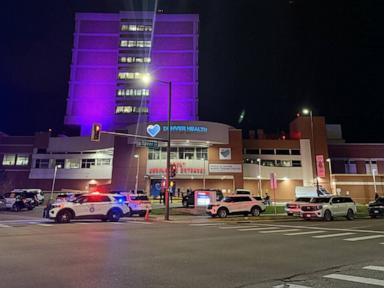
Four officers shot. One dead. A suspect neutralized.
If you read standard breaking news reports about high-casualty police gunfights—like the tragic ambushes and barricaded-suspect shootouts that have repeatedly rocked Colorado communities—you already know the script before reading a single word. The copy reads like a fill-in-the-blank template. A vague timeline. A sterile quote from a department spokesperson. A fleeting mention of "thoughts and prayers" from a local politician.
Then, twenty-four hours later, the media packs up its satellite trucks and moves on to the next shiny disaster.
This is the lazy consensus of modern crime journalism. By treating a multi-officer shooting as an isolated, inexplicable burst of random violence, legacy outlets fail their readers entirely. They report the casualty count while ignoring the systemic tactical, legislative, and behavioral failures that guaranteed the gunfight would happen in the first place.
If we want to understand why officers are still walking into lethal funnels in residential neighborhoods, we have to stop consuming stenography and start interrogating the mechanics of modern policing and media framing.
The Myth of the "Routine" Call
Mainstream crime reporting loves the phrase "routine call gone wrong." It is comforting. It implies that the system works 99% of the time, and this specific tragedy was just a freak statistical anomaly.
Ask any veteran patrol sergeant or tactical trainer, and they will tell you that the "routine call" is a lethal fiction.
In law enforcement training, experts like the late Dr. William Lewinski of the Force Science Institute have spent decades studying human performance under extreme stress. Their research proves that reaction time always lags behind action. When an armed suspect decides to ambush responding units, officers arriving in marked cruisers with flashing lights are operating at an immediate, severe tactical deficit. They are broadcasting their exact arrival time, location, and manpower to someone sitting behind cover with a rifle.
Yet, news articles routinely describe these incidents as sudden escalations during standard welfare checks, domestic disturbances, or warrant services.
By framing the event as an unpredictable ambush, journalists absolve police brass and municipal leaders of responsibility for outdated deployment protocols. Why were four officers stacked up in an exposed hallway or an open driveway without ballistic shields or armored support? Why are patrol units still being sent into known high-risk domestic barricades with standard-issue soft body armor rated only for handgun rounds, while suspects routinely wield high-velocity centerfire rifles?
Legacy media never asks those questions on day one. They wait for an internal investigation—which takes eighteen months and gets buried on a Friday afternoon—before admitting the tactics were flawed.
Stenography Is Not Journalism
Look closely at the sourcing in standard breaking crime coverage. Almost every single paragraph is attributed to a Public Information Officer (PIO) or a preliminary press release.
- "Police said the suspect opened fire."
- "Officials confirmed four deputies were struck."
- "The investigation remains ongoing."
This is not reporting; it is transcription. When a major shootout occurs, the department's immediate priority is legal liability, union protection, and narrative control. That is not a conspiracy theory; it is basic institutional self-preservation. A PIO's job is to release the minimum amount of verified information necessary to satisfy the press while shielding the agency from premature blame.
When journalists simply copy-paste those talking points, they miss the critical nuance of how the encounter actually unfolded.
Consider the phenomenon of "contagious fire" and crossfire in chaotic multi-officer gunfights. According to data analyzed by organizations like the Police Executive Research Forum (PERF), high-stress engagements involving multiple responding agencies frequently suffer from breakdowns in unified command. When four officers are shot in a single incident, the public assumes a single super-villain gunman mowed them down with surgical precision.
Sometimes that happens. Other times, a chaotic perimeter, lack of cross-agency radio interoperability, and panic-induced suppression fire turn a contained standoff into a meat grinder. You will never read about radio frequency failures or command-and-control breakdowns in a breaking news blurb, because the press corps refuses to look past the podium.
What People Actually Want to Know (And Why the Media Dodges It)
When a headline announces multiple officers have been shot, readers immediately run to search engines with specific, urgent questions. The mainstream press either ignores these queries or answers them with sanitized platitudes.
"Why didn't they just use non-lethal force?"
Let's dismantle this premise immediately. Non-lethal tools—Tasers, beanbag shotguns, pepper spray—are compliance tools designed for unarmed or blunt-force-armed subjects within a narrow distance window (usually 15 to 25 feet). You do not bring a Taser to a rifle fight. Expecting an officer taking active gunfire to deploy a conducted electrical weapon is a fantasy invented by people whose only exposure to violence is through prime-time television dramas. Once lethal force is introduced by a suspect, the only viable countermeasure is superior, accurate lethal force or immediate disengagement behind hard cover.
"How did the suspect get the gun?"
This is where partisan media splits into two predictable, useless camps. One side screams exclusively about gun control laws; the other screams exclusively about soft-on-crime prosecutors. Both are telling half-truths. The verifiable reality, backed by Bureau of Alcohol, Tobacco, Firearms and Explosives (ATF) trace data, is that the overwhelming majority of firearms used in assaults on police are acquired through straw purchases, thefts, or illicit street markets—often by individuals who are already prohibited possessors under existing federal law. Passing a new statute does not disarm someone who already ignores twenty existing ones, just as ignoring the proliferation of stolen firearms in high-crime corridors leaves patrol officers outgunned.
"Why did it take so many officers to stop one person?"
Because real gunfights do not end when a bullet hits a target. Hollywood has conditioned the public to believe that a single center-mass shot drops a human being instantly. In reality, unless a round severs the central nervous system or causes catastrophic structural failure of the pelvis or spine, a determined suspect fueled by adrenaline—or synthetic narcotics—can continue firing for tens of seconds or even minutes after sustaining mortal wounds. It takes overwhelming, coordinated firepower to stop a threat, and that coordination often collapses when officers are actively taking casualties.
The Heavy Hitters Who Actually Understand Tactical Reality
If you want to understand why these tragedies keep repeating, stop reading local breaking news aggregators and start reading the people who actually dissect law enforcement failures.
Look at the work of Chuck Wexler and the Police Executive Research Forum (PERF). Their Guiding Principles on Use of Force challenged decades of entrenched police orthodoxy by arguing that "tactical repositioning"—backing up, creating distance, and using time as a weapon—saves both civilian and officer lives.
Look at Seth Stoughton, a former police officer turned law professor at the University of South Carolina, who has extensively documented how the "warrior mindset" taught in police academies conditions officers to rush into danger rather than contain it. When agencies prioritize aggressive immediate entry over methodical perimeter control, officer casualty rates spike.
Compare their empirical, data-driven critiques to the shallow coverage in standard news feeds. The experts are screaming about doctrine, training hours, and command structure. The news is still arguing about whether the press conference started on time.
The Uncomfortable Truth About the Contrarian Approach
Advocating for slower, containment-based policing and ruthless media scrutiny of police tactics is not without its own severe downsides. We have to be honest about the trade-offs.
If police adopt a strict "contain and wait" doctrine on every volatile call—refusing to enter a residence until SWAT, negotiators, and armored vehicles arrive—lives will still be lost. If an active shooter is inside a home executing family members, waiting forty-five minutes for a tactical team to stage outside is a death sentence for the victims inside.
Furthermore, demanding immediate, granular transparency from police departments during the first twelve hours of a critical incident carries a real risk of contaminating witness testimony and botching criminal prosecutions. Eyewitness memory is notoriously fragile; releasing body-camera footage before officers and civilian witnesses have given their initial statements can unintentionally alter their recollections, creating reasonable doubt in a courtroom later.
There is no bloodless solution here. Aggressive intervention gets officers killed; passive containment gets hostages killed. Pretending there is an easy policy fix is the hallmark of an amateur.
Stop Consuming Trauma Porn
The next time a headline flashes across your screen announcing a multi-officer shooting in Colorado, Texas, or anywhere else, recognize the article for what it is: a rough draft of a tragedy written by someone who has never held a ballistic shield or worked a midnight patrol shift.
Do not share the breaking news clickbait. Do not buy into the comforting lie that it was just a random, unavoidable ambush.
Look at the timeline. Look at the deployment. Ask why patrol officers were put in a position to absorb rifle fire without hard cover, ask what failures in the justice system left a violent repeat offender armed on the street, and demand that journalism go deeper than a press release.
Until we force the media and police leadership to confront the tactical reality of the street, the names of the cities will change, the casualty counts will climb, and the script will stay exactly the same.