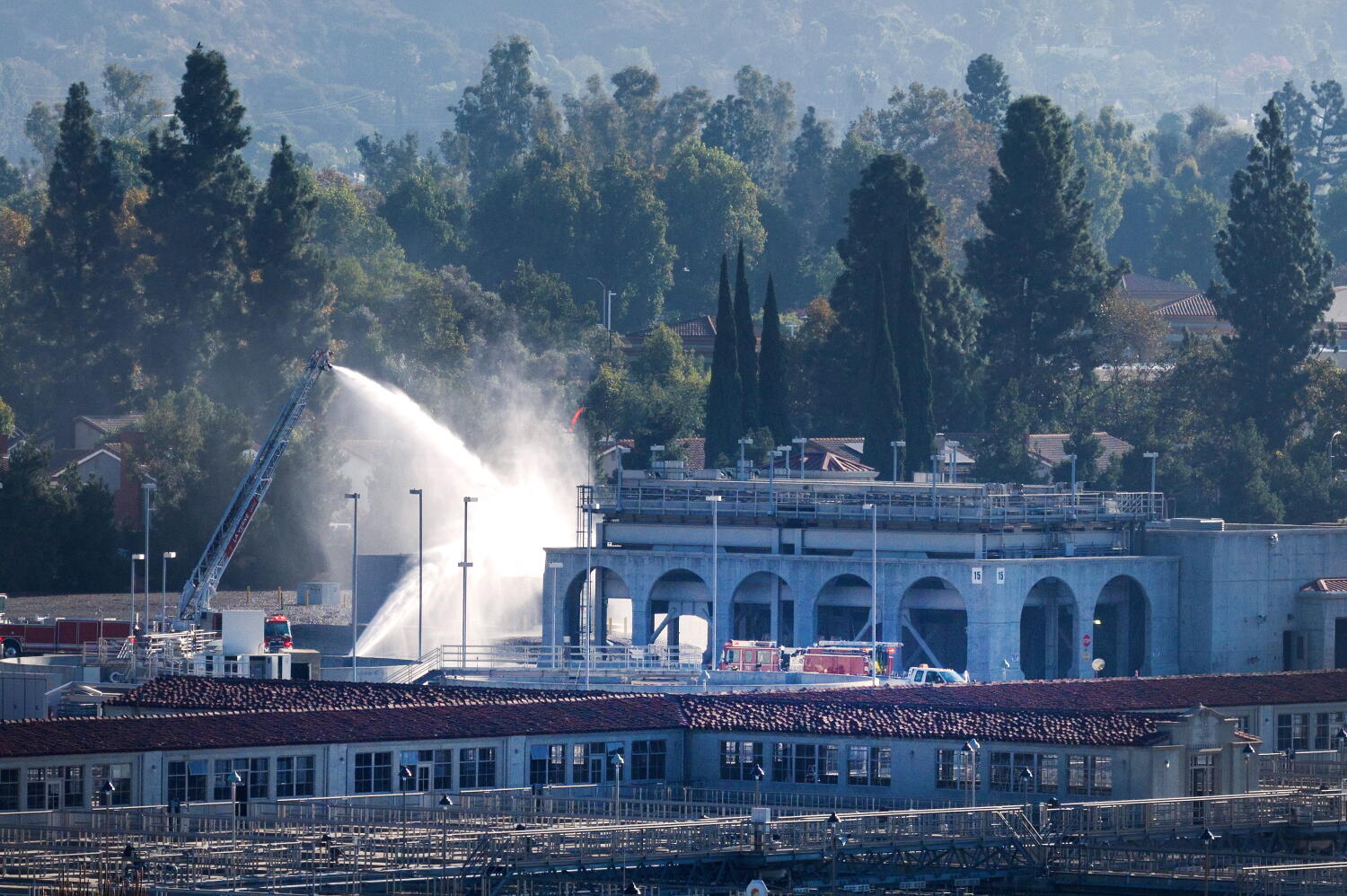
You smell it before you see it. A sharp, chemical reek reminiscent of burning plastic and acrid electronics cuts through the air, followed by a heavy plume of dark smoke drifting over local neighborhoods. This is the reality playing out across parts of California as massive utility-scale battery energy storage systems face thermal runaway events. While the state races to transition toward a 100% clean energy grid, lithium-ion battery installations are expanding rapidly. But these industrial-sized energy vaults come with a severe physical cost that local communities are no longer willing to ignore.
When a multi-megawatt battery facility catches fire, traditional firefighting playbooks fail completely. You cannot simply spray water on a lithium-ion fire and walk away. In fact, water can occasionally react with runaway cells or simply prolong the burn, forcing local emergency responders to adopt a defensive posture. They are often forced to cordon off a perimeter, evacuate nearby neighborhoods, and watch the installation burn itself out over days. Building on this theme, you can find more in: The Iron Handshake Across the Pacific.
The Physics of Thermal Runaway in Grid-Scale Facilities
To understand why these fires panic local residents, you have to look at what happens inside the metal containers. A modern battery energy storage system packs tens of thousands of individual lithium-ion cells into dense modular racks. If a single cell suffers a manufacturing defect, physical damage, or electrical overcharge, it can trigger a cascading failure known as thermal runaway.
The failing cell heats up instantly, reaching temperatures exceeding 1,000 degrees Fahrenheit. This intense heat transfers to adjacent cells, triggering a chain reaction that spreads through the entire rack before safety systems can intervene. As the cells break down, they release a hazardous cocktail of toxic and flammable gases, including hydrogen fluoride, carbon monoxide, and hydrogen cyanide. These invisible emissions threaten both first responders and downwind communities, turning a localized equipment failure into a public health crisis. Observers at MIT Technology Review have provided expertise on this matter.
Communities near major installations—such as the massive facility sites in Monterey County—have experienced sudden shelter-in-place orders and mandatory evacuations as toxic plumes drift over residential zones. When residents realize that industrial battery parks are being built yards away from schools and homes, the pushback is immediate and fierce.
Regulatory Lags and Safety Standard Overhauls
Local zoning boards are caught in a difficult bind. California needs massive energy storage capacity to store excess solar and wind power generated during peak daylight hours, ensuring reliability when the sun goes down. Without these grid-scale batteries, blackouts become much more likely. Yet, local officials frequently lack the technical background to evaluate whether a proposed facility has adequate fire suppression or proper isolation zones.
Current codes and safety standards are scrambling to catch up with the rapid scaling of battery technology. Organizations like the National Fire Protection Association have updated guidelines such as NFPA 855, imposing stricter mandates on thermal monitoring, early gas detection, and minimum separation distances between containers. However, many existing installations were approved under older, more lenient frameworks.
Municipalities are pushing back by demanding more than baseline compliance. They want independent safety audits, real-time air quality monitoring systems that can instantly detect off-gassing before a fire breaks out, and dedicated training funds for local fire departments who are often underequipped for chemical battery incidents.
Engineering Better Defense Mechanisms
Technology developers are responding to these failures with advanced engineering solutions. The older method of relying solely on standard gaseous fire suppression agents is facing heavy scrutiny because certain agents can actually create explosion risks if unburned flammable gases accumulate inside a sealed container.
Instead, modern designs are focusing on prevention and containment. Engineers are implementing liquid immersion cooling systems, where entire battery modules sit within thermally conductive dielectric fluids that dissipate heat evenly and choke off thermal runaway before it can propagate. Furthermore, early-warning VESDA (very early smoke detection apparatus) systems are becoming mandatory, allowing operators to detect microscopic particle changes in the air long before visible smoke or flames appear.
Fixing the safety deficit of lithium-ion storage isn't optional if the green transition is going to succeed. Energy companies must prioritize community safety over rapid deployment speed, investing heavily in robust engineering controls and transparent emergency communication. If the industry fails to earn the trust of the communities hosting these facilities, local opposition will stall the very infrastructure needed for a sustainable energy future.