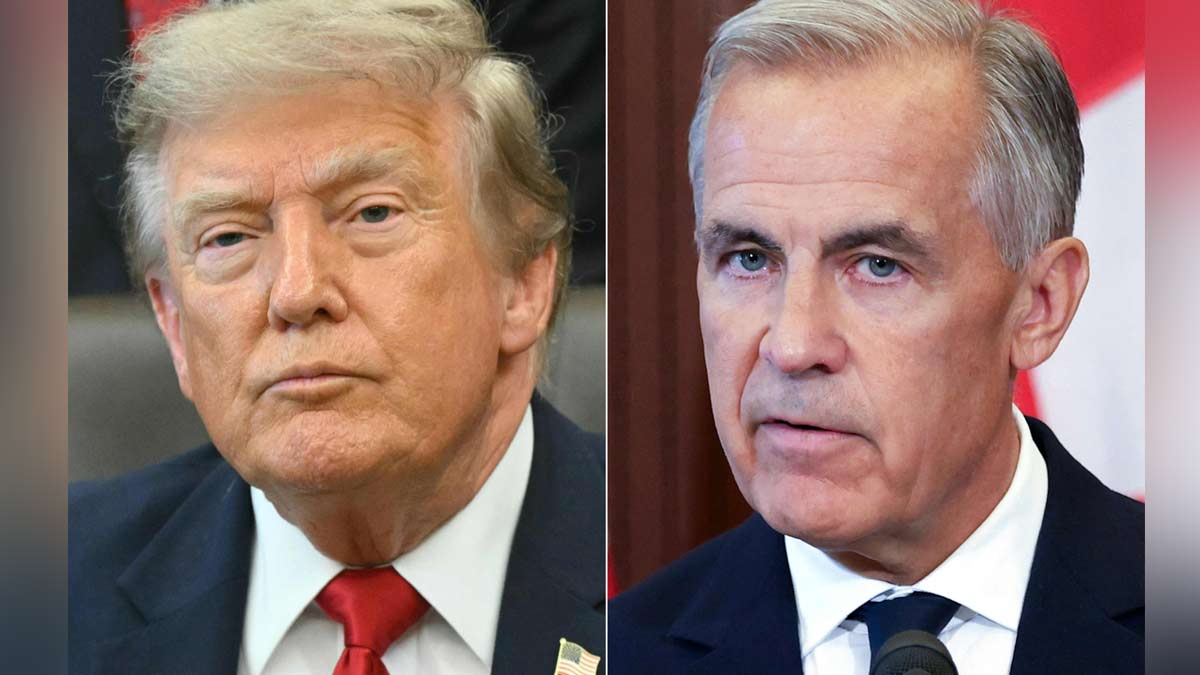
For decades, the border between the United States and Canada was celebrated as the longest undefended line on earth. Families crossed it for dinner, trucks hauled manufactured goods across it without missing a beat, and politicians routinely invoked a brotherhood of nations. That era is dead. When trade talks collapsed in Washington, it became glaringly obvious that the old diplomatic playbook no longer applies. Prime Minister Mark Carney drew a hard line, announcing that Canada will match new American import taxes dollar for dollar.
Washington imposed a fifty percent tariff on roughly twenty billion dollars worth of Canadian goods. This includes everything from hockey equipment and alcoholic beverages to down feathers and paper products. The White House blamed Ottawa for walking away from a deal, claiming they offered generous concessions on steel, aluminum, and autos. Canadian officials saw it differently. They argued that last-minute demands undermined national sovereignty and wrecked the economic logic of any agreement.
Trade wars rarely start overnight. They build through a slow accumulation of grievances, retaliations, and broken trust. When Donald Trump returned to office, he brought an aggressive protectionist agenda designed to force manufacturing back inside American borders. Almost immediately, universal tariffs hit Canadian shipments. Ottawa responded with counter-tariffs on billions of dollars of American exports. Provincial governments joined the fray by pulling American liquor off store shelves and restricting U.S. corporate access to regional procurement bids.
The Collapse of a Century-Old Alliance
Negotiators spent weeks trying to bridge the gap. For a brief moment, a compromise looked possible. Then reality set in. According to Canadian officials, Washington introduced new conditions at the eleventh hour. These terms aimed to restrict Canada from striking trade deals with other nations and weakened protections for Canadian culture and language. For Ottawa, crossing that line meant surrendering economic independence.
Mark Carney didn't blink. Stepping up to the microphone in Ottawa, he laid bare the new reality. He stated clearly that America has transformed all its commercial relationships and now uses economic integration as a weapon. His words marked a profound psychological shift. Canadians spent generations assuming their special status insulated them from protectionist backlash. That illusion vanished.
American trade representatives insisted they pushed for a fair deal. Jamieson Greer told reporters that Canada rejected an arrangement that gave them the best treatment of any major exporter to the U.S. market. Yet, those terms came packaged with restrictions that Canadian leaders found completely unacceptable. When a partner demands that you surrender your sovereign right to regulate your own economy, walking away becomes the only logical choice.
The Cost of Economic Nationalism
Protectionism sounds great on a campaign trail. It promises factory jobs, national self-reliance, and lower prices for domestic workers. Economics tells a different story. Imposing steep import duties on a deeply integrated trading partner creates immediate friction across supply chains.
American consumers are already feeling the pinch. Goods that crossed the border freely now carry massive surcharges. Companies relying on Canadian steel and aluminum face soaring production costs. Those expenses inevitably trickle down to everyday buyers shopping for appliances, cars, and building materials. A policy pitched as a win for the American worker turns into an invisible tax on ordinary households.
On the northern side of the border, the economic fallout hits just as hard. Small businesses that depend on cross-border trade are scrambling to find alternative suppliers or domestic buyers. Investment capital hesitates when uncertainty dominates the regulatory environment. Confidence takes years to build and seconds to shatter. When supply chains break down, rebuilding them requires massive capital expenditure that ultimately drives up consumer prices everywhere.
Inside the Provincial Pushback
Federal leaders aren't the only ones driving Canada's strategy. Provincial premiers hold powerful levers in this fight, particularly when it comes to retail liquor sales and public procurement rules. Ontario Premier Doug Ford didn't mince words when describing the tariff offensive, comparing it to getting punched in the face multiple times. His frustration reflects a broader political mood across the country.
Ontario's government-run liquor board previously purchased nearly a billion dollars in American alcohol annually before pulling those products off shelves. Other provinces followed suit, turning retail shelves into a frontline economic battleground. Manitoba Premier Wab Kinew urged residents to keep buying domestic products even if U.S. alcohol returns to stores. This grassroots resistance matters. It shows that public sentiment in Canada strongly favors standing firm rather than capitulating to Washington's demands.
Critics worry that provincial retaliation hurts local businesses just as much as American competitors. Restaurant owners and hospitality operators rely on popular U.S. spirits to serve customers. Yet, the prevailing political calculus prioritizes long-term sovereignty over short-term convenience. Leaders believe that giving in to coercive tariff threats only invites more aggressive demands down the road.
What Happens When Borders Become Bargaining Chips
Trade agreements require a baseline of trust. When a nation treats its closest ally like an economic adversary, the foundation crumbles. Canada has already started redirecting its economic focus. Ottawa referred dozens of major nation-building initiatives, including new ports, mines, and energy corridors, to a newly minted federal office. These projects represent billions in private investment aimed at diversifying trade away from an increasingly unreliable southern neighbor.
This pivot won't happen overnight. The U.S. economy remains an economic giant and Canada's primary export destination. Untangling decades of deeply integrated cross-border manufacturing requires time, money, and immense logistical effort. Yet, the political will to diversify has never been stronger. Citizens who once took open borders for granted now view economic self-reliance as an urgent necessity.
The consequences of this trade dispute extend far beyond milk, lumber, and automobiles. They redefine how middle powers navigate a world dominated by economic nationalism. When powerful nations weaponize tariffs against friendly neighbors, smaller economies learn that cooperation has limits. Canada chose to stand its ground, accepting the immediate economic pain of a trade war rather than signing away its independence. The road ahead looks rocky, expensive, and unpredictable. For Canadians watching from across the border, backing down was never an option.