A single captain on a bridge in the middle of the night holds more power over your morning commute than any politician or central banker. This is not hyperbole. It is the geographic reality of the Strait of Hormuz.
Imagine a narrow strip of water, barely twenty-one miles wide at its tightest squeeze. Through this throat, one-fifth of the world’s total oil consumption pulses every single day. If the global economy has a jugular vein, this is it. For decades, the nightmare scenario for every energy minister from Tokyo to Berlin has been a sudden, violent closure of this passage. The question has always been the same: if the door slams shut, is there a back way out?
The answer lies in thousands of miles of steel buried under scorching sand, far away from the naval patrols and the looming Iranian coastline.
The Weight of the Water
To understand why we are obsessed with bypassing the Strait, you have to look at the sheer volume of the traffic. On an average day, roughly 20 to 21 million barrels of oil slide through those waters. It isn’t just about gasoline. It’s about the plastic in your medical supplies, the asphalt on your roads, and the fuel for the planes carrying your overnight deliveries.
When tensions spike in the Persian Gulf—whether it’s a seized tanker or a stray drone—the ripples are felt instantly. Traders in London and New York don’t wait for the oil to stop flowing; they price in the fear that it might.
But there is a silent alternative. Saudi Arabia and the United Arab Emirates have spent billions trying to build a world where the Strait of Hormuz is an option, not a requirement. They have turned to the desert, laying pipelines that stretch across the Arabian Peninsula like massive, subterranean bypass surgeries.
The East-West Lifeline
The most significant of these is Saudi Arabia’s Petroline. Formally known as the East-West Pipeline, this 745-mile artery cuts across the heart of the kingdom. It starts in the massive oil fields of the East, near the Gulf, and terminates at the Red Sea port of Yanbu.
Consider the strategic shift this represents. Instead of a tanker crawling through the Strait and rounding the entire peninsula, the oil is pushed through the earth, emerging on the other side, ready to head through the Suez Canal toward Europe or down toward the Cape of Good Hope.
It sounds like a perfect solution. But physics and finance have a way of complicating things.
The Petroline has a nameplate capacity of about 5 million barrels per day. Recently, the Saudis worked to expand that toward 7 million. Even at full tilt, that is only about a third of what normally goes through the Strait. If the Strait closes, the Petroline is a bucket in a rainstorm. It helps, but it doesn't stop the flood.
The Abu Dhabi Shortcut
Further south, the United Arab Emirates has its own insurance policy: the Abu Dhabi Crude Oil Pipeline. This 230-mile project bypasses the Strait entirely, connecting the inland fields of Habshan to the port of Fujairah on the Gulf of Oman.
Fujairah is a fascinating place. It is a city built on the premise of "what if." Its massive storage tanks and deep-water berths sit outside the chokepoint, staring directly at the open Indian Ocean. If the Strait is blocked, Fujairah becomes the most important piece of real estate on the planet.
The UAE pipeline can handle about 1.5 million barrels per day. Again, it is a vital relief valve, but it isn't a replacement for the main artery. When you add the Saudi and Emirati capacities together, you get a theoretical bypass of roughly 8 to 9 million barrels per day.
That leaves 12 million barrels with nowhere to go.
The Logistics of a Locked Door
The problem isn’t just the oil. It’s the gas.
Qatar is the world’s leading exporter of Liquefied Natural Gas (LNG). Unlike oil, which can be pumped through a pipe across a desert and loaded onto a ship on the other side, LNG requires massive, specialized liquefaction plants. These are multi-billion dollar coastal fortresses. Qatar’s exports have no terrestrial bypass. They are entirely dependent on the Strait of Hormuz.
If the Strait closes, the lights don't just dim; in some parts of the world, they go out. Heating stops. Factories freeze. The economic impact of a total LNG cutoff would likely eclipse the oil shock itself.
There is also the matter of "swing capacity." In the oil world, the ability to ramp up production or move it quickly is the only thing that keeps prices stable. The pipelines are currently used for convenience and logistical efficiency. In a crisis, they would be pushed to their mechanical limits.
We have to ask: what happens when a system designed for 100% capacity is suddenly the only system? Maintenance becomes impossible. Wear and tear accelerate. A single mechanical failure or a targeted strike on a pumping station would turn a crisis into a catastrophe.
The Fragility of the Red Sea
For a long time, the Red Sea was seen as the safe haven—the destination of those bypass pipelines. But history is rarely that kind.
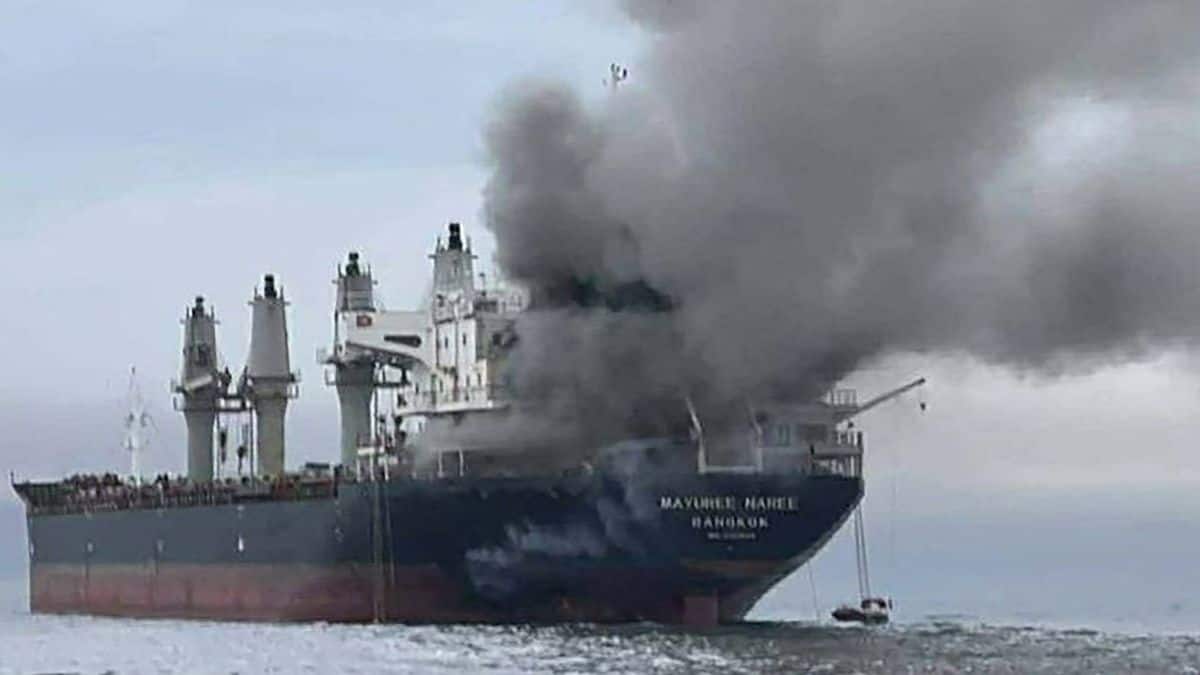
The security of the Red Sea is now its own complicated puzzle. With instability in Yemen and the persistent threat of maritime attacks near the Bab el-Mandeb strait, the "safe" end of the pipeline is no longer a guarantee of smooth sailing. Shipping companies are forced to weigh the risks of the Persian Gulf against the risks of the Red Sea.
It is a claustrophobic reality for global trade. We have spent half a century trying to engineer our way out of geographic traps, only to find that the new routes have their own ghosts.
The Human Cost of the "Oil Risk"
We talk about barrels and bpd (barrels per day) and deadweight tonnage. These are cold, sterile metrics. But the reality of a Strait closure is a human story.
It is the story of a truck driver in the American Midwest who can no longer afford the diesel to make his deliveries. It’s the story of a family in a developing nation where the cost of cooking fuel doubles overnight, forcing them to choose between heat and food. It’s the story of the sailors on those tankers, who navigate "High Risk Areas" with the knowledge that they are the primary targets in a game of global chicken.
The engineers who maintain the Petroline in the 120-degree heat of the Rub' al Khali desert aren't just doing a job. They are maintaining the thin, metallic thread that keeps the modern world from unraveling.
The Illusion of Total Security
Can the world bypass the Strait of Hormuz?
Technically, partially, and with immense difficulty. We have built the detours. We have laid the pipes. We have carved the ports out of the rock. But the math doesn't add up to a full escape. The world is still tethered to that twenty-one-mile stretch of water.
The pipelines are not a solution; they are a bridge. They buy time. They offer a margin of error. But they remind us of a fundamental truth we often try to ignore: our high-tech, digital, interconnected lives are still at the mercy of physical geography and the ancient, stubborn realities of the earth.
We live in a world of bypasses and workarounds, yet we remain remarkably vulnerable to a single, well-placed gate.