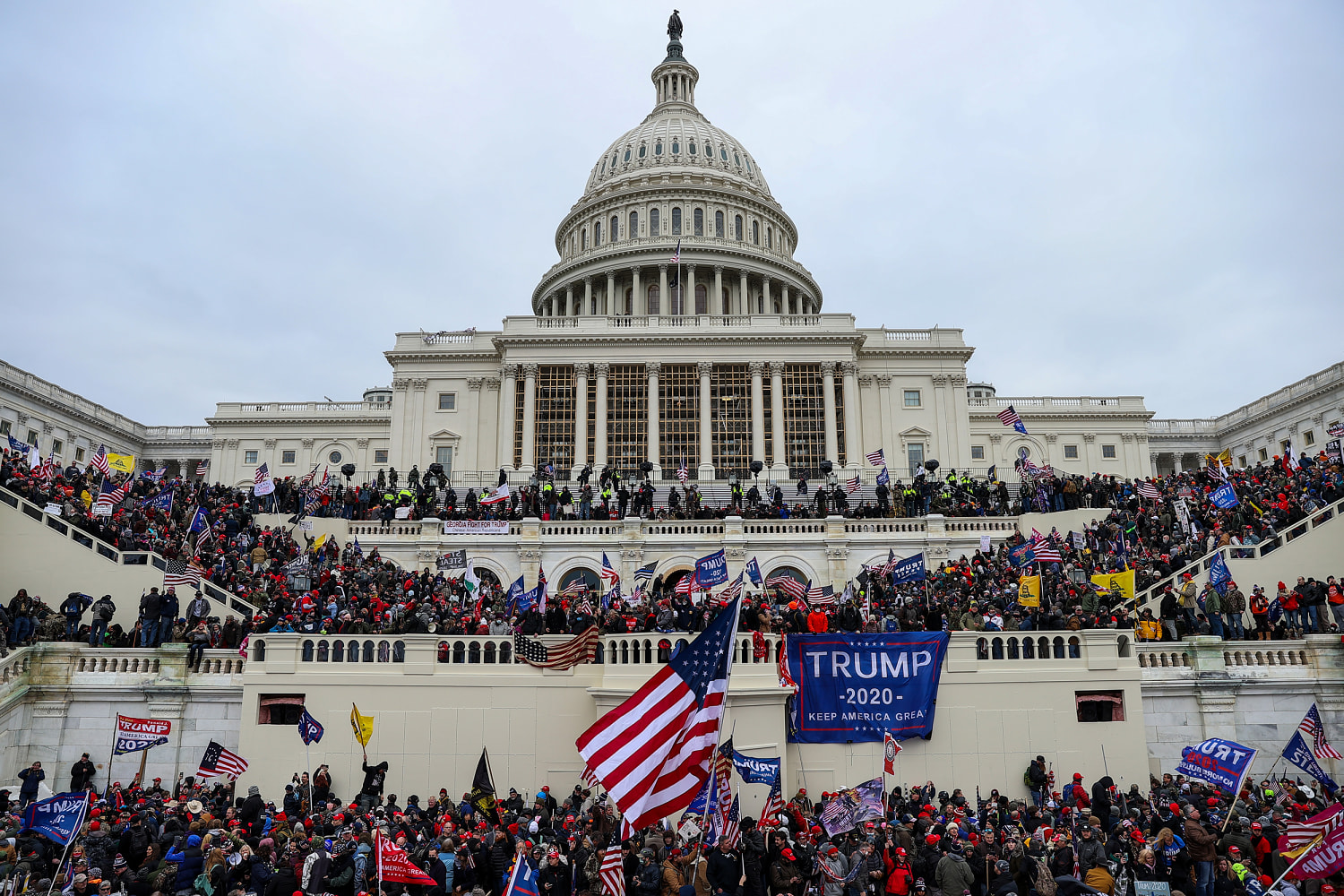
Justice is rarely a straight line, but in the case of Jonathan Laurens, it has looped back into a nightmare that even the most cynical court observers didn't see coming. Laurens, a man who once walked free from federal charges related to the January 6 Capitol breach thanks to a high-profile presidential pardon, is now trading his temporary liberty for a lengthy stay in a federal cell. The reason has nothing to do with political activism or "patriotism." It involves what federal prosecutors and judges have described as a massive, stomach-turning collection of child pornography.
This isn't just a story about a single criminal falling through the cracks. It is a case study in the unpredictable consequences of executive clemency and the blurred lines between political radicalization and deep-seated personal deviancy. When Laurens was pardoned for his role in the 2021 insurrection, the move was framed by supporters as a correction of judicial overreach. Today, that narrative has collided with the grim reality of a man who used his freedom to harbor a digital library of exploitation so vast it shocked seasoned investigators.
From the Crypt of the Capitol to the Dark Web
Jonathan Laurens first entered the national consciousness as a footnote in the sprawling legal aftermath of the January 6 riots. Like hundreds of others, he was caught up in the digital dragnet that followed the breach of the U.S. Capitol. His involvement was documented, his charges were filed, and his future looked increasingly bleak until the stroke of a pen changed everything.
The pardon was supposed to be a clean slate.
However, law enforcement soon discovered that Laurens’s interests extended far beyond political upheaval. While the public eye was focused on his legal reprieve, local and federal authorities in Tennessee were closing in on a different set of digital footprints. During a subsequent investigation, authorities executed a search warrant that uncovered a cache of illicit material that effectively ended any chance of Laurens maintaining his status as a misunderstood political figure.
The numbers are staggering. Investigators didn't just find a few files; they found thousands. This was a dedicated, organized collection of some of the most horrific material imaginable. It suggests a long-standing habit that existed long before he ever stepped foot on the National Mall.
The Mechanical Failure of Executive Clemency
The controversy here lies in the vetting process—or the lack thereof. When a President issues a pardon, it is an absolute exercise of power. There is no requirement for a background check beyond what the executive branch deems necessary. In the rush to provide relief to those involved in the events of January 6, critics argue that the standard filters for criminal history and character were bypassed in favor of political optics.
We have to ask if the pardon emboldened Laurens.
When the state signals that your previous illegal actions are forgiven, it can create a dangerous sense of invincibility. For a person already harboring dark, predatory impulses, a pardon acts as a "get out of jail free" card that may lower the perceived risk of future crimes. Laurens didn't just return to a quiet life; he doubled down on a different brand of lawlessness.
The Scope of the Evidence
Federal court records detail the sheer volume of the material found in Laurens's possession. We are talking about over 13,000 images and videos. This was not a passive collection. This was a curated archive.
- Device Seizure: Authorities took computers, hard drives, and mobile devices from his residence.
- Forensic Analysis: Tech experts spent weeks indexing the material, much of which was hidden behind encryption or buried in system folders.
- Victim Identification: The material included victims of various ages, some in the most vulnerable categories possible.
The court didn't see this as a momentary lapse in judgment. The judge noted the "industrial scale" of the collection, which directly influenced the severity of the sentencing.
A Sentence That Sticks
Unlike his previous brush with the law, there is no political shield for Laurens this time. He was recently sentenced to 15 years in federal prison, followed by a lifetime of supervised release. The sentencing phase was a somber affair where the "patriot" defense was nowhere to be found.
The defense tried to argue for leniency based on mental health and social isolation, but the prosecution was relentless. They pointed out that while Laurens was portraying himself as a victim of a "weaponized" justice system in public circles, he was privately consuming the exploitation of children. It was a hypocrisy that the court found impossible to ignore.
The Fallout for the January 6 Narrative
This case creates a massive headache for those attempting to blanket all January 6 defendants as simple "political prisoners." While many individuals involved in the riot have no prior or subsequent criminal records, the Laurens case provides a visceral counterpoint. It forces a hard look at the individual characters being championed by various political factions.
When you elevate a person to the status of a martyr, you take on the risk of their personal baggage. Laurens’s baggage turned out to be a lead weight that has dragged his supporters' rhetoric into the mud.
Why the System Failed to See it Coming
The legal system is designed to track "known" risks. If Laurens had a prior conviction for similar offenses, he likely wouldn't have been a candidate for a pardon or would have been under tighter surveillance. The problem is that many of these digital crimes remain invisible until a specific trigger—like a search warrant for an unrelated matter—brings them to light.
In this instance, the January 6 investigation was the catalyst. If Laurens hadn't been under the federal microscope for his political activities, his "enormous collection" might have stayed hidden for years. There is a dark irony in the fact that the very event that led to his pardon also likely led to the scrutiny that eventually put him behind bars for a much more heinous crime.
The Reality of Federal Supervised Release
Fifteen years is a significant sentence, but the "lifetime of supervised release" is the part of the judgment that ensures Laurens remains under the thumb of the law until the day he dies. This isn't just checking in with a PO once a month. For someone with his specific charges, it means:
- Strict Monitoring: Every device he ever touches will have monitoring software installed.
- No-Go Zones: He will be restricted from parks, schools, and any place where children congregate.
- Warrantless Searches: Probation officers can search his home and electronics at any time without notice.
The "freedom" he won with his pardon has been replaced by a cage that won't fully open even after he leaves the prison gates.
Beyond the Headlines
We often talk about the "radicalization pipeline" in the context of politics, but we rarely discuss how it intersects with other forms of deviancy. There is an argument to be made that individuals who feel alienated from society—the type of people who might seek out extremist political movements—are also more susceptible to seeking out taboo or illegal content in the darker corners of the internet.
Laurens was living a double life. One life was lived in the loud, boisterous world of political protest and "taking back the country." The other was lived in the silent, flickering light of a monitor, consuming the most illegal content the law recognizes.
The legal community is now debating whether the "Pardon Power" needs more checks and balances. While the Constitution grants the President wide latitude, cases like Laurens's suggest that the lack of a mandatory, independent review of a recipient's total background can lead to disastrous outcomes. If the goal of a pardon is to serve the interests of justice, the Laurens case stands as a monument to a time when it did the exact opposite.
He isn't a political prisoner. He isn't a hero of a movement. He is a convicted predator who used a moment of national chaos to hide a much darker secret.
The gavel has finally fallen, and this time, there is no one coming to save him.