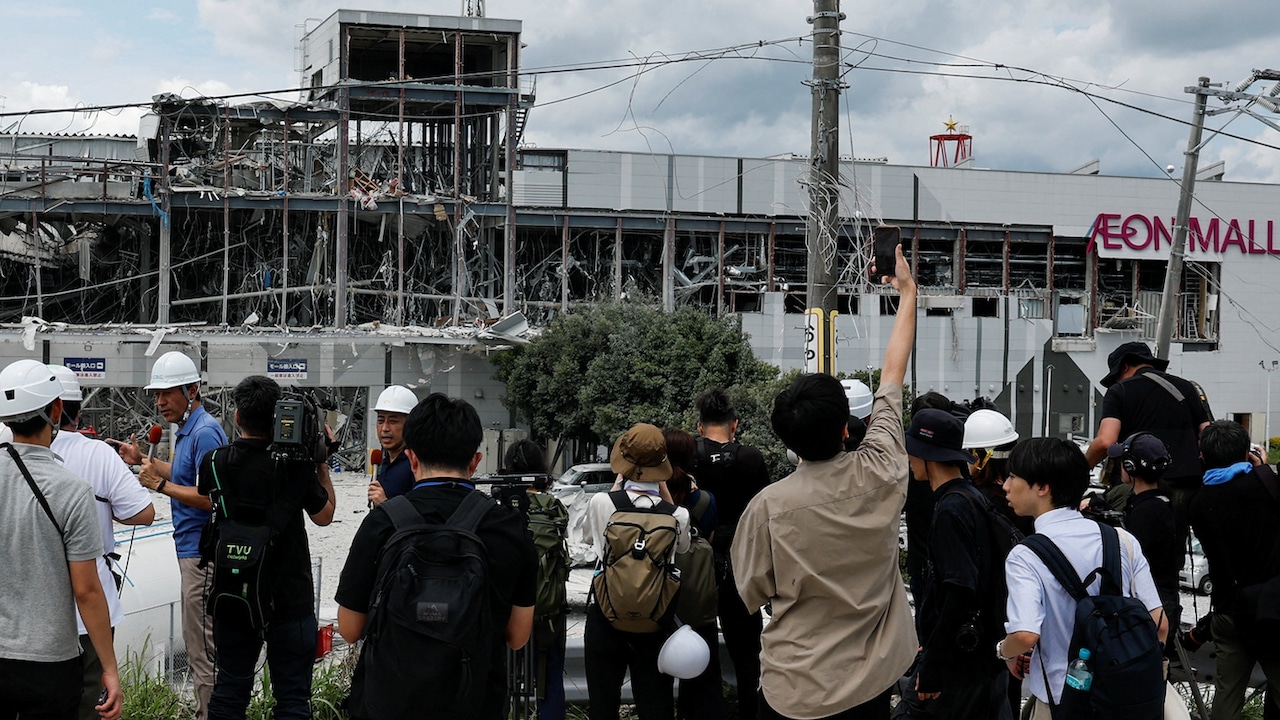
Two Japanese workers entered an earthquake-shattered shopping mall because their boss told them to retrieve cash. They did not walk back out.
When the earth violently ruptured beneath Ishikawa Prefecture, ordinary people scrambled for open ground, ducked under desks, and prayed for the tremors to stop. Inside a commercial complex rendered structurally unstable by violent seismic activity, a managerial directive overrode basic human survival instincts. The instruction was straightforward, transactional, and ultimately fatal. Get the money. Secure the register. Protect the asset.
This tragedy exposes a terrifying reality deeply embedded within rigid corporate cultures. When obedience to authority outranks the fundamental instinct to preserve life, disaster management fails entirely.
The Anatomy of Blind Compliance
Workplace disasters rarely stem from a single catastrophic error. They usually represent the bitter harvest of cultural conditioning cultivated over decades. In many traditional organizations, loyalty to the company hierarchy acts as an invisible force field. Questioning a superior is viewed as insubordination. Pausing to evaluate risk independently is punished as inefficiency.
When a crisis strikes, employees do not suddenly transform into rational independent actors. They fall back on their training. If their training consists of following orders without hesitation, they will follow those orders right into a collapsing building.
The psychological phenomenon known as authority bias plays a massive role here. Employees assume that management possesses superior information or a broader perspective. The workers inside that shattered mall likely trusted that if entering the structure was truly suicidal, the boss would never have asked. They gave the person in charge the benefit of a doubt that the situation did not warrant.
Management rarely views their own instructions as lethal. They operate in a bubble of abstraction. Sitting in a temporary staging area or viewing grainy security feeds, the leader focuses purely on financial exposure. Cash drawers left unattended invite theft or water damage. Inventory left behind represents a loss on a spreadsheet. To a manager detached from the physical reality of falling concrete and compromised load-bearing walls, sending someone inside looks like a reasonable operational recovery step.
They calculate risk using a business ledger instead of a physics textbook.
Historical Echoes of Corporate Recklessness
We have seen this script before, played out in different languages and different industries, but always with the same tragic outcome.
Consider the history of industrial disasters. From mining conglomerates pushing crews back into toxic shafts to avoid production quotas, to aviation authorities ignoring whistleblowers about structural fatigue, institutional pressure consistently bends human judgment. The pressure to perform often eclipses the duty of care.
In Japan, the concept of loyalty to the enterprise carries profound social weight. Post-war economic structures built companies as surrogate families. Employees traded lifelong devotion for job security. While modern labor markets have eroded some of these traditional bonds, the psychological residue remains potent. Saying no to a superior feels like a profound moral betrayal, not merely a refusal of a task.
That cultural programming creates a deadly vulnerability during natural disasters. Earthquakes do not care about corporate loyalty. Aftershocks do not check employee identification before bringing a ceiling down. Yet, human systems frequently fail to account for the physical laws governing our planet, preferring instead to rely on the unyielding momentum of daily operations.
The Failure of Crisis Protocols
Every major corporation drafts emergency response manuals. Glossy binders sit on shelves, filled with flowcharts, evacuation routes, and designated assembly points. These documents look impressive during safety audits. They satisfy regulatory requirements and provide legal cover for executives.
They also tend to fail completely the moment reality gets messy.
Real emergencies are chaotic, loud, and disorienting. Power fails. Communications break down. In that vacuum, abstract policy manuals lose out to immediate, direct commands from a person of authority. If the company culture encourages top-down micro-management during normal business hours, that dynamic intensifies during a crisis.
What went wrong in Ishikawa was not just a lack of an earthquake plan. It was the presence of a management style that treated human employees as disposable components of asset recovery.
Risk assessment requires psychological safety. If workers fear social ostracism, demotion, or being labeled as weak more than they fear a collapsing ceiling, the system is fundamentally broken. Organizations must actively train employees to push back against dangerous directives. More importantly, leaders must be legally and culturally held accountable when their demands place human lives in unnecessary peril.
Re-Engineering Corporate Accountability
Preventing future tragedies requires dismantling the normalization of deviance. When companies tolerate minor safety shortcuts during calm periods, they pave the way for catastrophic failures during emergencies.
Leadership training programs need a complete overhaul. Instead of focusing exclusively on productivity optimization and margin expansion, executive development must emphasize crisis ethics and personal liability. A manager who orders subordinates into a physically hazardous environment must face criminal negligence charges, not just internal reprimands.
Liability laws in many jurisdictions provide too much insulation for corporate brass. When a worker dies following a direct order issued from a safe distance, the accountability often stops at a fine or a settlement payout. True deterrence requires personal consequences for decision-makers who treat human life as an acceptable cost of doing business.
Employees also need institutional backing to refuse unsafe work. While many labor codes include the right to refuse hazardous tasks, invoking that right in a high-pressure corporate hierarchy takes immense courage. Unions, worker councils, and independent regulatory watchdogs must provide structural shields so that workers can say no without risking their livelihoods.
The Cost of Silence
The two workers in Ishikawa did not set out to become martyrs for labor reform. They were simply trying to do their jobs. Their deaths should serve as a permanent indictment of workplaces that value property over people.
Cash can be replaced. Inventory can be reordered. Buildings can be rebuilt from the foundation up. Human lives, once extinguished by institutional negligence, cannot be recovered.
Until executive culture learns to respect the absolute finality of death over the temporary inconvenience of a financial loss, workers will continue to pay the ultimate price for someone else's bottom line.